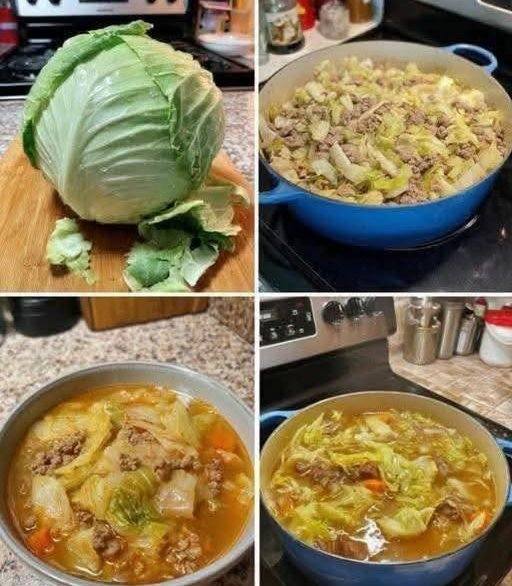
Cabbage and ground beef soup is one of the most comforting, deeply satisfying, economical, and nourishing soups ever created in home cooking. It is the kind of meal that fills an entire kitchen with rich savory aromas, warms the body during cold weather, stretches ingredients to feed a large family, and somehow tastes even better the next day. The soup has roots in many cultures because cabbage, beef, onions, carrots, herbs, and broth are universal comfort ingredients found all over the world.
This extremely detailed version explains every stage thoroughly, from ingredient selection and flavor-building techniques to cooking science, texture control, storage methods, flavor variations, troubleshooting, serving ideas, and advanced culinary methods. The goal is not only to give you a recipe but to help you fully understand how to create an unforgettable pot of cabbage and ground beef soup with rich layered flavor and perfect texture.
The soup itself is hearty without being overly heavy. The cabbage softens into silky sweetness while still retaining structure. The ground beef creates richness and depth. Tomatoes bring acidity and brightness. Potatoes make the soup comforting and substantial. Garlic, onion, celery, carrots, herbs, and broth create a deep savory foundation that develops beautifully during a long simmer.
Many people think cabbage soup is simple or bland, but when properly prepared with attention to browning, seasoning, and simmering, it becomes one of the most flavorful soups imaginable.
Understanding the Flavor Profile
Before cooking, it helps to understand what makes this soup taste so satisfying.
The flavor structure comes from several layers:
- Ground beef provides savory richness and umami
- Onion provides sweetness and aromatic depth
- Garlic creates warmth and complexity
- Carrots contribute natural sweetness
- Celery contributes earthy freshness
- Tomatoes add acidity and body
- Cabbage absorbs surrounding flavors beautifully
- Potatoes add creaminess and comfort
- Herbs contribute fragrance and balance
- Beef broth ties everything together
When all of these ingredients simmer slowly, they create a broth that tastes rich, balanced, warming, and deeply comforting.
Why Cabbage Works So Well in Soup
Cabbage is often underestimated. Raw cabbage can taste sharp and slightly peppery, but when slowly simmered in broth, it transforms completely.
During cooking:
- The fibers soften
- Natural sugars develop
- Harsh sulfur notes mellow
- The cabbage absorbs broth flavor
- Texture becomes silky and tender
Green cabbage is the classic choice because it becomes sweet and delicate during cooking without disappearing entirely.
Savoy cabbage produces an even softer texture and slightly sweeter flavor.
Red cabbage can also be used, though it changes the soup color dramatically and creates a darker broth.
Total Cooking Time
- Vegetable preparation: 30 to 45 minutes
- Browning and sautéing: 20 minutes
- Simmering: 1 to 2 hours
- Total time: About 2 to 3 hours
Longer simmering produces deeper flavor.
Yield
- 8 to 12 large servings
This soup is excellent for meal prep because it stores beautifully.
Complete Ingredient List
Meat
- 2 pounds ground beef, preferably 80/20 or 85/15
The fat percentage matters. Lean beef works, but moderate fat creates richer flavor.
Main Vegetables
- 1 medium green cabbage
- 2 large onions
- 4 garlic cloves
- 3 carrots
- 3 celery stalks
- 3 medium potatoes
- 1 bell pepper
Tomato Components
- 1 large can diced tomatoes
- 1 small can tomato paste
- 1 can tomato sauce
Liquid Components
- 8 cups beef broth
- 2 cups water
Seasonings
- 2 teaspoons salt
- 1 teaspoon black pepper
- 1 teaspoon smoked paprika
- 1 teaspoon sweet paprika
- 1 teaspoon oregano
- 1 teaspoon thyme
- 1 teaspoon basil
- 1 bay leaf
- 1 tablespoon Worcestershire sauce
- 1 teaspoon soy sauce
Optional Ingredients
- Mushrooms
- Corn
- Green beans
- Rice
- Barley
- Pasta
- Chili flakes
- Hot sauce
- Fresh parsley
- Sour cream
- Parmesan cheese
Equipment
You will need:
- Large Dutch oven or heavy soup pot
- Sharp chef’s knife
- Cutting board
- Wooden spoon
- Ladle
- Measuring spoons
- Large bowls for prep
Heavy-bottomed cookware works best because it distributes heat evenly and prevents scorching.
Step-by-Step Preparation
Step 1: Preparing the Cabbage
Remove the tough outer leaves from the cabbage.
Cut the cabbage into quarters through the core.
Lay each quarter flat on the cutting board and slice away the thick core.
Now chop the cabbage into medium-sized pieces.
Do not shred it too finely.
Large chunks soften beautifully while retaining texture.
Remember that cabbage shrinks significantly during cooking.
Place the chopped cabbage into a large bowl.
Step 2: Preparing the Aromatic Vegetables
Dice the onions into small cubes.
Slice the celery thinly.
Peel the carrots and dice them evenly.
Mince the garlic finely.
Cut the bell pepper into small pieces.
Peel and cube the potatoes into medium chunks.
Uniform cutting ensures even cooking.
Step 3: Heating the Pot
Place the Dutch oven over medium-high heat.
Allow the pot to heat fully before adding oil.
A properly heated pot improves browning dramatically.
Add olive oil.
Swirl the oil around the pot.
Step 4: Browning the Ground Beef Properly
Add the ground beef to the hot pot.
Do not stir immediately.
Allow the meat to sit undisturbed for several minutes.
This creates caramelization.
Caramelization equals flavor.
Many home cooks stir too early and accidentally steam the meat instead of browning it.
Once a deep brown crust develops underneath, begin breaking the beef apart with a wooden spoon.
Cook until all pink disappears.
Some pieces should become dark brown around the edges.
That browned flavor is essential for rich soup.
If excess grease accumulates, carefully spoon some out.
Leave a little fat behind because fat carries flavor.
Step 5: Building the Aromatic Base
Add onions directly into the browned beef.
Stir thoroughly.
Cook for 5 to 7 minutes until onions soften and begin turning golden.
Add carrots and celery.
Cook another 5 minutes.
The vegetables should begin softening while absorbing beef flavor.
Now add garlic.
Garlic cooks quickly, so stir constantly for about 1 minute.
Do not burn the garlic because burned garlic creates bitterness.
At this stage the kitchen aroma becomes intensely savory and comforting.
Step 6: Cooking the Tomato Paste
Push the meat and vegetables slightly aside.
Add tomato paste directly against the hot bottom of the pot.
Cook it for about 2 minutes while stirring constantly.
This step is extremely important.
Raw tomato paste tastes acidic and metallic.
Cooking it caramelizes natural sugars and deepens flavor.
Step 7: Adding Tomatoes
Pour in diced tomatoes and tomato sauce.
Stir thoroughly to combine.
Allow this mixture to simmer for several minutes.
The tomatoes begin blending into the beef and vegetables.
Step 8: Adding Liquids
Pour in beef broth slowly.
Add water.
Stir while scraping the bottom of the pot.
The browned bits stuck to the bottom dissolve into the broth.
Those browned bits contain concentrated flavor.
Never skip scraping the pot.
Step 9: Seasoning the Soup
Add:
- Salt
- Black pepper
- Paprika
- Smoked paprika
- Thyme
- Oregano
- Basil
- Bay leaf
- Worcestershire sauce
- Soy sauce
Stir thoroughly.
Bring the soup to a gentle boil.
Once boiling, reduce heat immediately to low.
Step 10: Adding Potatoes
Add cubed potatoes.
Simmer for about 10 minutes before adding cabbage.
Potatoes require longer cooking than cabbage.
Step 11: Adding the Cabbage
Begin adding cabbage in batches.
The pot may seem overfilled initially.
Do not panic.
Cabbage shrinks dramatically within minutes.
Stir gently as the cabbage softens.
Soon the cabbage settles beneath the broth level.
Cover partially with a lid.
Step 12: Slow Simmering
Allow the soup to simmer gently for 45 minutes to 1 hour.
Do not boil aggressively.
Gentle simmering creates cleaner flavor and better texture.
During simmering:
- Beef flavor spreads through broth
- Cabbage absorbs seasoning
- Potatoes soften
- Herbs release aroma
- Vegetables become tender
The broth gradually transforms into a rich savory liquid.
The Science of Slow Simmering
Slow simmering matters because:
- Flavors meld together gradually
- Proteins soften
- Vegetables absorb broth
- Harsh flavors mellow
- Natural sweetness develops
Rapid boiling can destroy texture and create cloudy broth.
Step 13: Final Taste Adjustment
Taste the soup carefully.
Now adjust flavor if necessary.
If bland:
- Add more salt
If too acidic:
- Add tiny pinch of sugar
If lacking richness:
- Add Worcestershire sauce
If too thick:
- Add broth
If too thin:
- Simmer uncovered
If lacking brightness:
- Add tiny splash vinegar
Final seasoning adjustment is one of the most important steps in soup-making.
Texture Goals
The perfect cabbage and ground beef soup should have:
- Tender cabbage
- Soft but intact potatoes
- Rich beefy broth
- Distinct vegetables
- Balanced tomato flavor
- Slightly thickened consistency
The broth should feel hearty but not like stew.
Serving Suggestions
Ladle soup into deep bowls.
Serve extremely hot.
Optional toppings:
- Fresh parsley
- Sour cream
- Parmesan cheese
- Black pepper
- Chili flakes
Excellent side dishes include:
- Crusty bread
- Garlic bread
- Cornbread
- Dinner rolls
- Buttered toast
- Grilled cheese sandwiches
Why the Soup Tastes Better the Next Day
The next-day flavor improvement happens because:
- Cabbage absorbs broth overnight
- Herbs fully infuse
- Beef flavor deepens
- Starches slightly thicken broth
- Acidity balances out
Many people intentionally cook this soup a day ahead for this reason.
Refrigerator Storage
Allow soup to cool before storing.
Transfer into airtight containers.
Store in refrigerator for 4 to 5 days.
The soup thickens slightly during storage.
Freezing Instructions
This soup freezes exceptionally well.
Allow soup to cool completely.
Freeze in meal-sized portions.
Leave room for expansion.
Freeze for up to 3 months.
Thaw overnight before reheating.
Reheating Instructions
Reheat slowly over medium-low heat.
Stir occasionally.
Add extra broth if needed.
Avoid rapid boiling because potatoes may break apart.
Advanced Flavor Techniques
Adding Smokiness
For smoky flavor add:
- Bacon
- Smoked sausage
- Smoked paprika
- Roasted garlic
Increasing Umami
To deepen savoriness add:
- Mushroom powder
- Soy sauce
- Worcestershire sauce
- Parmesan rind
- Beef bouillon
Making It Spicy
Add:
- Jalapeños
- Chili flakes
- Cayenne
- Hot sauce
Making It Creamy
Add:
- Heavy cream
- Sour cream
- Cream cheese
near the end of cooking.
Rustic Farmhouse Variation
Add:
- Barley
- Turnips
- Parsnips
- Leeks
This creates a more old-fashioned European style soup.
Italian-Style Variation
Use:
- Italian sausage
- Cannellini beans
- Italian herbs
- Parmesan cheese
Eastern European Variation
Add:
- Dill
- Caraway seeds
- Sour cream
This creates a flavor profile similar to traditional cabbage soups from Eastern Europe.
Low-Carb Variation
Remove potatoes.
Add:
- Extra cabbage
- Zucchini
- Cauliflower
Slow Cooker Version
Brown beef first.
Transfer everything except cabbage into slow cooker.
Cook:
- Low 7 to 8 hours
- High 4 to 5 hours
Add cabbage during final 1 to 2 hours.
Instant Pot Version
Use sauté function for browning.
Add ingredients.
Pressure cook:
- 15 minutes high pressure
Allow natural release.
Common Mistakes
Mistake 1: Weak Browning
Gray meat creates weak flavor.
Proper browning is essential.
Mistake 2: Overcrowding the Pot
Too much meat at once can steam instead of brown.
Mistake 3: Underseasoning
Large soups need enough salt.
Mistake 4: Overcooking Vegetables
Vegetables should remain recognizable.
Mistake 5: Using Watery Broth
Quality broth dramatically affects results.
Choosing the Best Broth
Homemade broth creates best flavor.
Store-bought broth also works.
Choose low-sodium broth if possible because seasoning becomes easier to control.
Choosing the Best Potatoes
Best choices:
- Yukon Gold
- Russet
- Red potatoes
Yukon Gold creates especially creamy texture.
Choosing the Best Beef
Ground chuck is excellent.
Higher fat creates richer soup.
Very lean beef can taste slightly dry.
Adding Rice or Pasta
If adding rice:
- Add during final 25 minutes
If adding pasta:
- Add during final 10 minutes
Otherwise they may overcook.
Nutritional Benefits
This soup provides:
- Protein from beef
- Fiber from cabbage
- Vitamins from vegetables
- Minerals from broth
- Slow-digesting carbohydrates from potatoes
Cabbage itself contains:
- Vitamin C
- Vitamin K
- Fiber
- Antioxidants
Budget-Friendly Benefits
This soup became popular historically because it stretches inexpensive ingredients into filling meals.
Cabbage is affordable.
Ground beef can feed many people when combined with vegetables and broth.
One large pot can provide several meals.
Meal Prep Advantages
This soup is ideal for meal prep because:
- It reheats well
- Flavor improves overnight
- Freezes beautifully
- Feeds many people
- Travels well in containers
How Restaurants Build Rich Soup Flavor
Restaurants often improve soup using:
- Roasted bones
- Long simmering
- Layered seasoning
- Butter
- Concentrated stock
- Slow caramelization
You can replicate these techniques at home.
Optional Gourmet Additions
For luxurious flavor add:
- Red wine
- Roasted garlic
- Fresh thyme
- Parmesan rind
- Caramelized onions
- Mushrooms cooked separately in butter
Using Fresh Herbs
Fresh herbs should usually be added near the end.
Good choices:
- Parsley
- Dill
- Thyme
Fresh herbs brighten the soup dramatically.
The Importance of Balance
Excellent soup balances:
- Saltiness
- Sweetness
- Acidity
- Richness
- Herb flavor
No single flavor should dominate.
Making the Soup Extra Thick
For thicker soup:
- Mash some potatoes into broth
- Simmer longer uncovered
- Add barley or rice
Making the Soup Brothier
For lighter soup:
- Add extra broth
- Reduce tomato paste slightly
- Use leaner beef
Large Batch Cooking
This recipe doubles very easily.
For parties or gatherings use:
- 4 pounds beef
- 2 cabbages
- 16 cups broth
Use very large stockpot.
Traditional Comfort Food Qualities
This soup represents classic comfort food because it is:
- Warm
- Filling
- Slow-cooked
- Richly aromatic
- Family-oriented
- Affordable
- Nourishing
It is the kind of meal often associated with winter evenings, family kitchens, and homemade cooking traditions passed down through generations.
Final Thoughts
A truly great cabbage and ground beef soup is not rushed. It develops through stages: browning, softening, simmering, seasoning, tasting, and resting. Every ingredient contributes something important. The cabbage becomes silky and sweet. The beef enriches the broth. The herbs provide fragrance. The tomatoes brighten the entire pot. The potatoes create comfort and body.
When prepared patiently and seasoned carefully, this humble soup becomes deeply flavorful, warming, nourishing, and memorable. It is one of those timeless recipes that continues to satisfy people generation after generation because it transforms simple ingredients into something rich, hearty, and deeply comforting.