This creamy vegetable bake is a warm, comforting dish made with potatoes, carrots, cauliflower, and peas, all brought together with a smooth garlic and herb cream sauce and finished with a generous layer of melted cheese. It is simple enough for an everyday meal but satisfying enough to serve when you want something a little more special
A Simple Vegetable Bake for Any Meal
- The best thing about this vegetable bake is how easily everything comes together. The potatoes, carrots, and cauliflower are lightly cooked first so they become tender without turning soft or falling apart. Frozen peas are added later, which keeps the preparation quick and gives the finished casserole plenty of color.
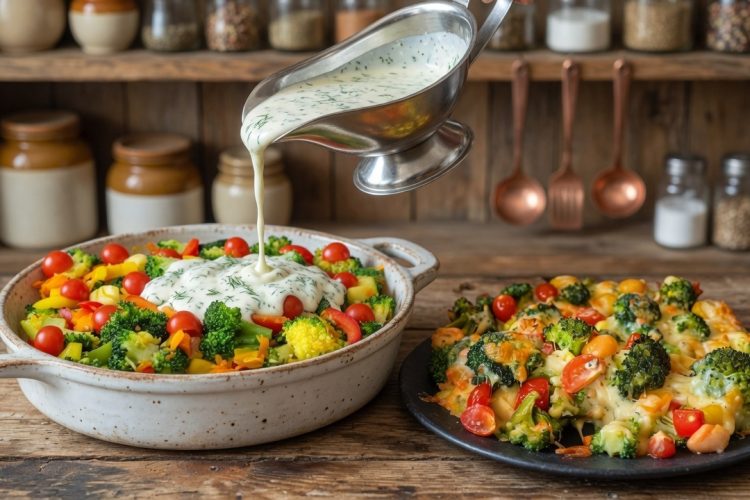
- Once the vegetables are ready, the creamy sauce is prepared with butter, flour, beef broth, and garlic and herb cream cheese. The sauce coats every piece of vegetable before the whole mixture is topped with grated cheese and baked until hot, creamy, and lightly golden.
- This is the kind of recipe that works well when you want a filling vegetable dish without preparing several separate side dishes. The potatoes make it hearty, the carrots add a gentle sweetness, cauliflower gives it substance, and peas bring a fresh flavor and bright green color.
Preparing the Vegetables
- Start by preparing the potatoes. Peel them and cut them into bite-sized pieces. Keeping the pieces reasonably similar in size helps them cook evenly. Either waxy or starchy potatoes can be used.
- Next, peel the carrots and thinly slice them. The thinner slices allow the carrots to become tender at about the same time as the potatoes and cauliflower.
- Prepare the cauliflower by dividing it into florets. The florets should not be too large because smaller, evenly sized pieces are easier to cook and serve.
- Place the potatoes, carrots, and cauliflower into a large pot. Cover them with water and add 1 teaspoon of salt. Cook the vegetables for approximately 10 minutes, or just until they become tender.
- The vegetables should not be cooked until completely soft. They will continue cooking later in the oven, so keeping them slightly firm at this stage helps them hold their shape in the casserole.
Why the Vegetables Should Not Be Overcooked
- It can be tempting to boil the vegetables until they are very soft, especially when making a creamy casserole. However, that can make the final dish too soft because the vegetables have another cooking stage ahead of them.
- The potatoes should be tender enough to eat but firm enough to handle. The cauliflower should also remain in recognizable florets rather than becoming mushy. The carrots should be tender but still hold their shape.
- Cutting the vegetables evenly helps with this. Similar-sized potato pieces, thinly sliced carrots, and reasonably sized cauliflower florets make it easier for everything to cook at a similar rate.
- Once the vegetables are ready, drain them thoroughly. This step is especially important because extra water left on the vegetables can thin out the creamy sauce.
Adding the Frozen Peas
- The frozen peas do not need to be cooked or thawed first. They can be added directly to the casserole once the potatoes, carrots, and cauliflower have been drained.
- This makes the recipe especially convenient. There is no extra pan needed for the peas, and there is no waiting for them to thaw.
- The peas also add a pleasant contrast to the other vegetables. Their natural sweetness works well with the savory sauce, while their bright green color makes the casserole look more appealing.
- Because the peas do not require a long cooking time, adding them directly before baking allows them to warm through without becoming overly soft.
Making the Creamy Sauce
- While the vegetables are being prepared, the creamy sauce can be made in a saucepan.
- Melt the butter over medium heat. Once melted, add the all-purpose flour and stir until the two ingredients form a thick paste.
- The flour and butter mixture creates the base of the sauce. The beef broth is then added gradually. Pour it in small amounts while stirring continuously.
- Adding the broth slowly helps keep the sauce smooth. Instead of adding all the liquid at once, give each addition time to blend into the flour mixture before adding more.
- Continue stirring until all of the broth has been incorporated.
Adding the Garlic and Herb Cream Cheese
- Once the beef broth has been blended into the sauce, stir in the garlic and herb cream cheese.
- The cream cheese gives the sauce its creamy texture while also adding garlic and herb flavor. Continue stirring until the cream cheese has completely blended into the sauce and the mixture looks smooth.
- At this point, taste the sauce and add salt and pepper as needed. Keep in mind that the beef broth, cream cheese, and grated cheese can already contain salt, so it is better to taste first rather than automatically adding a large amount.
- The finished sauce should be creamy and smooth but does not need to be extremely thick. It needs enough moisture to coat the vegetables and keep the casserole creamy while it bakes.
Bringing Everything Together
- Preheat the oven to 200°C (400°F).
- Transfer the drained potatoes, carrots, and cauliflower into a large casserole dish. Add the frozen peas directly to the vegetables.
- Pour the warm creamy sauce over everything.
- Now gently mix the vegetables and sauce together. Be careful not to stir too aggressively because the potatoes and cauliflower are already partially cooked. A gentle folding motion helps keep the vegetables intact while making sure the sauce reaches all of them.
- Once everything is coated, spread the mixture into an even layer.
- An even layer helps the casserole cook consistently and also gives the cheese topping a good surface to melt over.
Choosing the Cheese Topping
- The cheese is the finishing touch that brings the casserole together.
- Use 120 grams of grated cheese, such as Gouda, cheddar, or your favorite cheese. Spread it evenly over the entire vegetable mixture.
- Gouda gives the casserole a mild, creamy finish, while cheddar provides a stronger cheese flavor. Either works well with the garlic and herb cream sauce.
- Try to cover the surface evenly so that the cheese melts across the casserole instead of leaving large uncovered areas.
- As it bakes, the cheese melts into the creamy sauce underneath and develops lightly golden areas around the top and edges.
Baking the Vegetable Casserole
- Place the assembled casserole into the preheated oven.
- Bake for approximately 20 minutes, or until the cheese is completely melted and the edges are lightly golden.
- Since the vegetables were already cooked until tender, the oven is mainly used to heat everything together, finish the vegetables, and create the melted cheese topping.
- There is no need to bake the casserole for much longer than necessary. Once the cheese is melted and lightly golden, it is ready.
- A lightly browned cheese topping gives the casserole a nice contrast against the soft, creamy vegetables underneath.
Serving the Vegetable Bake
- Serve the vegetable bake hot, while the cheese is still melted and the creamy sauce is warm.
- It can be served as a main dish because the potatoes make it filling and substantial. It also works beautifully as a hearty side dish.
- For a larger meal, serve it alongside fish, schnitzel, or another preferred protein. The creamy vegetables pair easily with savory main dishes without requiring another complicated side.
- For a casual family meal, the casserole can simply be placed in the center of the table and served directly from the baking dish.
Getting the Best Texture
- The texture of this vegetable bake depends on a few simple details.
- First, do not overcook the vegetables during the boiling stage. They should be just tender because they will continue cooking in the oven.
- Second, drain the vegetables thoroughly. Excess water can dilute the sauce and make the casserole watery.
- Third, mix gently. Potatoes and cauliflower can break apart if stirred too roughly after cooking.
- Finally, bake only until the cheese is melted and lightly golden. This keeps the inside creamy and prevents the topping from becoming overly hard or deeply browned.
Why This Recipe Is Easy to Make
- There are only a few main stages: prepare the vegetables, cook them briefly, make the sauce, combine everything, add cheese, and bake.
- The vegetables cook together in one pot rather than requiring separate pans. The sauce is made in one saucepan, and the final mixture goes into one casserole dish.
- Frozen peas also save time because they can be added straight from the freezer.
- This simple workflow makes the vegetable bake a practical choice for a busy dinner while still giving you a homemade dish with a creamy sauce and melted cheese topping.
Keeping the Sauce Smooth
- The most important part of making the sauce is adding the beef broth gradually.
- Start with the butter and flour mixture, then slowly add the broth while stirring continuously. Allow each small amount of broth to blend in before adding more.
- This helps prevent lumps and creates a smoother sauce.
- Once all the broth is incorporated, add the garlic and herb cream cheese and continue stirring until everything is evenly combined.
- If the sauce looks slightly thinner than expected, remember that it will coat the vegetables and continue to come together during baking. The goal is a creamy sauce that can easily spread throughout the casserole.
A Colorful Combination of Vegetables
- One reason this casserole looks so inviting is the combination of colors.
- The potatoes create a light, hearty base. The carrots add bright orange pieces, while cauliflower gives the casserole a soft white color. The green peas add contrast throughout the dish.
- Once the cheese melts over the top, the colorful vegetables become surrounded by a creamy sauce and golden cheese.
- The result is much more interesting than serving plain boiled vegetables separately.
Flavor in Every Bite
- Each vegetable brings something different to the casserole.
- Potatoes make it satisfying and provide a soft, hearty texture. Carrots bring a mild natural sweetness. Cauliflower adds substance and absorbs the creamy sauce well. Peas provide freshness and a little sweetness.
- The garlic and herb cream cheese brings the vegetables together with a savory, creamy flavor. Beef broth adds another layer of richness to the sauce, while the grated cheese creates a flavorful topping.
- Because all of the ingredients bake together, the flavors blend without requiring complicated seasoning.
Helpful Tips Before Baking
- Make sure the vegetables are cut into similar-sized pieces where possible. This helps them cook evenly.
- Do not boil the vegetables until they are completely soft. They should be just tender.
- Drain the vegetables well before adding them to the casserole.
- Add the beef broth slowly when preparing the sauce and keep stirring.
- Add the frozen peas directly without thawing them first.
- Taste the sauce before adding extra salt.
- Mix the vegetables and sauce gently so the potatoes and cauliflower do not break apart.
- Spread the grated cheese evenly across the surface.
- Bake until the cheese is melted and lightly golden rather than deeply browned.
- Can Different Potatoes Be Used?
- Yes. The recipe allows either waxy or starchy potatoes.
- Whichever type is used, cut the potatoes into bite-sized pieces and avoid boiling them for too long. They need to remain firm enough to handle the mixing and baking stages.
- Do the Peas Need to Be Thawed?
- No. The frozen peas can be added directly to the casserole.
- There is no need to cook or thaw them separately. They will heat through while the casserole bakes.
- This is one of the details that keeps the recipe simple and saves preparation time.
- Can Cheddar Be Used?
- Yes. The recipe allows grated cheese such as Gouda, cheddar, or your favorite cheese.
- Gouda gives a mild and creamy flavor, while cheddar has a more noticeable savory taste. Both work well as the melted topping.
Why Is Thorough Draining Important?
- Boiled vegetables naturally hold some water. Cauliflower and potatoes can retain quite a bit after cooking.
- If that water goes into the casserole, it can dilute the creamy sauce and make the finished dish watery.
- Taking a moment to drain the vegetables thoroughly helps maintain the creamy consistency of the casserole.
Making It a Complete Meal
- This vegetable bake can easily stand on its own as a filling meal because of the potatoes, creamy sauce, and cheese.
- For a more complete dinner, it can also be served with fish, schnitzel, or another protein.
- The casserole already contains several vegetables, so it does not need many additional side dishes. A simple protein alongside it is enough to create a satisfying meal.
A Practical Cooking Order
- For a smooth cooking process, begin by preparing all of the vegetables.
- Peel and cut the potatoes. Slice the carrots and divide the cauliflower into florets.
- Cook them together until just tender, then drain them thoroughly.
- While they cook, prepare the creamy sauce. Melt the butter, add the flour, gradually add the beef broth, and then stir in the garlic and herb cream cheese.
- Once the vegetables are drained, place them in the casserole dish and add the frozen peas. Pour the sauce over everything and gently combine.
- Finish with the grated cheese and place the casserole in the oven.
- After about 20 minutes, the cheese should be melted and lightly golden, and the vegetable bake will be ready to serve.
Healthy Ultimate Low Calorie Vegetable Bake
A light, colorful, and satisfying vegetable bake made with fresh vegetables, creamy low-fat milk, egg, and a little cheese. It’s an easy option for a healthy lunch, dinner, or side dish.
4
servings30
minutes40
145
kcal1
hour10
minutesIngredients
2 cups mixed vegetables (broccoli, cauliflower, carrots, zucchini)
1 small onion, chopped
2 cloves garlic, minced
½ cup low-fat milk
½ cup low-fat shredded cheese
1 egg
½ tsp salt
¼ tsp black pepper
½ tsp Italian seasoning
Directions
- Preheat oven to 375°F (190°C).
- Steam or lightly boil the vegetables for 3–4 minutes, then drain.
- Whisk together milk, egg, garlic, salt, pepper, and Italian seasoning.
- Add vegetables and onion to a baking dish and pour the mixture over them.
- Sprinkle cheese on top.
- Bake for 25–30 minutes, until golden and set.
- Let it cool for a few minutes, then serve warm.
Notes
- Use any combination of your favorite fresh or frozen vegetables.
- Avoid overcooking the vegetables before baking so they stay slightly crisp.
- For a lighter version, use reduced-fat cheese or slightly less cheese.
- Let the bake rest for 5 minutes before serving so it sets nicely.
- Store leftovers in an airtight container in the refrigerator for up to 3 days.
Nutrition Facts
- Calories: 145kcal
- Fat: 6g
- Sodium: 288mg
- Carbohydrates: 14g
- Fiber: 0g
- Sugar: 6g
- Protein: 9g