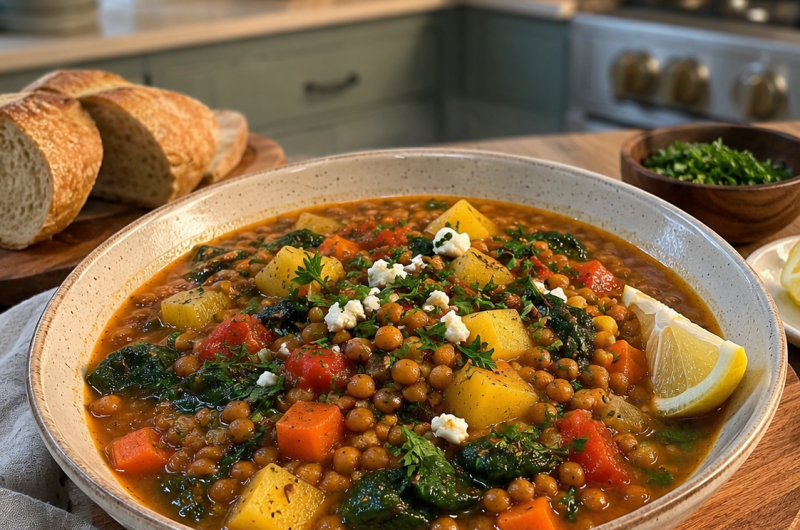
This hearty Mediterranean lentil and vegetable soup is the kind of meal that feels comforting without being overly rich or heavy. It combines earthy brown or green lentils with everyday vegetables, tomatoes, garlic, herbs, and warm spices. The vegetables soften slowly in olive oil before the lentils and broth are added, giving the soup a much deeper flavor than simply cooking everything together.
The final touch is fresh lemon juice. It may seem like a small addition, but it makes a noticeable difference. The lemon brightens the tomatoes, vegetables, lentils, and herbs while balancing the richness of the olive oil.
The soup makes a generous batch, so it works well for a family meal, meal prep, or a simple dinner with crusty bread on the side.
Why This Lentil Soup Works So Well
- There are several layers of flavor in this recipe. The first comes from the onion, carrots, celery, and red bell pepper. These vegetables create the base of the soup and become sweeter and more flavorful as they cook.
- Garlic is added after the vegetables have softened so it has enough time to release its aroma without becoming overly browned. Tomato paste is then cooked with the vegetables and spices. This short step helps deepen the tomato flavor and allows the cumin, oregano, smoked paprika, and coriander to become more fragrant.
- The lentils provide the hearty texture that makes this soup satisfying. Brown or green lentils are especially useful because they become tender while generally keeping their shape.
- Zucchini and leafy greens are added later in the cooking process. This keeps the zucchini from becoming too soft and allows the greens to retain some of their texture and fresh flavor.
- Finally, lemon juice brings everything together.
Getting the Lentils Ready
- Start by placing the dried brown or green lentils in a fine-mesh strainer. Rinse them thoroughly under cold water.
- While rinsing, take a quick look through the lentils and remove any small stones or damaged lentils that may be present. Lentils do not normally need to be soaked, which makes them especially convenient for a soup like this.
- Once rinsed, set them aside while the vegetables are prepared.
Building the Vegetable Base
- Use a large heavy-bottomed soup pot or Dutch oven so there is enough room for all the ingredients.
- Heat the extra-virgin olive oil over medium heat. Add the diced yellow onion, carrots, celery, and red bell pepper. Add a small pinch of salt and cook for about 7–9 minutes.
- Stir the vegetables occasionally as they cook. The goal is not to brown them heavily. Instead, let them gradually soften and develop their natural flavor.
- This is one of the most important stages of the recipe. Giving the vegetables enough time in the olive oil creates a flavorful foundation for the lentils and broth.
- When the onion becomes tender and the carrots, celery, and pepper have started to soften, the base is ready for the garlic.
Adding Garlic and Spices
- Add the minced garlic and stir it into the vegetables. Cook for about 30–60 seconds, just until the garlic becomes fragrant.
- Avoid cooking the garlic for too long or allowing it to become very dark, as this can give the soup a bitter flavor.
- Next, add the tomato paste along with the ground cumin, dried oregano, smoked paprika, and ground coriander. Stir everything well so the tomato paste and spices coat the vegetables.
- Cook for another 1–2 minutes.
- The tomato paste should darken slightly during this stage. Cooking it briefly before adding the liquid gives the soup a richer and more developed tomato flavor.
Adding the Lentils and Broth
- Once the tomato paste and spices have been cooked, add the rinsed lentils to the pot.
- Pour in the diced tomatoes, vegetable broth, and water. Add the bay leaf, salt, and freshly ground black pepper.
- Give everything a thorough stir and bring the soup to a boil over medium-high heat.
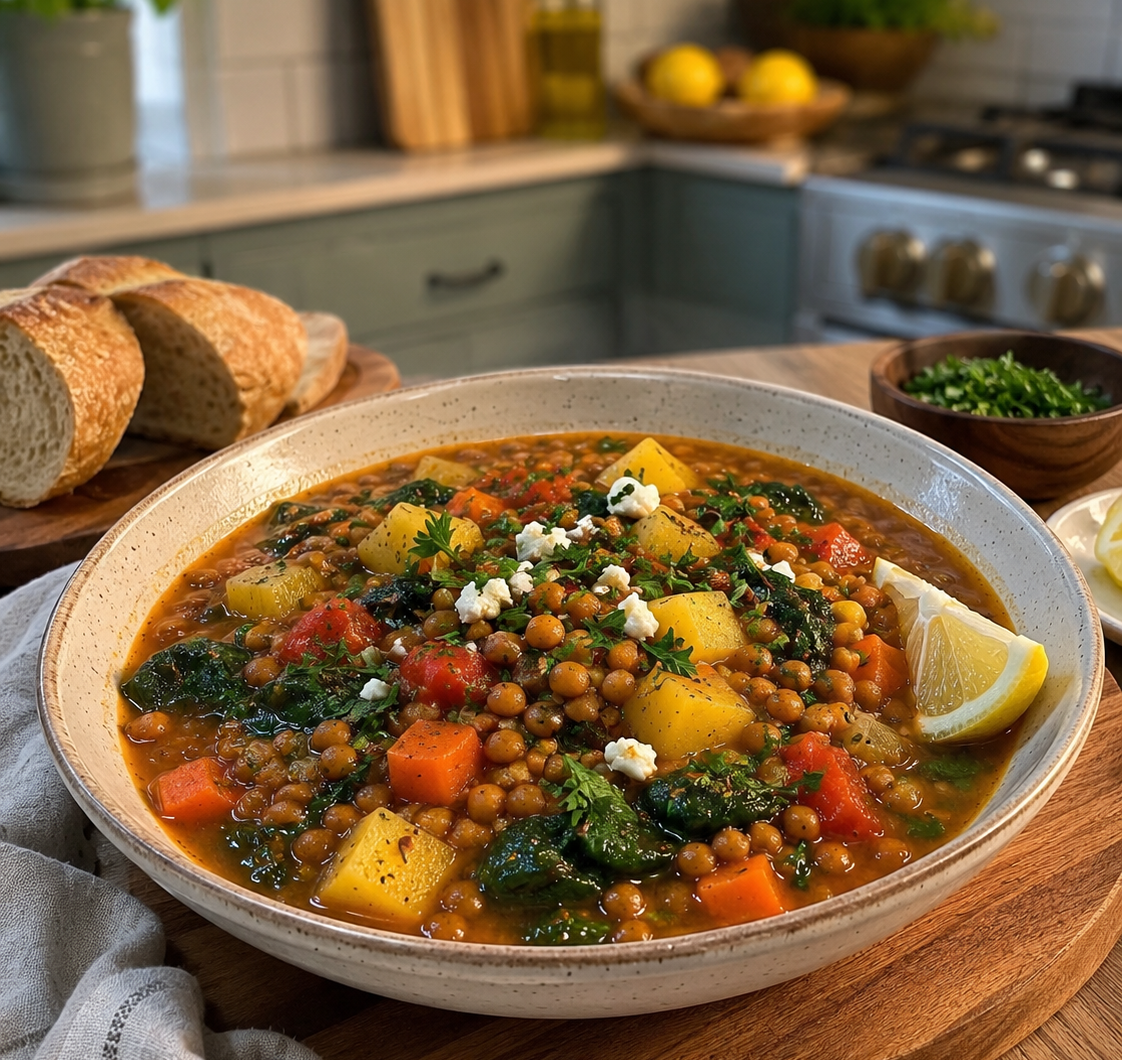
- At this point, the pot should have a colorful mixture of lentils, vegetables, tomatoes, and aromatic broth.
Letting the Soup Simmer
- Once the soup reaches a boil, reduce the heat to low and partially cover the pot with a lid.
- Let it simmer for about 30–35 minutes. Stir occasionally so the lentils cook evenly and nothing settles too heavily on the bottom of the pot.
- The lentils should become tender while still holding their shape. If the soup becomes thicker than you prefer during cooking, add another ½–1 cup of water or broth.
- Lentils naturally release starch as they cook, so the soup will gradually become thicker and heartier.
Adding the Zucchini
- When the lentils are nearly tender, stir in the chopped zucchini.
- Continue simmering for about 8–10 minutes. This is enough time for the zucchini to become tender without allowing it to completely disappear into the soup.
- Adding zucchini toward the end also gives the finished soup a better balance of textures.
Adding the Greens
- Next, stir in the chopped kale or spinach.
- If spinach is being used, it wilts very quickly and generally needs only a minute or two. Kale is firmer, so give it around 4–5 minutes to soften.
- At this stage, taste the soup and adjust the salt and black pepper if needed.
- Remove the bay leaf before serving.
The Fresh Lemon Finish
- Turn off the heat and stir in the juice of one lemon.
- The lemon should be added near the end rather than cooked throughout the entire process. Fresh lemon juice has a brighter flavor, and it helps balance the hearty lentils and olive oil.
- Taste the soup after adding the lemon. If you prefer a stronger citrus flavor, additional lemon can be added.
- This simple finishing step gives the soup its fresh Mediterranean character.
How to Serve the Soup
- Ladle the hot soup into bowls and finish each serving with a drizzle of extra-virgin olive oil.
- Sprinkle over chopped fresh parsley and, if desired, fresh dill. Crumbled feta can be added for a creamy, salty contrast.
- Serve lemon wedges alongside the bowls so the flavor can be adjusted at the table.
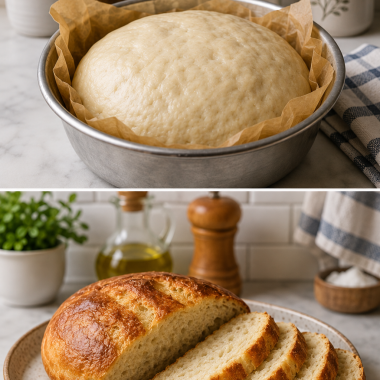
- Crusty bread is an especially good accompaniment. It can be served alongside the soup for dipping into the flavorful broth.
- For a fuller Mediterranean-style meal, the soup can also be served with hummus, Greek salad, olives, roasted vegetables, or a simple cucumber salad.
Making the Soup Extra Hearty
- The basic recipe is already filling, but the provided variations can make it even more substantial. A diced potato, pearl barley, cooked chickpeas, chopped cauliflower, small pasta, or cooked white beans can be used as optional additions.
- If adding diced potato, it should go into the pot at the same time as the lentils so it has enough time to cook.
- Cooked chickpeas or beans can be added during the final 10 minutes, allowing them to warm through without becoming overly soft.
Mediterranean Flavor Variations
- Greek-Inspired Version
- For a Greek-inspired variation, the soup can be finished with extra lemon, fresh dill, and crumbled feta. The addition of dried thyme and a generous drizzle of olive oil also works well with the existing flavors.
- Italian-Inspired Version
- For an Italian-style direction, the cumin and coriander can be replaced with Italian seasoning and dried basil. The combination of tomatoes, zucchini, and spinach fits naturally with this version, while Parmesan can be used in place of feta.
- Moroccan-Inspired Version
- The cumin can be made more noticeable and combined with cinnamon, turmeric, cayenne, and fresh cilantro. Lemon and plain yogurt can be used when serving.
- Spicy Mediterranean Version
- For more heat, crushed red pepper flakes and a little cayenne can be added alongside the smoked paprika. Fresh lemon and parsley make a good finishing combination for the spicier version.
- These are optional flavor directions rather than changes required for the main recipe.
Tips for Better Lentil Soup
- Choose Brown or Green Lentils
- Brown and green lentils are ideal because they hold their shape well and create a hearty texture.
- Red lentils can cook much faster and tend to break down more, resulting in a creamier soup.
- Take Time With the Vegetables
- The onion, carrot, celery, and bell pepper should not be rushed. Those first several minutes of sautéing create the foundation of the soup.
- Keep an Eye on the Consistency
- Lentils continue to absorb liquid as they cook. If the soup becomes too thick, add additional water or vegetable broth.
- If it is thinner than desired, let it simmer uncovered for a few extra minutes.
- Add Lemon at the End
- Fresh lemon juice is best added after the cooking is finished. It keeps its bright flavor and gives the soup a cleaner, fresher finish.
Making It Ahead
- This soup is well suited to make-ahead meals. Once prepared, allow it to cool before transferring it to airtight containers and refrigerating.
- The flavors can become even more developed after resting overnight.
- The soup can be kept refrigerated for approximately 4–5 days. Because the lentils continue absorbing liquid as the soup sits, add a splash of water or broth when reheating if the consistency has become too thick.
Freezing the Soup
- The soup can also be frozen.
- Allow it to cool completely before transferring it into freezer-safe containers. Leave some room at the top because the soup will expand as it freezes.
- It can be frozen for up to 3 months.
- For best results, thaw it overnight in the refrigerator and reheat gently on the stovetop. After reheating, fresh lemon juice and parsley can be added to bring back the bright flavors.
A Simple, Complete Meal
- A bowl of this lentil and vegetable soup can stand on its own as a satisfying meal. The lentils provide substance, while the vegetables add color, texture, and flavor. Tomatoes give the broth richness, and the combination of garlic, oregano, cumin, smoked paprika, and coriander keeps every spoonful flavorful.
- A final drizzle of olive oil, fresh herbs, lemon, and optional feta makes the presentation simple but inviting.
- Serve it hot with crusty bread, and it becomes an easy Mediterranean-inspired meal that is hearty, flavorful, and practical enough for everyday cooking.
Healthy Hearty Mediterranean Lentil and Vegetable Soup
A hearty and comforting Mediterranean-style soup made with tender lentils, vegetables, tomatoes, garlic, herbs, warm spices, and fresh lemon. It is filling without feeling heavy and makes a generous family-sized meal.
8
servings20
minutes45
minutes300
kcal1
hour5
minutesIngredients
2 tbsp extra-virgin olive oil
1 large yellow onion, diced
3 carrots, diced
2 celery stalks, diced
1 red bell pepper, diced
4 cloves garlic, minced
2 tbsp tomato paste
1½ cups (300 g) dried brown or green lentils, rinsed
1 can (14.5 oz/410 g) diced tomatoes
7 cups (1.65 L) vegetable broth
2 cups (480 ml) water
1 tsp ground cumin
1 tsp dried oregano
1 tsp smoked paprika
½ tsp ground coriander
1 bay leaf
1 tsp salt, plus more to taste
½ tsp freshly ground black pepper
2 cups chopped zucchini
2 cups chopped kale or spinach
Juice of 1 lemon
2 tbsp chopped fresh parsley
1 tbsp chopped fresh dill, optional
Extra-virgin olive oil
Lemon wedges
Crumbled feta, optional
Crusty bread, for serving
Directions
- Rinse the lentils: Rinse the lentils under cold water and remove any stones or damaged lentils. Set aside.
- Cook the vegetables: Heat olive oil in a large soup pot over medium heat. Add onion, carrots, celery, and bell pepper with a small pinch of salt. Cook for 7–9 minutes until softened.
- Add garlic: Stir in the minced garlic and cook for 30–60 seconds until fragrant.
- Toast the seasonings: Add tomato paste, cumin, oregano, smoked paprika, and coriander. Stir and cook for 1–2 minutes.
- Add the main ingredients: Stir in the rinsed lentils, diced tomatoes, vegetable broth, water, bay leaf, salt, and black pepper. Bring to a boil.
- Simmer: Reduce heat to low and partially cover. Simmer for 30–35 minutes, stirring occasionally, until the lentils are tender. Add extra water or broth if needed.
- Add zucchini: Stir in the chopped zucchini and simmer for 8–10 minutes.
- Add greens: Stir in kale or spinach. Cook spinach for 1–2 minutes or kale for about 4–5 minutes.
- Finish with lemon: Remove the bay leaf and turn off the heat. Stir in the lemon juice and adjust seasoning to taste.
- Serve: Ladle into bowls and top with parsley, optional dill, a drizzle of olive oil, and optional feta. Serve with lemon wedges and crusty bread.
Notes
- Brown or green lentils work best for a hearty texture.
- Lentils naturally thicken the soup as they sit. Add water or broth when reheating if needed.
- Fresh lemon juice is best added at the end for a brighter flavor.
- Refrigerate leftovers for approximately 4–5 days.
- Freeze cooled soup for up to 3 months in freezer-safe containers.
- Reheat gently and refresh with lemon juice and parsley before serving.
Nutrition Facts
- Serving Size: 8 g
- Calories: 310kcal
- Fat: 10g
- Saturated Fat: 1.5g
- Sodium: 654mg
- Carbohydrates: 43g
- Fiber: 13g
- Sugar: 9g
- Protein: 15g