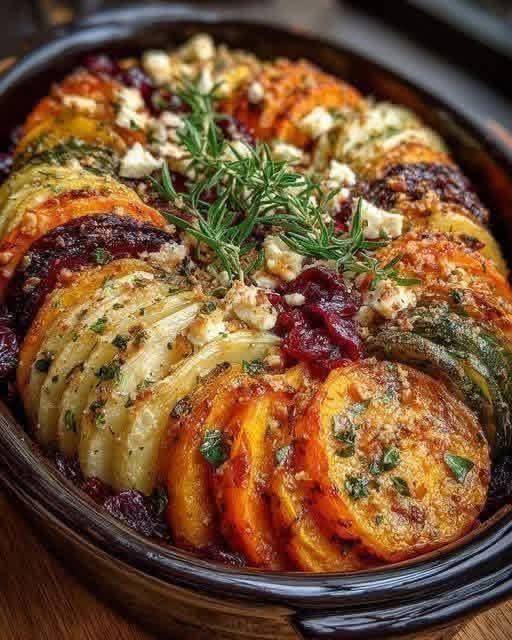
Layered sweet potatoes are one of the most satisfying baked dishes because they combine sweetness, creaminess, savory flavors, herbs, spices, cheese, and soft buttery textures into a single comforting meal. The dish is made by arranging very thin slices of sweet potatoes into repeated layers, adding rich sauce between every level, and baking slowly until everything becomes tender and deeply flavorful.
This recipe is intentionally extremely detailed and lengthy so that every small aspect is fully explained. It includes ingredient explanations, cooking science, preparation methods, layering techniques, baking guidance, texture improvements, flavor balancing, optional additions, serving ideas, storage instructions, troubleshooting advice, variations, and advanced cooking tips.
The final dish becomes creamy in the center, slightly crisp on top, aromatic from herbs and garlic, and beautifully golden after baking. Every layer absorbs the surrounding cream and seasoning, creating a balanced combination of sweetness and savory richness.
History and Inspiration Behind Layered Sweet Potatoes
Layered potato dishes have existed in many cultures for centuries. Traditional potato gratins from Europe inspired many modern layered casseroles. Sweet potatoes later became a popular substitute because of their natural sweetness, nutritional value, soft texture, and ability to caramelize beautifully during baking.
In many homes layered sweet potato dishes are especially popular during:
Holiday dinners
Family gatherings
Winter meals
Thanksgiving celebrations
Festive occasions
Weekend comfort-food dinners
Large shared meals
Potluck events
The sweetness of sweet potatoes works especially well with cream, butter, garlic, herbs, and cheese. The balance of sweet and savory flavors is what makes this dish memorable.
Total Time Breakdown
Washing and peeling vegetables: 20 minutes
Slicing potatoes: 15 minutes
Preparing sauce: 20 minutes
Preparing cheese and fillings: 10 minutes
Layering dish: 20 minutes
Covered baking time: 60 minutes
Uncovered baking time: 30 minutes
Resting time: 15 minutes
Total approximate time: 2 hours 30 minutes
Servings
Serves 8 to 12 people depending on portion size.
This recipe is large enough for family gatherings and can easily be doubled for parties or holiday meals.
Ingredient Section in Full Detail
Main Potato Ingredients
6 large orange sweet potatoes
2 white sweet potatoes
2 Yukon Gold potatoes
3 tablespoons olive oil
4 tablespoons melted butter
1 tablespoon sea salt
2 teaspoons black pepper
1 teaspoon smoked paprika
1 teaspoon regular paprika
1 teaspoon onion powder
1 teaspoon garlic powder
1 teaspoon dried thyme
1 teaspoon dried oregano
1 teaspoon cumin powder
1 teaspoon chili flakes
1 tablespoon fresh rosemary finely chopped
1 tablespoon fresh parsley chopped
1 teaspoon brown sugar
1 teaspoon honey
1 teaspoon mustard powder
Explanation of Potato Choices
Orange sweet potatoes provide sweetness and creaminess.
White sweet potatoes add firmness and prevent the dish from becoming overly soft.
Yukon Gold potatoes create a buttery texture and help absorb cream sauce evenly.
Combining multiple potato types creates complexity in texture and flavor.
Cream Sauce Ingredients
5 tablespoons butter
1 large onion finely diced
8 garlic cloves minced
4 tablespoons flour
4 cups whole milk
2 cups heavy cream
1 cup chicken broth or vegetable broth
1 teaspoon salt
1 teaspoon pepper
1 teaspoon thyme
1 teaspoon oregano
1 teaspoon smoked paprika
1 teaspoon chili powder
1 teaspoon mustard powder
1 teaspoon nutmeg
1 teaspoon Italian seasoning
2 tablespoons cream cheese
2 tablespoons sour cream
1 tablespoon parmesan cheese
1 teaspoon Worcestershire sauce
Cheese Layer Ingredients
2 cups mozzarella cheese grated fresh
2 cups sharp cheddar cheese grated
1 cup parmesan cheese grated
1 cup Monterey Jack cheese grated
1 cup Gruyère cheese grated
1 cup provolone cheese grated
Explanation of Cheese Selection
Mozzarella creates stretchiness.
Cheddar adds sharp flavor.
Parmesan adds salty richness.
Gruyère creates nutty depth.
Monterey Jack melts smoothly.
Provolone contributes creamy texture.
Optional Vegetable Additions
1 cup sautéed mushrooms
1 cup spinach
1 cup kale
1 cup caramelized onions
1 cup roasted corn
1 chopped red bell pepper
1 chopped yellow bell pepper
1 chopped green bell pepper
1 chopped jalapeño
Optional Protein Additions
1 cup shredded chicken
1 cup cooked turkey
1 cup cooked minced beef
1 cup crumbled sausage
1 cup diced smoked chicken
Optional Crunch Topping
1 cup breadcrumbs
2 tablespoons melted butter
2 tablespoons parmesan cheese
1 teaspoon garlic powder
1 teaspoon parsley
Kitchen Equipment Detailed List
Large sharp knife
Vegetable peeler
Cutting board
Mandoline slicer
Large bowls
Whisk
Saucepan
Large skillet
Cheese grater
Measuring spoons
Measuring cups
9×13 inch baking dish
Aluminum foil
Oven mitts
Wooden spoon
Serving spatula
Importance of Proper Slicing
One of the most important parts of this recipe is slicing the potatoes correctly. Thick slices create uneven cooking and can leave the center undercooked. Thin slices allow cream and seasoning to move through every layer.
Ideal thickness:
2 millimeters to 3 millimeters
If slices are thinner than this, they may become too soft and break apart completely. If thicker, they may remain firm after baking.
Using a mandoline slicer is strongly recommended for consistent layers.
Step 1: Cleaning and Preparing the Potatoes
Wash all potatoes thoroughly under cold running water.
Use your hands or a vegetable brush to remove dirt.
Peel every potato carefully.
After peeling, rinse once again.
Place peeled potatoes on clean towels.
Step 2: Slicing the Potatoes
Slice potatoes into thin rounds.
Try to maintain consistent thickness.
Separate larger slices from smaller ones because larger slices are often used at the bottom and smaller slices fit well near edges.
Place sliced potatoes into cold water immediately to prevent browning.
Allow potatoes to soak for 10 to 15 minutes.
Why soaking matters:
It removes excess starch.
It helps layers remain distinct.
It prevents discoloration.
It improves texture.
After soaking, drain thoroughly.
Pat completely dry with towels.
Excess water can thin the cream sauce and reduce flavor concentration.
Step 3: Seasoning the Potato Slices
In a very large bowl combine:
Olive oil
Melted butter
Salt
Black pepper
Paprika
Smoked paprika
Garlic powder
Onion powder
Oregano
Thyme
Rosemary
Parsley
Cumin
Brown sugar
Honey
Mustard powder
Chili flakes
Mix until fully combined.
Add potato slices gradually.
Gently toss using hands or large spoons.
Ensure every slice receives some seasoning.
Allow potatoes to rest for 15 minutes.
This resting period allows seasoning to penetrate slightly into the potato surfaces.
Step 4: Preparing Optional Vegetables
Mushrooms
Heat skillet with oil.
Cook mushrooms over medium-high heat until moisture evaporates.
Season lightly with salt and pepper.
Caramelized Onions
Cook sliced onions slowly in butter for 25 minutes until deeply golden.
Spinach or Kale
Sauté briefly until wilted.
Bell Peppers
Cook lightly for 3 to 4 minutes to soften slightly.
Jalapeños
Slice thinly for even heat distribution.
Step 5: Preparing Optional Proteins
If adding proteins, cook them fully before layering.
Chicken
Season with salt, pepper, garlic powder, and paprika.
Cook and shred.
Beef
Cook minced beef until browned.
Drain excess fat.
Season lightly.
Turkey
Use cooked shredded turkey leftovers.
Sausage
Cook and crumble completely.
Step 6: Making the Cream Sauce
Place large saucepan over medium heat.
Add butter.
Allow butter to melt gently.
Add diced onions.
Cook 7 to 8 minutes until translucent.
Add garlic.
Cook 1 minute.
Add flour gradually while whisking continuously.
Cook flour mixture for 2 minutes.
This step removes raw flour taste.
Slowly add milk in small amounts while whisking continuously.
Once smooth, add cream and broth.
Continue stirring.
Allow mixture to heat slowly.
Add:
Salt
Pepper
Nutmeg
Mustard powder
Paprika
Smoked paprika
Thyme
Oregano
Italian seasoning
Chili powder
Reduce heat.
Add cream cheese and sour cream.
Whisk until smooth.
Add parmesan cheese.
Stir until melted.
The sauce should coat the back of a spoon.
Not too thick.
Not too thin.
If too thick:
Add extra milk.
If too thin:
Simmer longer.
Taste carefully.
The sauce should taste slightly stronger than desired because potatoes absorb seasoning during baking.
Step 7: Preparing the Cheese Mixture
Combine all grated cheeses in a large bowl.
Mix thoroughly.
Reserve one and a half cups for final topping.
Freshly grated cheese melts better than pre-packaged shredded cheese.
Pre-shredded cheese often contains anti-caking ingredients that affect smooth melting.
Step 8: Preparing the Baking Dish
Preheat oven to 375°F or 190°C.
Grease baking dish thoroughly using butter.
Optional flavor enhancement:
Rub garlic cloves around baking dish interior.
This creates subtle garlic aroma.
Step 9: Creating the First Layer
Arrange largest potato slices at bottom.
Overlap slightly like roof tiles.
Avoid stacking randomly.
Neat layering helps even cooking.
After first layer:
Add several spoonfuls cream sauce.
Spread evenly.
Add handful cheese mixture.
Add small amount optional vegetables or protein if using.
Repeat process slowly and carefully.
Step 10: Building Multiple Layers
Continue creating repeated layers.
Potatoes
Cream sauce
Cheese
Vegetables
Protein
Repeat until ingredients are used.
Press layers gently occasionally to remove air gaps.
Try to distribute ingredients evenly.
Avoid placing all fillings in one area.
Step 11: Final Top Layer
Finish with potatoes arranged attractively.
Pour remaining sauce slowly over entire dish.
Allow sauce to settle into edges.
Top generously with reserved cheese.
Add extra parmesan.
Optional breadcrumb topping can now be added.
Breadcrumb Topping Preparation
Mix:
Breadcrumbs
Butter
Parmesan
Garlic powder
Parsley
Sprinkle lightly over top.
This creates crispy golden crust.
Step 12: Covered Baking Phase
Cover tightly with aluminum foil.
Place dish onto center oven rack.
Bake covered for 60 minutes.
Why covered baking matters:
Steam softens potatoes.
Moisture remains trapped.
Cream absorbs gradually.
Potatoes cook evenly.
Step 13: Uncovered Baking Phase
Remove foil carefully.
Bake additional 25 to 35 minutes.
Watch carefully near end.
Desired final appearance:
Golden brown top
Bubbling edges
Crispy cheese spots
Soft center
Insert knife into center.
Knife should slide easily.
If potatoes remain firm:
Continue baking 10 to 15 more minutes.
Step 14: Resting After Baking
Remove dish from oven.
Do not cut immediately.
Allow resting for at least 15 minutes.
Why resting is important:
Layers stabilize.
Sauce thickens slightly.
Slices hold shape better.
Serving becomes cleaner.
Skipping resting time may cause layers to collapse.
Step 15: Garnishing
Top with:
Fresh parsley
Fresh thyme
Black pepper
Extra parmesan
Chili flakes
Optional drizzle:
Small amount melted butter.
Texture Analysis
Top Layer
Crispy
Golden
Cheesy
Slight crunch
Middle Layers
Creamy
Soft
Rich
Tender
Bottom Layer
Deeply flavorful
Slightly caramelized
Rich with absorbed sauce
Flavor Balance Analysis
Sweet potatoes provide sweetness.
Garlic and onion create savory depth.
Cheese adds richness and saltiness.
Herbs create freshness and aroma.
Nutmeg enhances warmth.
Paprika contributes smokiness.
Mustard powder balances creaminess.
Cream sauce creates luxurious texture.
Serving Suggestions in Detail
Main Dinner Pairings
Roast chicken
Grilled steak
Baked fish
Roasted turkey
Barbecue dishes
Lamb chops
Vegetarian Pairings
Green salad
Tomato soup
Roasted broccoli
Garlic mushrooms
Grilled asparagus
Bread Pairings
Garlic bread
Herb rolls
Toasted sourdough
Dinner rolls
Breakfast Serving Idea
Serve with:
Fried eggs
Turkey sausage
Fresh avocado
Holiday Serving Suggestions
Layered sweet potatoes are excellent for:
Thanksgiving
Eid dinners
Winter gatherings
Family celebrations
Birthday meals
Large buffets
How to Make Individual Portions
Instead of one large baking dish:
Use ramekins or small baking dishes.
Create mini layered stacks.
Reduce baking time slightly.
These individual servings look elegant for dinner parties.
Advanced Flavor Enhancements
Roasted Garlic Version
Roast entire garlic bulbs until soft.
Mix roasted garlic into cream sauce.
Brown Butter Version
Cook butter until golden and nutty before adding to sauce.
Herb Infused Cream
Heat cream with rosemary and thyme before adding.
Smoked Version
Add smoked cheese and smoked paprika.
Spicy Version
Add:
Extra chili flakes
Cayenne pepper
Hot sauce
Pepper jack cheese
Jalapeños
Sweet and Savory Version
Add:
Maple syrup
Candied pecans
Crispy bacon
Caramelized onions
Mediterranean Version
Add:
Feta cheese
Olives
Sun-dried tomatoes
Spinach
Basil
Mexican Inspired Version
Add:
Corn
Beans
Taco beef
Cilantro
Jalapeños
Pepper jack cheese
French Inspired Version
Use Gruyère heavily and add thyme with caramelized onions.
Italian Inspired Version
Add marinara sauce between some layers and include basil.
Healthy Version
Use low-fat milk.
Reduce cheese quantity.
Use olive oil instead of butter.
Add more vegetables.
Skip breadcrumb topping.
Vegan Version Full Guide
Use:
Vegan butter
Plant milk
Cashew cream
Vegan cheese
Vegetable broth
Cashew Cream Recipe
Blend:
1 cup soaked cashews
1 cup water
Garlic
Salt
Nutritional yeast
Blend until smooth.
Use as cream substitute.
Storage Instructions
Cool completely before storing.
Transfer into airtight containers.
Refrigerate up to 4 days.
Reheating in Oven
Cover with foil.
Bake at 350°F until hot.
Reheating in Microwave
Heat individual portions gradually.
Avoid overheating.
Freezing Instructions
Before Baking
Assemble entire dish.
Wrap tightly.
Freeze up to 2 months.
After Baking
Cool completely.
Freeze portions separately.
Thaw overnight before reheating.
Common Problems and Solutions
Problem: Potatoes still hard
Cause:
Slices too thick
Insufficient baking time
Solution:
Bake longer covered.
Problem: Sauce too watery
Cause:
Potatoes not dried properly
Too much liquid
Solution:
Simmer sauce longer next time.
Problem: Top burns too quickly
Cause:
High oven temperature
Solution:
Cover loosely with foil.
Problem: Bland flavor
Cause:
Insufficient seasoning
Solution:
Season every layer lightly.
Problem: Layers collapse
Cause:
Cut too early
Solution:
Rest longer before serving.
Nutritional Discussion
Sweet potatoes contain:
Vitamin A
Fiber
Potassium
Vitamin C
Antioxidants
Compared to regular potatoes they provide greater natural sweetness and more beta carotene.
Approximate Nutrition Per Serving
Calories: 480 to 650
Protein: 18 grams
Carbohydrates: 42 grams
Fat: 32 grams
Fiber: 6 grams
Sugar: 10 grams
Calcium: High
Iron: Moderate
Cooking Science Behind the Recipe
Sweet potatoes contain natural sugars that caramelize during baking.
The cream sauce surrounds starch molecules and creates smooth texture.
Cheese proteins melt and brown through heat exposure.
Slow baking allows moisture movement between layers.
Nutmeg enhances dairy flavors.
Mustard powder balances richness.
Flour thickens the sauce by absorbing liquid and expanding.
How Professional Chefs Improve Layered Dishes
Even slicing
Strong seasoning
Layer consistency
Resting before serving
Combining multiple cheeses
Balancing textures
Using fresh herbs
Controlling moisture carefully
Ways to Make the Dish More Luxurious
Add truffle oil.
Use Gruyère and aged parmesan.
Add roasted garlic.
Use fresh cream.
Add sautéed wild mushrooms.
Include fresh thyme and rosemary.
Top with crispy shallots.
Family Meal Ideas Using Leftovers
Breakfast hash
Chop leftovers and cook in skillet with eggs.
Stuffed wraps
Place warmed portions into tortillas.
Soup addition
Add cubes into creamy vegetable soup.
Casserole remix
Mix leftovers with vegetables and rebake.
Party Presentation Ideas
Serve in cast iron dish.
Add fresh herbs on top.
Use decorative baking dishes.
Create individual ramekin portions.
Pair with elegant salad.
Holiday Table Presentation
Place dish in center of table.
Garnish generously with herbs.
Serve alongside roasted meats.
Use warm lighting for golden appearance.
Final Thoughts
Layered sweet potatoes are comforting, rich, beautiful, and versatile. The recipe rewards patience because careful layering, proper seasoning, and slow baking create deep flavor and luxurious texture impossible to achieve quickly.
The creamy sauce melts into every slice while the cheese forms a golden crust on top. The natural sweetness of the potatoes balances perfectly against garlic, herbs, spices, and savory dairy richness.
Whether served during holidays, family dinners, celebrations, or cold evenings, this dish creates warmth, comfort, and satisfaction. Every bite contains soft layers, creamy sauce, aromatic herbs, melted cheese, and caramelized sweetness that make the recipe unforgettable.