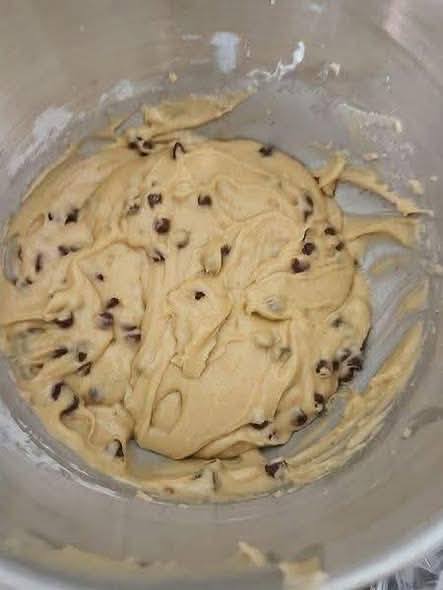
Thermomix chocolate chip cookies are one of the most rewarding homemade baked treats because they combine simplicity with professional-quality results. A Thermomix allows the baker to mix ingredients evenly, cream butter and sugar efficiently, and create consistent cookie dough with less effort than traditional hand-mixing methods. The result can be soft, chewy, thick, crispy, gooey, caramelized, or bakery-style depending on how the ingredients and baking techniques are adjusted.
This extremely detailed recipe guide explains not only how to make Thermomix chocolate chip cookies, but also why every ingredient matters, how each step affects texture, how to customize flavor, how to troubleshoot mistakes, how to create bakery-style results, and how to store and freeze the dough for future baking.
The goal of this guide is to provide a complete master recipe and professional baking knowledge so you can repeatedly produce outstanding chocolate chip cookies in your own kitchen.
Understanding Chocolate Chip Cookies
Chocolate chip cookies may appear simple, but they are actually one of the most scientifically balanced baked goods. Small changes in ingredient ratios, temperature, moisture, sugar type, flour amount, mixing time, and baking duration dramatically affect the final result.
For example:
- More brown sugar creates softer cookies
- More white sugar creates crispier cookies
- Melted butter creates flatter cookies
- Chilled butter creates thicker cookies
- Extra flour creates dense cookies
- Underbaking creates gooey centers
- Overmixing creates tough cookies
- Long chilling creates deeper flavor
A Thermomix helps control many of these variables because it mixes evenly and efficiently.
The Ideal Texture
This recipe aims to produce cookies with:
- Crisp golden edges
- Soft chewy centers
- Rich buttery flavor
- Deep caramel notes
- Generous chocolate distribution
- Thick bakery-style appearance
- Slightly gooey middle
- Balanced sweetness
Yield Information
This recipe can produce:
- 24 medium cookies
- 18 large cookies
- 12 giant bakery-style cookies
Depending on scoop size.
Preparation Time
- Ingredient preparation: 15 minutes
- Mixing time: 10 minutes
- Chilling time: 30 minutes to 24 hours
- Baking time: 10–15 minutes
- Cooling time: 20 minutes
Total approximate time:
1 hour to 24 hours depending on chilling duration.
Ingredient List
Dry Ingredients
- 320 g all-purpose flour
- 1 tablespoon cornstarch
- 1 teaspoon baking soda
- 1/2 teaspoon baking powder
- 1 teaspoon fine sea salt
Wet Ingredients
- 170 g unsalted butter softened
- 120 g dark brown sugar
- 100 g white granulated sugar
- 2 large eggs
- 2 teaspoons vanilla extract
Chocolate Ingredients
- 200 g semi-sweet chocolate chips
- 100 g dark chocolate chunks
- 50 g milk chocolate pieces
Optional Additions
- 1 teaspoon espresso powder
- 1 teaspoon molasses
- 1 tablespoon milk powder
- 1/2 teaspoon cinnamon
- flaky sea salt for topping
Detailed Ingredient Explanation
Flour
Flour provides structure.
All-purpose flour is ideal because it creates balance between softness and chewiness.
Bread flour creates chewier cookies due to higher protein.
Cake flour creates softer, more delicate cookies.
For best results:
- Sift flour before use
- Weigh flour accurately
- Avoid packing flour tightly
Too much flour leads to:
- Dry cookies
- Dense texture
- Reduced spread
Too little flour leads to:
- Excess spreading
- Thin cookies
- Greasy texture
Cornstarch
Cornstarch softens the crumb and creates bakery-style thickness.
It also reduces gluten development slightly, helping cookies remain tender.
Baking Soda
Baking soda helps cookies spread and brown properly.
It reacts with acidic ingredients such as brown sugar.
Baking Powder
Baking powder adds slight lift and contributes to softness.
Salt
Salt balances sweetness and intensifies chocolate flavor.
Without salt, cookies often taste flat.
Sea salt is preferred for cleaner flavor.
Butter
Butter is one of the most important ingredients.
It affects:
- Flavor
- Texture
- Spread
- Moisture
- Browning
Softened butter should be cool but pliable.
Butter that is too warm causes excessive spreading.
Butter that is too cold does not cream properly.
European-style butter with higher fat content creates richer cookies.
Brown Sugar
Brown sugar contains molasses which contributes:
- Moisture
- Chewiness
- Caramel flavor
Dark brown sugar creates deeper flavor than light brown sugar.
White Sugar
White sugar encourages:
- Crispy edges
- Spreading
- Caramelization
The balance between white and brown sugar determines texture.
Eggs
Eggs provide:
- Structure
- Moisture
- Richness
- Stability
Room-temperature eggs blend more smoothly.
Cold eggs can cause butter to seize.
Vanilla Extract
Vanilla deepens sweetness and complements chocolate.
Pure vanilla extract is preferred over imitation vanilla.
Chocolate
Using multiple types of chocolate creates complexity.
Chocolate chips hold shape during baking.
Chocolate chunks melt into pools.
Dark chocolate balances sweetness.
Milk chocolate adds creaminess.
Optional Espresso Powder
Espresso powder does not make cookies taste like coffee.
Instead, it enhances chocolate flavor and depth.
Optional Molasses
Molasses creates:
- Richness
- Chewiness
- Dark caramel flavor
Only a small amount is needed.
Thermomix Equipment Setup
You will need:
- Thermomix machine
- Baking trays
- Baking paper
- Cookie scoop
- Cooling rack
- Spatula
- Measuring scale
Preparing Ingredients Properly
Butter Temperature
Butter should be softened but not melted.
Correct butter texture:
- Pressable with finger
- Still cool
- Holds shape
Improper butter temperature is one of the most common causes of cookie failure.
Egg Temperature
Room-temperature eggs mix better.
Place eggs in warm water for 10 minutes if cold.
Chocolate Preparation
For best texture:
- Use mixed chocolate sizes
- Chop some chocolate roughly
- Leave some large chunks
Irregular chocolate pieces create bakery-style appearance.
Step-by-Step Thermomix Instructions
Step 1: Mix Dry Ingredients
Place into Thermomix bowl:
- Flour
- Cornstarch
- Baking soda
- Baking powder
- Salt
Mix:
5 seconds / Speed 5
Transfer to separate bowl.
This evenly distributes leavening agents.
Step 2: Cream Butter and Sugars
Add to Thermomix bowl:
- Butter
- Brown sugar
- White sugar
Mix:
20 seconds / Speed 4
Scrape bowl.
Mix again:
20 seconds / Speed 4
The mixture should become:
- Creamy
- Pale
- Fluffy
Creaming incorporates air into dough.
Proper creaming improves texture significantly.
Step 3: Add Eggs and Vanilla
Add:
- Eggs
- Vanilla
- Espresso powder if using
- Molasses if using
Mix:
15 seconds / Speed 4
Scrape bowl.
Mix briefly again if needed.
Mixture should look smooth and glossy.
Step 4: Add Dry Ingredients
Return flour mixture to Thermomix bowl.
Mix:
15 seconds / Speed 3
Then:
5–8 seconds / Knead mode
Do not overmix.
Overmixing develops gluten excessively.
This creates tough cookies.
Step 5: Add Chocolate
Add:
- Chocolate chips
- Chocolate chunks
Mix:
Reverse mode
10 seconds / Speed 2
Alternatively fold manually.
Step 6: Chill Dough
Transfer dough to bowl.
Cover tightly.
Chill minimum:
30 minutes
Ideal chilling:
12–24 hours
Benefits of chilling:
- Better flavor
- Reduced spreading
- Thicker cookies
- Improved texture
- Enhanced caramelization
Professional bakeries often chill dough overnight.
Understanding Dough Chilling
Chilling changes the cookie dramatically.
During chilling:
- Flour hydrates
- Fat solidifies
- Sugars absorb moisture
- Flavor compounds develop
Freshly mixed dough tastes different from aged dough.
24-hour chilled dough often produces superior cookies.
Step 7: Preheat Oven
Preheat:
175°C fan forced
or
180°C conventional
Oven accuracy matters greatly.
Use oven thermometer if possible.
Step 8: Shape Dough
Use scoop or scale.
Medium cookies:
40–50 g dough
Large bakery cookies:
70–100 g dough
Do not flatten excessively.
Tall dough mounds create thicker cookies.
Press extra chocolate pieces on top for attractive appearance.
Step 9: Baking Process
Bake medium cookies:
10–12 minutes
Bake large cookies:
13–15 minutes
Signs cookies are ready:
- Golden edges
- Slightly soft center
- Puffy appearance
Centers continue baking after removal.
Underbaking slightly improves softness.
Step 10: Cooling Process
Leave cookies on tray:
5–10 minutes
Transfer to rack afterward.
Fresh cookies are fragile immediately after baking.
Cooling allows structure to set.
Advanced Baking Science
Why Cookies Spread
Cookies spread because butter melts during baking.
Factors increasing spread:
- Warm dough
- Low flour
- High sugar
- Thin baking trays
Factors reducing spread:
- Chilled dough
- More flour
- Cooler butter
- Higher baking temperature
Caramelization
Sugars caramelize during baking.
This creates:
- Golden color
- Rich flavor
- Crispy edges
Maillard Reaction
Proteins and sugars react under heat.
This creates:
- Toasted flavor
- Brown color
- Complex aroma
Bakery-Style Cookie Secrets
Professional bakeries use several techniques.
Large Dough Portions
Large cookies bake differently.
Centers remain softer while edges crisp.
Overnight Chilling
Extended chilling deepens flavor dramatically.
Mixed Chocolate
Using chopped chocolate instead of only chips creates melted pools.
Salt Topping
Flaky sea salt enhances sweetness and balances richness.
Slight Underbaking
Removing cookies before fully set creates gooey centers.
Brown Butter Variation
Brown butter transforms chocolate chip cookies.
How to Brown Butter
Place butter in saucepan.
Cook over medium heat.
Butter foams then develops golden brown specks.
Smell becomes nutty and caramel-like.
Cool before using.
Brown Butter Flavor
Brown butter adds:
- Nutty notes
- Caramel complexity
- Rich aroma
- Deep flavor
Many bakery cookies use brown butter.
Double Chocolate Variation
Replace:
40 g flour
With:
40 g cocoa powder
Add:
White chocolate chips
Result:
Rich chocolate cookies with gooey centers.
Triple Chocolate Variation
Use:
- Dark chocolate
- Milk chocolate
- White chocolate
Creates varied sweetness and texture.
Nut Variations
Excellent additions:
- Walnuts
- Pecans
- Hazelnuts
- Almonds
- Macadamias
Toast nuts before adding.
Toasting improves flavor significantly.
Oatmeal Chocolate Chip Version
Replace:
80 g flour
With:
80 g rolled oats
Results:
- Chewier texture
- Rustic appearance
- More hearty flavor
Coconut Variation
Add:
80 g shredded coconut
This creates:
- Tropical flavor
- Slight chewiness
- Sweet aroma
Peanut Butter Variation
Add:
120 g peanut butter
Reduce butter slightly.
Results:
- Rich nutty flavor
- Dense chewy texture
Stuffed Cookies
Large cookies can be stuffed with:
- Nutella
- Caramel
- Peanut butter
- Marshmallow
- Chocolate ganache
Freeze filling before stuffing.
Caramel-Stuffed Cookies
Place frozen caramel center inside dough ball.
Bake carefully.
Centers become molten and rich.
Ice Cream Sandwich Cookies
Use large soft cookies.
Cool completely.
Add ice cream between cookies.
Freeze briefly before serving.
Storage Instructions
Room Temperature Storage
Store in airtight container:
Up to 5 days
Add bread slice to maintain softness.
Refrigerating Dough
Cookie dough may remain refrigerated:
Up to 72 hours
Flavor improves over time.
Freezing Dough
Scoop dough balls first.
Freeze on tray.
Transfer to freezer bag.
Store:
Up to 3 months
Bake directly from frozen.
Add:
2–4 minutes baking time.
Freezing Baked Cookies
Cool completely before freezing.
Separate layers with parchment paper.
Reheating Cookies
Microwave:
10–15 seconds
Or oven:
150°C for 4 minutes
This restores softness.
Common Problems and Solutions
Cookies Too Flat
Causes:
- Butter too warm
- Dough not chilled
- Too little flour
Solutions:
- Chill dough longer
- Measure flour accurately
- Use cooler butter
Cookies Too Thick
Causes:
- Too much flour
- Dough too cold
Solutions:
- Slightly flatten dough
- Reduce flour slightly
Cookies Too Dry
Causes:
- Overbaking
- Too much flour
Solutions:
- Reduce baking time
- Weigh ingredients
Cookies Too Sweet
Solutions:
- Increase dark chocolate
- Add flaky salt
- Reduce white sugar slightly
Uneven Baking
Causes:
- Uneven dough size
- Oven hotspots
Solutions:
- Rotate trays
- Use scoop
Understanding Cookie Texture Types
Thin Crispy Cookies
Characteristics:
- Crunchy
- Golden
- Caramelized
To achieve:
- More white sugar
- Melted butter
- Less flour
Thick Chewy Cookies
Characteristics:
- Soft center
- Dense texture
- Rich flavor
To achieve:
- More brown sugar
- Chilled dough
- Extra flour
Gooey Cookies
Characteristics:
- Soft middle
- Melted chocolate
- Slight underbaking
To achieve:
- Bake shorter
- Use large dough balls
Professional Presentation Tips
Chocolate on Top
Reserve chocolate pieces for tops.
Visible chocolate improves appearance.
Circular Cookie Technique
Immediately after baking:
Use round cutter to shape cookies.
Creates perfect circles.
Sea Salt Finish
Add flaky salt while warm.
Enhances flavor dramatically.
Layered Chocolate
Use different chocolate sizes for bakery appearance.
Serving Suggestions
Serve with:
- Cold milk
- Coffee
- Hot chocolate
- Vanilla ice cream
- Salted caramel sauce
Cookies also pair well with:
- Espresso
- Tea
- Dessert platters
Holiday Versions
Eid Cookies
Add:
- Pistachios
- Cardamom
- White chocolate drizzle
Winter Cookies
Add:
- Cinnamon
- Nutmeg
- Dark chocolate
Summer Cookies
Add:
- Coconut
- White chocolate
- Macadamia nuts
Kids’ Version
Use:
- Mini chocolate chips
- Colorful candies
- Marshmallows
Gourmet Version
Use:
- Brown butter
- Sea salt
- Premium dark chocolate
- Vanilla bean paste
Healthier Adaptations
Reduced Sugar Version
Reduce sugar slightly.
Use dark chocolate.
Whole Wheat Version
Replace part of flour with whole wheat flour.
Texture becomes heartier.
Gluten-Free Version
Use gluten-free flour blend.
Add xanthan gum if needed.
Dairy-Free Version
Use:
- Vegan butter
- Dairy-free chocolate
Egg-Free Version
Replace eggs with:
- Flax eggs
- Applesauce
Texture changes slightly.
Large Batch Instructions
For parties or events:
Double recipe quantities carefully.
Avoid overcrowding Thermomix bowl.
Mix in batches if necessary.
Gift Packaging Ideas
Cookies can be packaged in:
- Decorative tins
- Clear gift bags
- Cookie boxes
- Glass jars
Layer with parchment paper.
Why Homemade Cookies Taste Better
Homemade cookies often outperform store-bought because:
- Fresher ingredients
- Better butter quality
- No preservatives
- Adjustable sweetness
- Freshly baked aroma
Final Expert Tips
- Always weigh ingredients
- Chill dough whenever possible
- Underbake slightly
- Use quality chocolate
- Rotate trays
- Let cookies cool properly
- Experiment with chocolate combinations
- Keep notes on your preferred texture
Complete Summary
These Thermomix chocolate chip cookies combine:
- Rich butter flavor
- Soft chewy texture
- Crispy edges
- Melted chocolate pockets
- Deep caramel notes
- Bakery-style appearance
The Thermomix simplifies preparation while maintaining excellent consistency and texture.
By mastering:
- Ingredient balance
- Dough temperature
- Chilling time
- Baking duration
you can create cookies that rival professional bakeries.
This recipe is endlessly customizable and suitable for everyday baking, celebrations, holidays, gifting, family gatherings, or special dessert presentations.
With practice and experimentation, you can tailor this master recipe into your own signature chocolate chip cookie style.