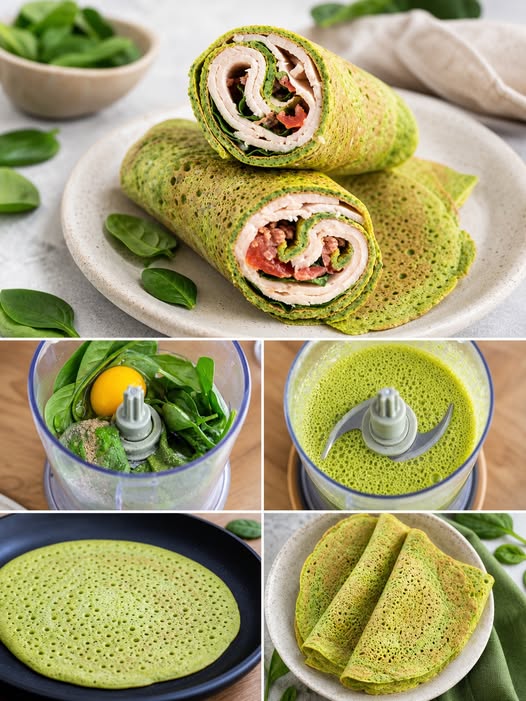
Keto Spinach Wraps are one of the most practical low-carb flatbread alternatives you can make at home, especially if you are following a Ketogenic Diet where keeping carbohydrates very low while maintaining satiety is important. These wraps are soft, flexible, mildly earthy in flavor, and naturally green because of blended Spinach. What makes them especially useful is that they behave like real tortillas when prepared correctly, meaning you can fold them, roll them, and stuff them without breaking, while still staying keto-friendly.
This is a very detailed, extended version of the recipe that also explains the science behind ingredients, texture control, troubleshooting, variations, meal prep strategy, and professional kitchen tips so you can consistently get perfect wraps every time.
The foundation of this recipe is spinach, eggs, and low-carb flour alternatives. Spinach provides moisture, fiber, color, and a mild vegetal taste. Eggs provide structure and protein, acting like a natural binder when heated. Almond flour and coconut flour absorb excess moisture and give body, replacing gluten which normally provides elasticity in wheat wraps. Cream cheese or similar dairy fat adds softness and prevents the wraps from becoming too dry or brittle. Olive oil or butter contributes tenderness and improves pan release.
Ingredients in full detailed form
Fresh spinach leaves, 2 to 3 packed cups, thoroughly washed
Eggs, 4 large at room temperature
Cream cheese, 4 tablespoons softened to room temperature for easy blending
Almond flour, 1/2 cup finely ground and sifted if possible for smooth texture
Coconut flour, 2 tablespoons, optional but highly recommended for structure control
Olive oil or melted butter, 1 tablespoon for moisture and flexibility
Salt, 1/2 teaspoon to enhance overall flavor
Black pepper, 1/4 teaspoon for mild heat and aroma
Garlic powder, 1/2 teaspoon for depth of flavor
Baking powder, 1/2 teaspoon to create slight airiness and prevent dense texture
Water, 2 to 4 tablespoons only if required for consistency adjustment
Optional enhancements depending on preference and dietary variation
Parmesan cheese, 2 tablespoons for richer savory taste and better browning
Chili flakes for heat
Italian seasoning or oregano for herbal aroma
Turmeric pinch for deeper color and anti-inflammatory boost
Ground flaxseed 1 tablespoon to increase fiber and improve binding
Chia seeds 1 teaspoon if you want extra thickness and nutrition boost
Step one is preparing the spinach correctly because moisture control is the most important factor in successful wraps. Spinach naturally holds a lot of water, and if it is not properly dried, the batter becomes too loose and the wraps tear during cooking.
Wash Spinach thoroughly at least two or three times. After washing, either blanch it quickly or use it raw depending on flavor preference. Blanching for 30 to 60 seconds in hot water then immediately placing it in cold water preserves color and reduces bitterness. After that, squeeze out as much water as physically possible using your hands or a clean cloth. This step determines whether your wraps become flexible or soggy.
Next, the blending stage is where texture is created. Add spinach, eggs, cream cheese, and olive oil into a blender. Blend until completely smooth. There should be no visible spinach fibers. The mixture should look like a thick green cream. This is important because any unblended fibers will create weak points in the wrap.
After that, add almond flour, coconut flour, salt, pepper, garlic powder, and baking powder. Blend again until everything is fully integrated. At this point, the batter should resemble thick pancake batter but still be pourable. If it is too thick, add water slowly one spoon at a time. If it is too thin, sprinkle a little almond flour and blend again.
Now comes a crucial step many people skip, which is resting the batter. Let it sit for 10 to 20 minutes. This allows coconut flour and almond flour to absorb liquid properly. It also stabilizes the mixture so the wraps cook evenly. Without this step, wraps may break or cook unevenly.
Cooking requires a non-stick pan or well-seasoned skillet. Heat should always be medium-low rather than high. High heat is one of the main reasons keto wraps fail because eggs cook too fast and become rubbery while the inside remains wet.
Lightly grease the pan with a small amount of olive oil or butter. Pour a ladle of batter into the center. Immediately tilt the pan in a circular motion so the batter spreads thinly and evenly. Thickness matters a lot here. Thin wraps are more flexible; thick wraps tend to crack.
Cook the first side for about 2 to 3 minutes. You will notice the surface gradually drying and edges lifting slightly. This is a sign that structure is forming. Do not rush flipping because undercooked wraps will tear. Once the bottom is lightly golden and the surface is set, carefully flip using a flat spatula.
Cook the second side for 1 to 2 minutes. This side usually cooks faster. Remove and place on a plate. Stack each wrap and cover them with a clean cloth. This traps steam and keeps them soft instead of drying out.
Now, understanding the science of why this works helps you improve results. Eggs act as a protein network that solidifies when heated. Almond flour provides fat and mild structure but no gluten, so flexibility comes from moisture balance. Coconut flour is extremely absorbent, so even a small amount drastically changes texture. Cream cheese adds fat and stabilizes the mixture, preventing brittleness. Spinach contributes fiber but also water, which is why drying it properly is essential.
If wraps turn out too fragile, it usually means excess moisture or insufficient binding agents. Adding one extra egg or a small amount of coconut flour fixes this. If wraps feel rubbery, it usually means they were cooked on too high heat or overcooked. If they are too thick and not foldable, the batter was not spread thin enough or was too dense.
For flavor customization, you can turn these wraps into multiple styles. A Mediterranean version includes oregano, parmesan, and olive oil. A spicy version includes chili flakes and garlic. A high-protein version includes extra egg whites. A dairy-free version replaces cream cheese with blended tofu or coconut cream, although texture becomes slightly less rich.
These wraps are extremely useful for meal prep. Once cooled, place parchment paper between each wrap and store in an airtight container. They last about three days in the refrigerator. For longer storage, freeze them individually. When reheating, use a pan on low heat for 20 to 40 seconds per side. Avoid microwaving for long periods because it can make them chewy.
Filling options are almost unlimited. You can use grilled chicken mixed with mayonnaise, boiled eggs with mustard, tuna with olive oil, paneer with spices, avocado with cucumber, or scrambled eggs with cheese. Because the wrap itself is neutral, it adapts to both savory and mildly spicy fillings.
A professional tip is to slightly undercook the wrap by a few seconds if you plan to reheat later. This keeps it softer after reheating. Another tip is to always let batter rest and always use room-temperature ingredients, because cold cream cheese or cold eggs can create uneven blending.
Nutritionally, these wraps are low in carbohydrates, moderate in protein, and high in healthy fats depending on how much oil or cheese is used. This balance is what makes them compatible with a Ketogenic Diet. They also provide fiber from almond flour and spinach, which helps digestion and improves satiety.
Common mistakes include not squeezing spinach enough, using high heat, flipping too early, or making batter too thin. Each of these mistakes affects structure. Mastering this recipe is mostly about controlling moisture and heat rather than complicated techniques.
If you want even softer wraps, you can add one tablespoon of yogurt or a bit more cream cheese. If you want firmer wraps for burritos, slightly increase almond flour. If you want ultra-thin crepe-like wraps, dilute batter slightly and spread it quickly in the pan.
Once you understand these adjustments, you can treat this recipe as a base formula rather than a fixed instruction, allowing you to customize it for breakfast wraps, lunch rolls, or even keto sandwich bread alternatives.
These Keto Spinach Wraps are not just a recipe but a flexible cooking method that can be adapted endlessly depending on taste, diet goals, and texture preference while staying aligned with a low-carb lifestyle.