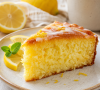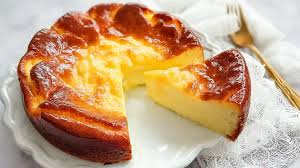
The 3-Ingredient Yogurt Cake is one of the most fascinating minimalist desserts because it transforms a handful of ordinary ingredients into something surprisingly elegant, soft, airy, creamy, and luxurious. At first glance, it may seem impossible that only yogurt, eggs, and sweetened condensed milk can create a cake with such a delicate structure, but the magic happens through careful mixing, aeration, gentle baking, and patience.
This cake is often described as a cross between a cheesecake, sponge cake, soufflé, custard, and Japanese cotton cake. It has a tender texture that trembles slightly when moved, melts softly in the mouth, and leaves behind a creamy tangy sweetness that feels comforting yet refined.
Unlike heavy butter cakes or dense cheesecakes, this yogurt cake feels light enough to enjoy after a large meal while still satisfying dessert cravings. It can be served chilled during summer, slightly warm in winter, or decorated elegantly for celebrations.
The recipe below is intentionally written in an extremely detailed and extended style so that every tiny aspect of the preparation, texture, baking science, troubleshooting, flavor development, storage, serving techniques, and variations becomes fully understandable even for complete beginners.
Introduction to the Cake
Minimal-ingredient baking has become increasingly popular because people enjoy recipes that are:
- Easy to prepare
- Affordable
- Quick to understand
- Flexible
- Reliable
- Less intimidating
However, simplicity does not always mean sacrificing flavor. In fact, many classic desserts became famous precisely because they relied on only a few ingredients handled properly.
This yogurt cake proves that idea beautifully.
The recipe uses:
- Yogurt for moisture and tanginess
- Eggs for structure and lift
- Condensed milk for sweetness and creaminess
That is all.
No flour.
No butter.
No oil.
No baking powder.
No cornstarch.
No cream cheese.
Yet the final cake still becomes rich, soft, and beautifully textured.
What Makes This Cake Special
Several characteristics make this dessert unique.
1. Extremely Simple Ingredient List
Most cakes require:
- Flour
- Sugar
- Butter
- Milk
- Vanilla
- Baking powder
- Salt
This recipe removes nearly all of those.
That simplicity makes the recipe:
- Budget-friendly
- Beginner-friendly
- Fast to prepare
- Less messy
2. Naturally Light Texture
Because whipped egg whites create the structure, the cake develops natural airiness without chemical leaveners.
The result is:
- Fluffy
- Delicate
- Soft
- Moist
- Slightly bouncy
3. Cheesecake-Like Creaminess
Although no cream cheese is used, the yogurt and condensed milk combination creates a creamy custard-like richness.
When chilled, the cake develops an even smoother texture similar to light cheesecake.
4. Versatile Serving Options
The cake can be:
- Served plain
- Decorated
- Flavored
- Layered
- Chilled
- Frozen
- Topped with fruit
- Served with tea or coffee
Complete Ingredient Breakdown
Ingredient 1: Yogurt
Yogurt is the soul of this cake.
It contributes:
- Moisture
- Protein
- Tanginess
- Creaminess
- Body
Choosing the Right Yogurt
The best yogurt for this recipe is:
- Thick
- Plain
- Unsweetened
- Full-fat
Greek yogurt is ideal because:
- It contains less water
- It has more protein
- It creates a richer cake
- It improves texture stability
Using Regular Yogurt
If only regular yogurt is available:
- Place it in a clean cloth
- Suspend it over a bowl
- Let excess liquid drain for several hours
This produces thicker yogurt suitable for baking.
Yogurt Flavor Notes
The yogurt gives the cake:
- Slight acidity
- Freshness
- Gentle tang
- Balanced sweetness
Without yogurt, the cake would taste flat and overly sweet.
Ingredient 2: Eggs
Eggs perform multiple critical roles.
They provide:
- Structure
- Stability
- Air
- Richness
- Color
Importance of Egg Separation
Separating egg whites and yolks is essential.
The yolks:
- Add richness
- Blend smoothly with yogurt
The whites:
- Trap air during whipping
- Create volume
- Help the cake rise naturally
Why Room Temperature Eggs Matter
Cold eggs whip less effectively.
Room-temperature eggs:
- Expand better
- Create more volume
- Blend smoothly
- Improve texture
Egg White Science
When whipped, egg whites form millions of tiny air bubbles.
During baking:
- The bubbles expand
- Heat sets the proteins
- The cake becomes airy
This process replaces the need for baking powder.
Ingredient 3: Sweetened Condensed Milk
Sweetened condensed milk provides:
- Sweetness
- Creaminess
- Smooth texture
- Rich flavor
Why Condensed Milk Works So Well
Condensed milk contains:
- Concentrated milk solids
- Sugar
- Minimal water
This creates:
- Dense flavor
- Smooth texture
- Silky consistency
Flavor Contribution
The condensed milk gives:
- Caramel-like depth
- Milky richness
- Soft sweetness
It balances the yogurt’s tanginess beautifully.
Equipment Needed
Although the recipe is simple, proper equipment improves results significantly.
Mixing Bowls
You need separate bowls for:
- Egg yolks
- Egg whites
- Final batter
Glass or metal bowls are preferred.
Electric Mixer
An electric mixer helps create stable whipped egg whites quickly.
Hand whisking is possible but requires more effort.
Spatula
A flexible spatula is best for folding the batter gently.
Cake Pan
A 6-inch or 7-inch round pan works well.
Smaller pans create taller cakes.
Baking Paper
Parchment paper prevents sticking and supports delicate cake removal.
Large Baking Tray
Needed for the water bath method.
Understanding the Water Bath Method
The water bath is extremely important.
It helps:
- Regulate oven temperature
- Prevent cracking
- Create humidity
- Bake evenly
Without a water bath:
- The cake may crack
- The top may brown too quickly
- The texture may become rubbery
How It Works
The hot water surrounding the cake pan creates gentle steam.
Steam protects the delicate batter from harsh direct heat.
Preparation Before Baking
Preparation is critical because the batter should be baked immediately after mixing.
Step 1: Prepare Ingredients Early
Set out:
- Eggs
- Yogurt
- Condensed milk
Allow them to reach room temperature.
Step 2: Prepare the Pan
Line the bottom and sides with parchment paper.
The paper should rise above the pan edges because the cake expands slightly.
Step 3: Preheat the Oven
Preheat to 160°C (320°F).
A stable oven temperature is essential.
Detailed Mixing Process
Separating the Eggs
Crack each egg carefully.
Place:
- Yolks in one bowl
- Whites in another
Avoid breaking yolks into the whites.
Even tiny amounts of yolk can reduce whipping ability.
Mixing the Yolks and Yogurt
Add yogurt to the yolks.
Whisk slowly until smooth.
The mixture should become:
- Creamy
- Pale
- Lump-free
Adding Condensed Milk
Pour condensed milk gradually.
Mix continuously.
The batter should become:
- Glossy
- Thick
- Smooth
- Velvety
Optional Straining
For ultra-smooth texture:
- Pass the mixture through a sieve
This removes:
- Lumps
- Yogurt graininess
- Tiny egg particles
Whipping Egg Whites
This is the most important technical step.
Stage 1: Foamy Stage
Initially:
- Large bubbles appear
- Whites become frothy
Stage 2: Soft Peaks
The foam thickens.
Peaks bend slightly when lifted.
Stage 3: Medium Peaks
The texture becomes creamier.
Peaks partially hold shape.
Stage 4: Stiff Peaks
The peaks stand upright firmly.
This is the ideal stage.
Do not overbeat until dry or clumpy.
Folding Technique
Folding preserves air.
First Addition
Add one-third of whipped whites.
Mix gently to lighten batter.
Remaining Additions
Add remaining whites gradually.
Use slow motions:
- Cut through center
- Scoop from bottom
- Lift upward
- Rotate bowl
This technique keeps the batter airy.
Pouring and Pan Preparation
Pour batter gently.
Smooth the surface lightly.
Tap once or twice to release large bubbles.
Avoid excessive tapping.
Baking Process
Place the cake pan inside the water bath.
Bake slowly.
During Baking
The cake gradually:
- Rises
- Expands
- Sets around edges
The center remains slightly jiggly.
Baking Time Variations
Baking may take:
- 50 minutes
- 60 minutes
- 70 minutes
Different ovens behave differently.
Signs of Proper Baking
The cake is ready when:
- The top becomes lightly golden
- Edges are stable
- Center jiggles slightly
- Surface appears set
A slight wobble is normal.
Cooling Process
Cooling must happen slowly.
Oven Cooling
Turn off oven.
Open door slightly.
Leave cake inside for 15–20 minutes.
Room Temperature Cooling
Remove cake.
Cool completely.
Refrigeration
Chill for at least 1 hour.
Overnight chilling produces best flavor and texture.
Texture Analysis
This cake changes texture depending on temperature.
Warm Texture
When warm:
- Soft
- Custardy
- Delicate
Chilled Texture
When cold:
- Creamier
- Firmer
- Cheesecake-like
Flavor Profile
The flavor is:
- Mild
- Milky
- Creamy
- Slightly tangy
- Delicately sweet
It is not overwhelmingly sugary.
Serving Ideas
Plain and Simple
Serve plain for minimalist elegance.
With Fruit
Excellent fruits include:
- Strawberries
- Mango
- Blueberries
- Raspberries
- Kiwi
- Peaches
With Sauces
Try:
- Chocolate sauce
- Berry compote
- Honey
- Caramel
- Lemon syrup
With Powdered Sugar
A light dusting creates elegant presentation.
Serving Temperature Options
Chilled
Most popular method.
Creates creamy cheesecake texture.
Slightly Warm
Creates soufflé-like softness.
Frozen Slightly
Creates semi-frozen mousse-like texture.
Advanced Baking Science
Protein Structure
Egg proteins coagulate during baking.
This creates structure.
Moisture Retention
Yogurt proteins help retain moisture.
Air Expansion
Whipped egg whites trap air bubbles.
Heat expands those bubbles.
Steam Action
Water bath steam prevents rapid drying.
Troubleshooting Guide
Problem: Cake Sank Excessively
Possible causes:
- Underbaking
- Overmixing
- Sudden cooling
- Weak egg whites
Problem: Dense Texture
Possible causes:
- Egg whites deflated
- Folding too aggressively
- Underwhipped whites
Problem: Cracks on Surface
Possible causes:
- Oven too hot
- No water bath
- Overbaking
Problem: Wet Interior
Possible causes:
- Excess yogurt moisture
- Insufficient baking time
Problem: Rubbery Texture
Possible causes:
- Overbaking
- Too much heat
Flavor Variations
Lemon Yogurt Cake
Add:
- Lemon zest
- Lemon juice
Creates refreshing citrus brightness.
Vanilla Yogurt Cake
Add vanilla extract.
Produces bakery-style aroma.
Coffee Yogurt Cake
Add dissolved instant coffee.
Creates mocha-like depth.
Chocolate Yogurt Cake
Add cocoa powder carefully.
Cinnamon Yogurt Cake
Add ground cinnamon.
Perfect for winter.
Coconut Yogurt Cake
Add shredded coconut.
Creates tropical flavor.
Berry Yogurt Cake
Fold berries gently into batter.
Honey Yogurt Cake
Replace part of sweetness with honey flavoring.
Orange Yogurt Cake
Add orange zest for fragrant citrus notes.
Pistachio Yogurt Cake
Top with crushed pistachios after baking.
Strawberry Yogurt Cake
Serve with fresh strawberry puree.
Mango Yogurt Cake
Excellent chilled during summer.
Seasonal Serving Ideas
Summer
Serve chilled with fresh berries.
Winter
Serve warm with cinnamon.
Spring
Serve with floral honey.
Autumn
Serve with caramel sauce.
Pairing Suggestions
This cake pairs beautifully with:
- Tea
- Coffee
- Milk
- Hot chocolate
- Fruit juice
Tea Pairings
Best teas include:
- Green tea
- Earl Grey
- Jasmine tea
- Chamomile
Coffee Pairings
Excellent with:
- Cappuccino
- Espresso
- Latte
Presentation Techniques
Minimalist Style
Serve plain on white plate.
Elegant Dessert Style
Add:
- Fruit garnish
- Mint leaves
- Sauce drizzle
Celebration Style
Decorate with whipped cream and berries.
Nutritional Perspective
Compared to many desserts, this cake:
- Uses fewer ingredients
- Contains protein from eggs and yogurt
- Contains no flour
- Contains no butter
However, condensed milk still adds sugar.
Storage Guide
Refrigerator Storage
Store covered up to 4 days.
Freezer Storage
Freeze slices individually.
Best Storage Containers
Use airtight containers.
Why People Love This Recipe
People enjoy this recipe because it is:
- Easy
- Affordable
- Foolproof
- Elegant
- Soft
- Creamy
- Flexible
Beginner Tips
Read Entire Recipe First
Preparation becomes easier.
Use Clean Equipment
Especially for egg whites.
Do Not Rush Folding
Gentle folding matters greatly.
Avoid Opening Oven Early
Temperature drops may collapse cake.
Let Cake Cool Slowly
Prevents shrinking.
Professional Baker Tips
Weigh Ingredients
Improves consistency.
Use Oven Thermometer
Many ovens run hotter than expected.
Rotate Carefully
If oven heats unevenly.
Chill Overnight
Improves flavor dramatically.
Historical Inspiration
Although modern viral versions became famous online, this style of cake resembles:
- Japanese soufflé cheesecake
- European custard cakes
- Light baked cheesecakes
Its popularity increased because of social media baking trends emphasizing simple recipes.
Texture Comparisons
This cake resembles:
- Cheesecake
- Flan
- Custard
- Soufflé
- Cotton cake
Yet remains unique.
Family-Friendly Nature
Children often love this cake because:
- Texture is soft
- Flavor is mild
- Sweetness is gentle
Budget-Friendly Advantage
Only three ingredients make it economical.
Ideal Occasions
Perfect for:
- Tea parties
- Family dinners
- Eid gatherings
- Birthdays
- Afternoon desserts
- Potlucks
Emotional Comfort Aspect
Soft creamy desserts often create emotional comfort because:
- Texture feels soothing
- Flavor is nostalgic
- Warmth feels calming
Final Conclusion
The 3-Ingredient Yogurt Cake demonstrates how simplicity can create extraordinary results. Through careful handling of yogurt, eggs, and condensed milk, an elegant dessert emerges with surprisingly luxurious texture and flavor.
The cake teaches important baking principles:
- Air creates lightness
- Gentle heat creates tenderness
- Patience improves texture
- Simplicity can still feel sophisticated
Whether served plain, chilled, decorated, flavored, or paired with fruit, this cake consistently delivers a comforting creamy experience that feels far more complex than its humble ingredient list suggests.
With practice, the recipe becomes not just a dessert but a dependable foundation for countless variations and creative presentations.