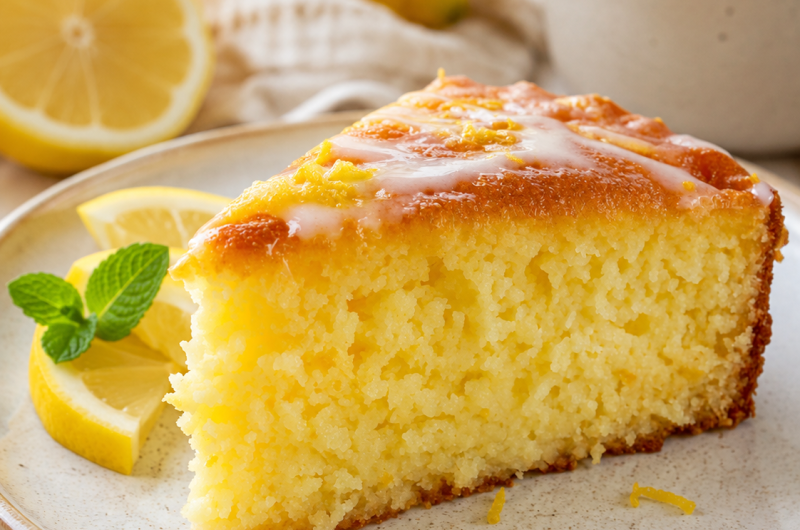
There is something especially appealing about a homemade lemon cake. The fresh citrus flavor makes it feel light and refreshing, while the right combination of yogurt and almond flour gives it enough richness to make every bite satisfying. This Flourless Lemon Greek Yogurt Cake brings those qualities together in a simple cake that does not need traditional wheat flour.
The cake is made with full-fat Greek yogurt, almond flour, fresh lemon juice, lemon zest, eggs, and a few basic baking ingredients. Once baked, it develops a soft, tender crumb with lightly golden edges. A simple lemon glaze is added after cooling, giving the cake a smooth finish and an extra layer of fresh citrus flavor.
Because almond flour replaces regular flour, the cake has a naturally tender texture and a slightly nutty taste. Greek yogurt keeps the crumb moist, while fresh lemon juice and zest provide the main flavor. The result is a cake that works just as well for an ordinary afternoon as it does for brunch or a small celebration.
What Makes This Lemon Cake Different?
- Traditional lemon cakes usually depend on wheat flour for their structure. This version takes a different approach by using almond flour along with eggs and Greek yogurt.
- Almond flour gives the cake a softer texture and natural richness. It also works particularly well with lemon because its mild nutty flavor does not overpower the citrus. Instead, it gives the lemon flavor something rich and rounded to sit against.
- Greek yogurt is another important part of the recipe. It adds moisture while also bringing a gentle tang. That tang works with the lemon juice rather than competing with it.
- The finished cake is not overly complicated. There is no separate frosting to prepare and no complicated decorating technique. Once the cake has cooled, the lemon glaze can simply be whisked together and drizzled over the top.
Keeping the Ingredients at Room Temperature
- Before starting, it helps to allow the eggs and Greek yogurt to come closer to room temperature.
- Cold ingredients can sometimes make a cake batter feel thicker and less evenly mixed. Room-temperature ingredients combine more smoothly, which is particularly useful in a recipe based on almond flour and Greek yogurt.
- There is no need to leave the ingredients out for a long time. Simply preparing them a little ahead of mixing is enough.
- The goal is a smooth batter in which the eggs, yogurt, sugar, lemon juice, zest, and vanilla are evenly incorporated.
Preparing the Cake Pan
- The recipe uses an 8-inch round cake pan.
- Since this is a tender almond flour cake, preparing the pan properly is important. Grease the pan thoroughly, then line the bottom with parchment paper.
- The parchment makes releasing the finished cake much easier. Almond flour cakes can be delicate, so it is better to make removal as simple as possible rather than trying to lift a soft cake from an unlined pan.
- Once the pan is prepared, set it aside while the batter is mixed.
Getting the Lemon Flavor Right
- The recipe uses both fresh lemon juice and lemon zest, and each one contributes something different.
- Fresh lemon juice provides acidity and a clean citrus taste. Lemon zest supplies fragrant lemon oils that give the cake a stronger aroma.
- When zesting the lemons, use only the yellow outer surface. The white layer underneath can taste bitter, so avoid grating deeply into the lemon.
- Fresh lemon is especially useful here because the cake depends on lemon for much of its character. The combination of juice and zest gives the finished dessert a much brighter flavor than relying on one or the other alone.
Mixing the Wet Ingredients
- Start by adding the full-fat Greek yogurt to a large mixing bowl.
- Add the three eggs, granulated sugar, fresh lemon juice, lemon zest, and vanilla extract.
- Whisk everything together until the mixture looks smooth and creamy. The sugar should be evenly distributed, and there should be no visible streaks of egg or yogurt.
- This stage is worth doing carefully because it creates the base of the cake. Once the almond flour is added, the batter becomes thicker, so it is easier to make sure the wet ingredients are properly combined beforehand.
- The mixture should have a pale, creamy appearance with the lemon zest evenly scattered throughout.
Adding the Almond Flour
- Once the wet ingredients are smooth, add the almond flour, baking powder, and salt.
- A rubber spatula works well for this step.
- Fold the dry ingredients into the wet mixture gently. Keep mixing until the almond flour has been incorporated and there are no dry pockets remaining.
- The batter will be thicker than a typical wheat-flour cake batter. That is completely normal. Almond flour creates a different consistency because it contains natural fats and behaves differently from wheat flour.
- There is no reason to continue mixing after everything has come together. Once the batter looks smooth and uniform, it is ready for the pan.
What the Finished Batter Should Look Like
- The batter should be thick but spreadable.
- It should not be watery or extremely loose. At the same time, it should be easy to transfer into the prepared cake pan with a spatula.
- Pour the batter into the pan and smooth the surface.
- Give the pan a few gentle taps against the counter. This can help release larger air bubbles trapped in the batter and encourages the cake to bake more evenly.
- There is no need to aggressively bang the pan. A few light taps are enough.
Baking the Cake
- Preheat the oven to 350°F (175°C) before baking.
- Place the filled cake pan on the center oven rack. The cake should bake for approximately 40 to 45 minutes.
- The exact baking time can vary slightly depending on the oven, so the appearance of the cake is important.
- As it bakes, the top should become lightly golden. The center should look set rather than wet or loose.
- A toothpick inserted into the middle should come out mostly clean. A few moist crumbs are fine. The goal is not necessarily a completely dry toothpick because baking the cake until it is completely dry can result in a less tender crumb.
Watching the Top During Baking
- Almond flour can brown fairly quickly because of its natural fat content.
- If the cake is becoming too golden before the center has finished baking, cover the top loosely with aluminum foil during the final ten minutes.
- The foil should sit loosely over the cake rather than being pressed against the surface.
- This allows the middle to continue baking while protecting the top from excessive browning.
- The finished cake should have a pleasant golden appearance rather than a very dark surface.
Cooling the Cake Properly
- When the cake is finished baking, remove it from the oven and leave it in the pan for about 15 minutes.
- This short resting period allows the cake to settle.
- After that, gently run a thin knife around the edge if needed. Carefully remove the cake from the pan and transfer it to a cooling rack.
- It is important not to rush this stage. The cake is delicate while it is warm, and moving or slicing it too soon can cause it to break.
- Allow the cake to cool completely before adding the glaze.
Making the Lemon Glaze
- The glaze is simple and takes only a few minutes to prepare.
- Add the powdered sugar, two tablespoons of fresh lemon juice, and one teaspoon of lemon zest to a small bowl.
- Whisk until smooth.
- The consistency should be thick enough to remain visible on the cake but loose enough to drizzle.
- If it seems too thick, gradually add the remaining lemon juice. The recipe allows 2–3 tablespoons of lemon juice, so the third tablespoon can be added according to the consistency needed.
- It is better to add the lemon juice gradually rather than adding all of it immediately.
Why the Cake Should Be Completely Cool
- The cake needs to be completely cool before the glaze is added.
- If glaze is poured over a warm cake, it can melt quickly and soak into the surface. While that will still add sweetness, it will not create the neat glazed appearance intended for this cake.
- A cooled cake allows the glaze to remain on top and gently move toward the edges.
- Once drizzled, some glaze can naturally run down the sides. This creates a simple finish without requiring special decorating tools.
Serving the Cake
- After the glaze has been added, allow it to set briefly before slicing.
- The cake can be served as it is because the lemon glaze provides plenty of flavor and sweetness.
- For a simple afternoon dessert, a slice can be paired with tea or coffee. The fresh citrus flavor also makes it suitable for brunch and spring or summer gatherings.
- The cake does not need a heavy topping. Its soft almond flour crumb and lemon glaze provide enough texture and flavor on their own.
Fresh Berries on the Side
- Fresh berries can be served alongside the cake if a more colorful presentation is wanted.
- Strawberries, blueberries, and raspberries all work naturally with lemon. Their sweetness and slight acidity complement the citrus flavor.
- There is no need to cover the cake with berries. A small amount placed beside each slice or arranged around the serving plate is enough.
- This keeps the cake itself as the main focus.
Serving with Whipped Cream
- Lightly whipped cream can also be served alongside individual slices.
- The creamy texture provides a nice contrast to the bright lemon glaze and tender cake.
- Instead of spreading whipped cream over the entire cake, serve a small amount beside each slice. This is especially useful when the cake needs to be stored because the cake itself can remain covered without the cream becoming part of the storage process.
Important Ingredient Notes
- Use Full-Fat Greek Yogurt
- Full-fat Greek yogurt gives the cake its rich, moist texture.
- The recipe is specifically designed around thick Greek yogurt. Regular yogurt contains more liquid and can make the batter looser.
- Low-fat Greek yogurt may also produce a slightly different texture. For the most reliable result, use the full-fat Greek yogurt listed in the recipe.
- Measure the Almond Flour Carefully
- Almond flour can become compact when stored.
- For more accurate measuring, spoon the flour into the measuring cup and level it rather than pressing it down.
- Too much almond flour can make the cake heavier and denser, while too little can affect how the cake sets.
- Finely ground almond flour is also preferable to coarse almond meal because it creates a smoother crumb.
- Do Not Overbake
- Overbaking can take away some of the moisture that makes this cake appealing.
- Begin checking around the 40-minute mark.
- The top should be lightly golden, and the center should be set. A toothpick may have a few moist crumbs attached.
- Once the cake reaches that point, it is ready to come out of the oven.
Avoid Opening the Oven Too Soon
- Try to keep the oven door closed during the first part of baking.
- Opening it too early can cause a sudden drop in temperature and may interfere with the cake’s rise.
- If the cake needs to be checked, wait until it is close to the end of the suggested baking time.
- This small step can help maintain a more even bake.
Storage at Room Temperature
- The cake can be stored in an airtight container at room temperature for up to two days, provided the kitchen is cool.
- Keeping it covered prevents the surface from drying out and protects the cake from absorbing other odors.
- Because the cake has a moist crumb and contains Greek yogurt, it should not be left uncovered in a warm environment.
Refrigerating the Cake
- For longer storage, place the cake in an airtight container and refrigerate it for up to five days.
- The refrigerator can make the almond flour crumb feel firmer. Before serving, allow slices to sit at room temperature for a little while.
- This helps soften the texture and allows the lemon aroma to become more noticeable.
Freezing Individual Slices
- Individual slices can also be frozen.
- After the cake has completely cooled, wrap each slice tightly in plastic wrap and place the wrapped slices in a freezer-safe container.
- The cake can be frozen for up to two months.
- When ready to serve, thaw the slices overnight in the refrigerator and then allow them to come to room temperature.
- Freezing individual portions is useful because only the amount needed has to be thawed.
A Simple Cake for Many Occasions
- This Flourless Lemon Greek Yogurt Cake is straightforward enough for everyday baking but has a finished appearance that works well for guests.
- The almond flour provides a tender base, Greek yogurt adds moisture and tang, and fresh lemon juice and zest bring brightness. The lemon glaze adds just enough sweetness and gives the cake an attractive finish.
- It can be served at brunch, afternoon tea, family gatherings, spring celebrations, birthdays, or simply when a homemade lemon dessert is wanted.
- The preparation is uncomplicated, the ingredients are easy to work with, and the final cake does not require elaborate decoration.
- Most importantly, the flavor remains centered on fresh lemon. The yogurt and almond flour support the cake without taking attention away from its citrus character.
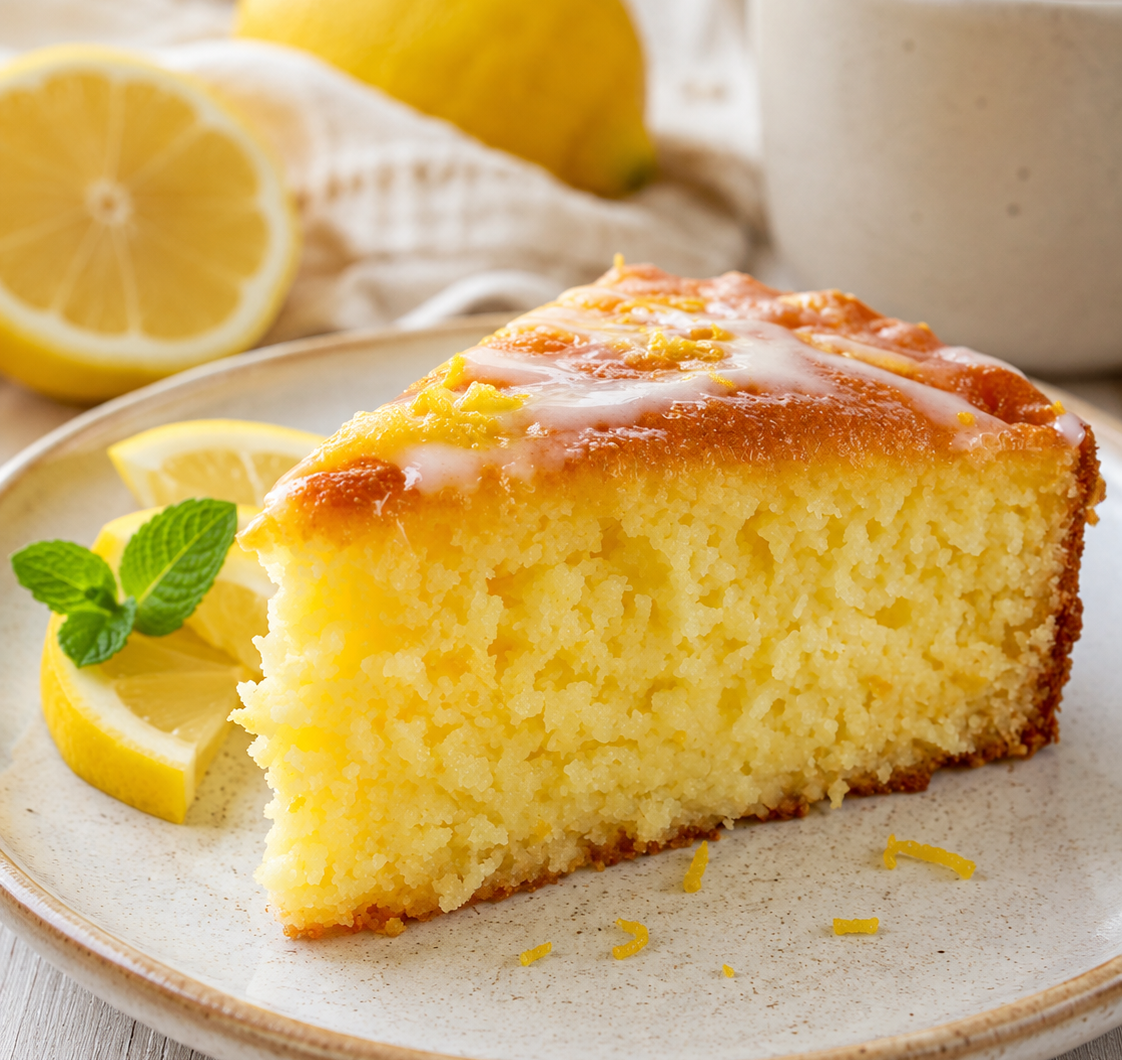
Flourless Lemon Greek Yogurt Cake
A soft, moist, naturally gluten-free lemon cake made with full-fat Greek yogurt and almond flour, finished with a fresh lemon glaze. The cake has a tender crumb, bright citrus flavor, and a simple glossy finish.
10
servings15
minutes40
minutes315
kcal55
minutesIngredients
1 cup full-fat Greek yogurt
3 large eggs
2 cups almond flour
¾ cup granulated sugar
2 tablespoons fresh lemon zest
¼ cup fresh lemon juice
1 teaspoon baking powder
1 teaspoon vanilla extract
¼ teaspoon salt
1 cup powdered sugar
2–3 tablespoons fresh lemon juice
1 teaspoon lemon zest
Directions
- Preheat the oven to 350°F (175°C). Grease an 8-inch round cake pan and line the bottom with parchment paper.
- Add the Greek yogurt, eggs, granulated sugar, lemon juice, lemon zest, and vanilla extract to a large bowl.
- Whisk until the mixture is smooth, creamy, and evenly combined.
- Add the almond flour, baking powder, and salt.
- Fold gently with a rubber spatula until the dry ingredients are fully incorporated and no dry pockets remain.
- Transfer the batter to the prepared cake pan and smooth the surface.
- Tap the pan lightly on the counter a few times to release large air bubbles.
- Bake on the center oven rack for 40–45 minutes, or until the top is lightly golden, the center is set, and a toothpick inserted into the middle comes out mostly clean.
- If the top is browning too quickly, loosely cover it with aluminum foil during the final 10 minutes.
- Remove the cake from the oven and let it cool in the pan for 15 minutes.
- Carefully remove the cake from the pan and transfer it to a cooling rack. Let it cool completely.
- For the glaze, whisk the powdered sugar, 2 tablespoons of lemon juice, and lemon zest in a small bowl until smooth.
- Add the remaining lemon juice gradually if a thinner glaze is needed.
- Once the cake is completely cool, drizzle the glaze over the top and allow it to naturally run slightly down the sides.
- Let the glaze set briefly, then slice and serve.
Notes
- Use full-fat Greek yogurt for the best texture.
- Measure almond flour carefully and avoid packing it tightly into the measuring cup.
- Use fresh lemon juice and zest for the brightest flavor.
- Do not overbake; a few moist crumbs on the toothpick are fine.
- Allow the cake to cool completely before glazing.
- Store covered at room temperature for up to 2 days.
- Refrigerate in an airtight container for up to 5 days.
- Individual slices can be frozen for up to 2 months.
- Fresh berries or whipped cream can be served alongside the cake if desired.
Nutrition Facts
- Total number of serves: 10
- Calories: 315kcal
- Fat: 18g
- Carbohydrates: 35g
- Protein: 8g