Introduction
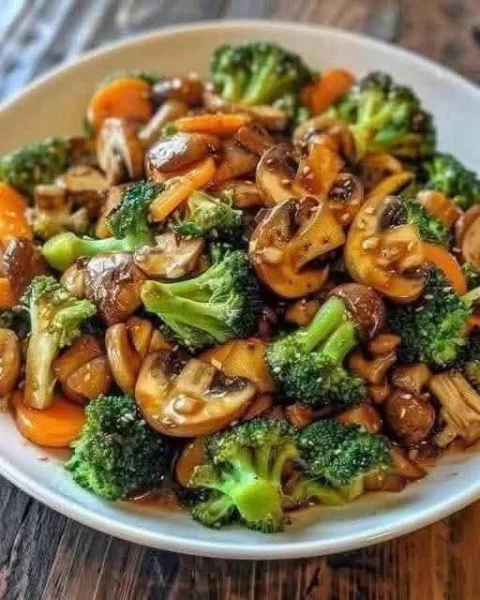
Broccoli, carrot, and mushroom stir-fry is one of the most versatile vegetable dishes in Asian-inspired cooking. It combines crisp vegetables, earthy mushrooms, savory sauce, aromatic garlic and ginger, and balanced seasonings into a meal that is nutritious, colorful, and deeply satisfying. This dish can be served as a side dish alongside rice and noodles or transformed into a complete meal with tofu, chicken, shrimp, or beef.
The beauty of stir-frying lies in cooking ingredients quickly over high heat while preserving texture, flavor, and nutrients. Broccoli remains slightly crunchy, carrots become tender yet vibrant, and mushrooms absorb the savory sauce while developing a rich umami flavor.
This recipe is intentionally detailed and extensive, covering every stage from ingredient selection to cooking techniques, troubleshooting, variations, storage, serving ideas, and nutrition.
Preparation Time
Preparation Time: 25 minutes
Cooking Time: 15 minutes
Total Time: Approximately 40 minutes
Servings: 4 to 6
Difficulty Level: Easy to Intermediate
Ingredients
Main Vegetables
2 large heads broccoli
2 large carrots
300 grams mushrooms
1 medium onion
1 red bell pepper
1 yellow bell pepper
4 cloves garlic
1 tablespoon fresh ginger
2 green onions
Oil and Cooking Base
3 tablespoons vegetable oil
1 teaspoon sesame oil
1 tablespoon butter (optional)
Sauce Ingredients
4 tablespoons soy sauce
2 tablespoons oyster sauce
1 tablespoon dark soy sauce
1 tablespoon rice vinegar
1 tablespoon honey or brown sugar
1 teaspoon chili flakes
1 teaspoon black pepper
1 teaspoon white pepper
1 tablespoon cornstarch
1/2 cup vegetable broth or water
Optional Additions
200 grams tofu cubes
200 grams chicken strips
1 cup snap peas
1 cup baby corn
1 tablespoon roasted sesame seeds
1 teaspoon sriracha sauce
Cooked noodles or steamed rice for serving
Choosing the Best Ingredients
Selecting Broccoli
Choose broccoli heads that are dark green with tightly packed florets. Avoid broccoli that has yellow flowers or soft stems. Fresh broccoli should feel heavy for its size and firm to the touch.
Selecting Carrots
Choose bright orange carrots without cracks or soft spots. Medium-sized carrots tend to have the best sweetness and texture.
Selecting Mushrooms
Button mushrooms, cremini mushrooms, shiitake mushrooms, or oyster mushrooms all work beautifully. Cremini mushrooms provide deeper flavor, while shiitake mushrooms add intense umami richness.
Importance of Fresh Garlic and Ginger
Fresh garlic and ginger are essential in stir-fry recipes because they create the aromatic base that gives the dish its authentic flavor profile. Powdered versions cannot provide the same freshness.
Equipment Needed
Large wok or skillet
Sharp knife
Cutting board
Mixing bowls
Wooden spoon or spatula
Small whisk or fork
Measuring spoons and cups
Vegetable Preparation
Preparing the Broccoli
Wash the broccoli thoroughly under cold water. Cut florets into medium bite-sized pieces. Peel the thick outer layer of the stems and slice them thinly because the stems are edible and delicious.
To maintain bright green color during cooking, you may blanch broccoli in boiling water for 1 minute and immediately transfer it to ice water. Drain thoroughly before stir-frying.
Preparing the Carrots
Peel the carrots. Slice them diagonally into thin oval pieces for attractive presentation and even cooking. Thin slices cook faster and absorb sauce more effectively.
You may also julienne the carrots for a more restaurant-style appearance.
Preparing the Mushrooms
Clean mushrooms gently with a damp cloth or paper towel. Avoid soaking them in water because mushrooms absorb moisture easily.
Slice mushrooms evenly. Thick slices create meatier texture while thin slices cook more quickly.
Preparing the Onion and Bell Peppers
Slice onions into thin strips.
Cut bell peppers into long slices similar in size to the onions for even cooking and balanced appearance.
Preparing Garlic and Ginger
Finely mince garlic.
Grate or finely chop ginger.
These ingredients cook quickly, so keep them ready before heating the wok.
Preparing the Sauce
In a medium bowl combine:
Soy sauce
Oyster sauce
Dark soy sauce
Rice vinegar
Honey or brown sugar
Black pepper
White pepper
Chili flakes
Vegetable broth or water
Whisk thoroughly.
In a separate small bowl dissolve cornstarch with 2 tablespoons water to create a slurry. This thickens the sauce later.
Understanding Stir-Fry Technique
Stir-frying requires high heat and quick movement. The goal is to cook vegetables rapidly while preserving texture and freshness.
Important principles include:
Prepare everything before cooking because stir-frying happens quickly.
Use high heat for proper searing.
Avoid overcrowding the pan.
Add ingredients according to cooking time.
Keep vegetables moving continuously.
Step-by-Step Cooking Instructions
Step 1: Heat the Wok
Place the wok or large skillet over medium-high to high heat.
Allow it to become very hot before adding oil.
Add vegetable oil and swirl it around the surface.
Step 2: Cook Aromatics
Add minced garlic and ginger.
Stir continuously for 20 to 30 seconds until fragrant.
Do not burn the garlic because burnt garlic creates bitterness.
Step 3: Add Onions
Add sliced onions.
Cook for about 2 minutes until slightly softened but still crisp.
Step 4: Cook Carrots
Add carrots because they require more cooking time than other vegetables.
Stir-fry for approximately 3 minutes.
If needed, add 1 tablespoon water to help soften them slightly.
Step 5: Add Mushrooms
Add mushrooms to the wok.
Initially mushrooms release moisture. Continue cooking until the liquid evaporates and mushrooms begin browning.
This usually takes 4 to 5 minutes.
Proper browning develops rich flavor.
Step 6: Add Broccoli and Bell Peppers
Add broccoli florets and bell peppers.
Stir-fry for 3 to 4 minutes.
Vegetables should remain vibrant and slightly crisp.
Avoid overcooking because mushy vegetables lose appeal.
Step 7: Add Sauce
Whisk sauce mixture again and pour it into the wok.
Stir thoroughly to coat vegetables evenly.
Allow sauce to simmer for about 1 minute.
Step 8: Thicken the Sauce
Add cornstarch slurry gradually while stirring continuously.
Cook for another 1 to 2 minutes until sauce thickens and becomes glossy.
Step 9: Finish the Dish
Drizzle sesame oil over the stir-fry.
Add green onions.
Sprinkle sesame seeds if desired.
Taste and adjust seasoning.
Serving Suggestions
Serve hot with:
Steamed jasmine rice
Brown rice
Garlic noodles
Rice noodles
Fried rice
Quinoa
Cauliflower rice
The dish pairs well with grilled chicken, tofu, salmon, or shrimp.
Optional Protein Variations
Tofu Version
Use firm tofu.
Press tofu for 20 minutes to remove excess water.
Cube and lightly fry before adding to the stir-fry.
Chicken Version
Slice boneless chicken thinly.
Marinate with soy sauce, cornstarch, and black pepper for 15 minutes.
Cook separately before vegetables and combine later.
Shrimp Version
Use peeled and deveined shrimp.
Cook only 2 to 3 minutes because shrimp cooks rapidly.
Beef Version
Use flank steak sliced thinly against the grain.
Marinate briefly with soy sauce and cornstarch.
Advanced Flavor Enhancements
Adding Umami
Add a teaspoon of mushroom powder or miso paste for deeper flavor.
Adding Sweetness
A small amount of honey balances salty and spicy notes.
Adding Heat
Use fresh chilies, chili garlic sauce, or sriracha.
Smoky Flavor
Allow vegetables to char slightly in places for restaurant-style wok flavor.
Common Mistakes and Solutions
Overcrowding the Pan
Too many vegetables lower pan temperature and cause steaming instead of stir-frying.
Cook in batches if necessary.
Using Low Heat
High heat is essential for authentic stir-fry texture and flavor.
Overcooking Vegetables
Vegetables should remain slightly crisp.
Watery Sauce
Mushrooms release water naturally.
Cook long enough for evaporation before adding sauce.
Uneven Vegetable Sizes
Uniform cutting ensures even cooking.
Nutritional Information
Approximate nutrition per serving without rice:
Calories: 180 to 240
Protein: 6 grams
Carbohydrates: 18 grams
Fiber: 6 grams
Fat: 12 grams
Vitamin C: Very high
Vitamin A: High
Iron: Moderate
Potassium: High
Health Benefits
Broccoli Benefits
Rich in vitamin C, vitamin K, antioxidants, and fiber.
Supports immune health and digestion.
Carrot Benefits
Excellent source of beta-carotene and vitamin A.
Supports eye health.
Mushroom Benefits
Contains antioxidants, minerals, and natural umami compounds.
Supports immune function.
Storage Instructions
Allow stir-fry to cool completely before storing.
Refrigerate in airtight container for up to 4 days.
Reheat in skillet over medium heat for best texture.
Avoid microwaving too long because vegetables may become soft.
Freezing Instructions
Although possible, freezing slightly changes vegetable texture.
If freezing:
Cool completely.
Store in freezer-safe containers.
Freeze for up to 2 months.
Thaw overnight before reheating.
Restaurant-Style Tips
Use a carbon steel wok for authentic smoky flavor.
Cook over very high heat.
Prepare all ingredients beforehand.
Use minimal sauce to avoid sogginess.
Do not over-stir constantly; allow brief contact with hot pan for slight caramelization.
Vegan Version
Replace oyster sauce with mushroom sauce or hoisin sauce.
Use maple syrup instead of honey.
Gluten-Free Version
Use gluten-free soy sauce or tamari.
Ensure oyster sauce substitute is gluten-free.
Low-Carb Version
Reduce carrots slightly.
Serve with cauliflower rice.
Avoid sugar in sauce.
Family Meal Ideas
This stir-fry works well in meal prep because vegetables stay flavorful for days.
You can pair it with:
Soup
Spring rolls
Dumplings
Grilled proteins
Asian salads
Frequently Asked Questions
Can I use frozen broccoli?
Yes, but thaw and dry thoroughly first to avoid excess water.
Can I make this ahead?
Yes. Chop vegetables and prepare sauce one day ahead.
Which mushrooms are best?
Shiitake and cremini mushrooms provide richest flavor.
Can I skip oyster sauce?
Yes. Replace with soy sauce plus a little sugar.
Why is restaurant stir-fry better?
Restaurants use extremely high heat burners that create smoky wok flavor called “wok hei.”
Final Notes
Broccoli, carrot, and mushroom stir-fry is an adaptable and dependable dish suitable for quick dinners, healthy lunches, family meals, and meal preparation. Its combination of textures, vibrant appearance, and balanced flavors makes it popular worldwide.
Once you master the basic technique, you can customize the recipe endlessly with different vegetables, proteins, spices, sauces, and serving styles. The key is maintaining high heat, organized preparation, and careful timing.
A properly cooked stir-fry should have:
Bright vegetables
Balanced sauce
Slight crispness
Deep savory flavor
Fresh aroma
Glossy appearance
And most importantly, every bite should taste fresh, satisfying, and full of natural vegetable flavor.