Soft skillet flatbread is one of those recipes that looks simple on paper but becomes genuinely impressive when you understand the small details that control softness, elasticity, and flavor. It is a pan-cooked bread that relies on basic pantry ingredients and heat from a skillet rather than an oven, yet it can turn out as tender and flexible as bakery-style bread when done properly. The goal of this long, detailed guide is to help you understand not just the steps, but also why each step matters so you can consistently produce soft, pillowy flatbreads that stay soft even after cooling.
Flatbread
At its core, skillet flatbread is built from flour, water, salt, and a fat source such as oil or butter. What transforms this simple mixture into something soft and fluffy is either yeast or a chemical leavening agent like baking powder, plus proper kneading, resting, and cooking technique. Many people focus only on ingredients, but the real difference between dry, stiff flatbread and soft, flexible flatbread comes from hydration level, gluten development, and how moisture is preserved after cooking.
To begin in the most traditional and reliable way, you first decide whether you want a yeast-based dough or a quick baking powder version. Yeast gives a more bread-like structure, a deeper flavor, and a soft chew that stays good even after a few hours. Baking powder gives a faster dough that is still soft but slightly more biscuit-like and best eaten fresh. For a very soft restaurant-style result, yeast is generally preferred, but both methods can be made excellent if handled correctly.
If using yeast, the first important step is activation. Warm water is used, ideally at a temperature that feels like warm bath water rather than hot. If the water is too hot, it kills the yeast; if it is too cold, the yeast activates slowly and the dough becomes dense. Sugar is added to feed the yeast, helping it become active faster and improving browning during cooking. When yeast is sprinkled into the warm sweetened water and left for several minutes, it should form a foamy layer on top. This foaming indicates that carbon dioxide production has begun, which is essential for creating softness inside the dough.
While the yeast is activating, the dry mixture is prepared. All-purpose flour is most commonly used because it has the right balance of protein to form gluten without making the bread too chewy. Salt is added not just for taste but also to regulate yeast activity and strengthen gluten structure. In richer versions, a small amount of milk powder can be added to enhance softness and give a subtle creamy flavor. Some people also add a tiny pinch of baking powder even in yeast dough to improve lightness, though this is optional.
Once the yeast mixture is ready, it is poured into the flour along with oil or melted butter. The fat plays a very important role because it coats flour particles slightly, which limits excessive gluten tightening and keeps the final bread soft instead of rubbery. As the mixture is combined, it slowly transforms from dry flour into a shaggy dough. At this stage, the dough will not look smooth and that is expected.
Kneading is where the structure of the flatbread is truly formed. When you knead, you are aligning gluten proteins into long strands that trap gas from yeast fermentation. This is what gives the bread elasticity and allows it to puff slightly in the pan. Kneading should continue for around ten minutes by hand until the dough becomes smooth, soft, and slightly springy when pressed. A good dough for skillet flatbread should feel alive, meaning it gently bounces back when touched but still feels tender. If it is too dry, the bread becomes stiff; if it is too sticky, it becomes hard to roll and may tear during cooking.
After kneading comes resting, which is just as important as mixing. The dough is placed in a lightly oiled bowl and covered so it does not dry out. During resting, gluten relaxes and yeast begins producing gas, which expands the dough structure. This is what creates softness and prevents toughness. A proper resting period allows the dough to double in size, becoming airy and lighter. Without enough resting, even well-kneaded dough will produce dense flatbreads.
Once the dough has risen, it is gently handled rather than aggressively kneaded again. The purpose here is to preserve the gas bubbles that formed during fermentation. The dough is lightly pressed down to release excess large air pockets, then divided into equal portions. Each portion is shaped into a smooth ball by tucking edges underneath. This shaping step helps create even texture when rolling and cooking.
Rolling is another stage where many mistakes happen. The dough should be rolled evenly without pressing too hard. Uneven thickness causes uneven cooking, where thin areas dry out and thick areas remain doughy. The ideal thickness is moderate, allowing steam to form inside during cooking without making the bread too heavy. If the dough sticks, a light dusting of flour is used, but too much flour during rolling can dry out the surface and reduce softness.
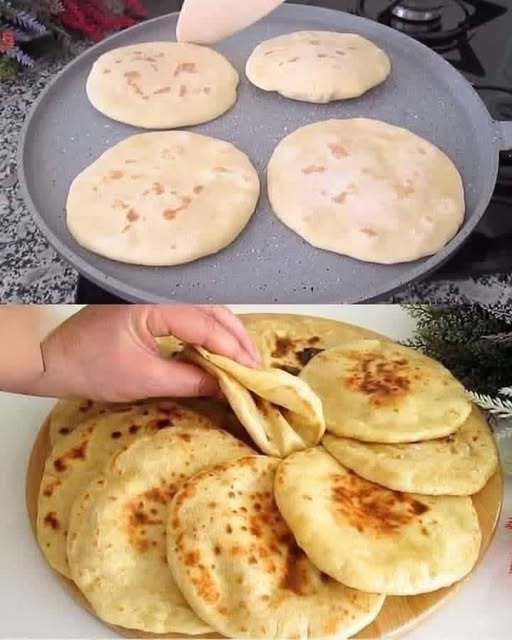
The skillet stage is where transformation happens quickly. A heavy pan or cast iron skillet is preferred because it holds heat evenly. The pan is heated to medium or medium-high. If the heat is too low, the bread dries out before browning; if too high, it burns on the outside while remaining raw inside. The rolled dough is placed onto the dry hot pan. Within moments, small bubbles begin to appear. These bubbles are pockets of steam and gas expanding inside the dough.
As the first side cooks, it develops light golden spots. After about a minute or two, it is flipped. The second side begins to cook while the first side finishes steaming internally. This is when the bread often puffs up, which is a sign of good gluten structure and proper moisture balance. Pressing lightly with a spatula helps encourage even puffing, but it should not be flattened completely. Over-pressing can force out steam and reduce softness.
Once both sides are cooked, the flatbread is immediately removed from the skillet and brushed with melted butter or oil. This step is not optional if maximum softness is desired. The fat locks in surface moisture and prevents drying as the bread cools. Stacking the breads together and covering them with a clean cloth traps steam, which further softens the texture and keeps them pliable.
The final texture of a well-made skillet flatbread should be soft enough to fold without cracking, flexible enough to wrap around fillings, and tender enough to tear easily with fingers. It should not feel dry or brittle. When bitten, it should have a slight chew but remain light.
There are many ways to modify this base recipe depending on preference. Adding yogurt to the dough increases tenderness due to its acidity, which weakens gluten slightly and creates a softer bite. Milk instead of water enriches flavor and improves browning. A small amount of olive oil in the dough creates a smoother texture. Herbs like coriander, parsley, or even dried oregano can be mixed in for flavor variations. Garlic powder or onion powder can also be added for a savory version that pairs well with grilled meats or curries.
For storage, the key principle is preventing moisture loss. Once cooled, flatbreads should be wrapped tightly or stored in an airtight container. Reheating on a dry skillet for a few seconds on each side restores softness because heat reactivates trapped moisture inside the bread. Microwaving also works if the bread is covered with a damp cloth to prevent drying.
A major insight in mastering Flatbread is that softness is not just about ingredients but about moisture management at every stage. From properly hydrated dough to controlled heat cooking and immediate post-cooking steaming, every step contributes to the final texture.
Once you understand this system, you can adjust the recipe freely. If you want extra soft wrap-style bread, increase hydration slightly and use yogurt. If you want slightly thicker bread for dipping, roll it less thin and cook at slightly lower heat. If you want a more puffed result, ensure strong yeast activation and avoid over-flouring during rolling.
If you want, I can extend this even further into a step-by-step troubleshooting guide for common problems like hard flatbread, no puffing, or dry texture, or even convert it into a restaurant-style naan hybrid version.