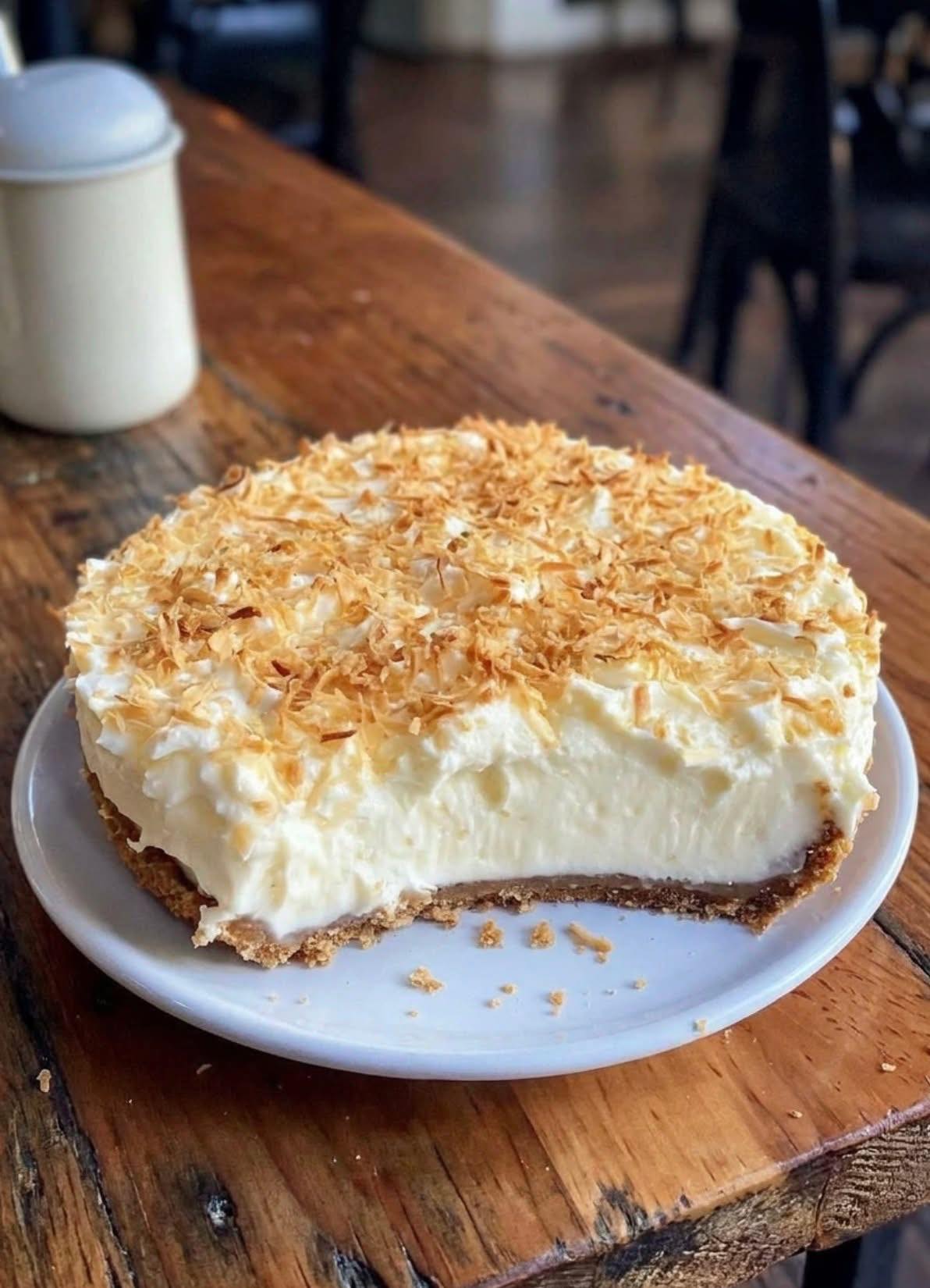
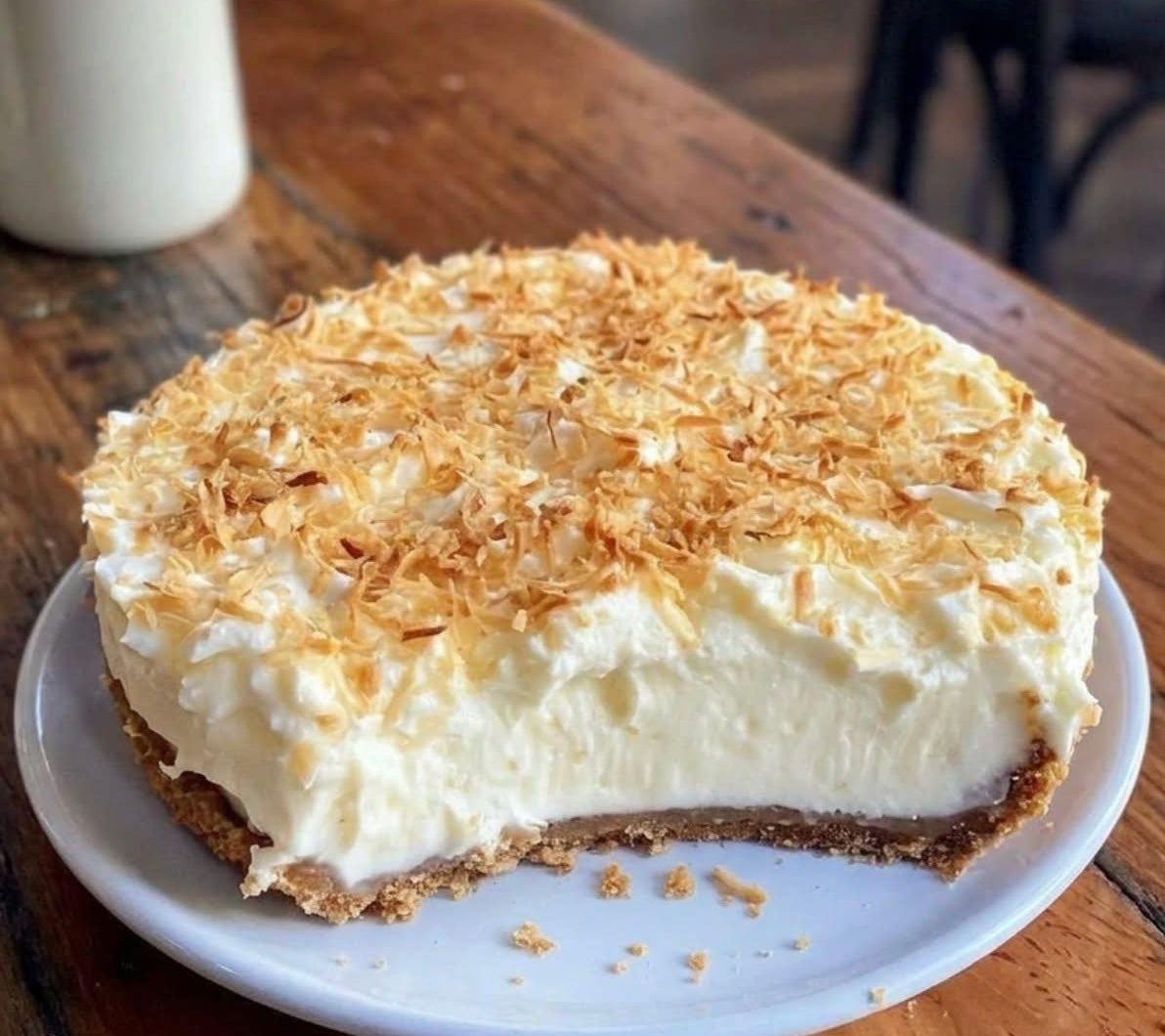
Coconut Cream Pie is a classic homemade dessert featuring a flaky, buttery pie crust, a smooth coconut custard filling, and a generous layer of freshly whipped cream. Finished with toasted coconut chips and delicate white chocolate shavings, this delicious pie offers a wonderful combination of creamy, crunchy, and sweet textures. It is an excellent dessert for family gatherings, holiday celebrations, birthday parties, or whenever you want to prepare something special at home.
This homemade coconut cream pie recipe brings together simple ingredients to create a rich dessert with plenty of coconut flavor. The filling combines unsweetened coconut milk and half and half to create a smooth, custard-like consistency. Brown sugar adds sweetness and depth, while vanilla extract gives the filling a pleasant aroma. The homemade crust includes cottage cheese, which adds protein and creates an interesting twist on a traditional pie crust.
One of the best things about this coconut cream pie is that its components can be prepared ahead of time. The coconut filling needs several hours to cool completely, making it convenient to prepare earlier in the day. Once the crust and filling are ready, assembling the dessert is straightforward. A light whipped cream topping and toasted coconut garnish complete the pie beautifully.
What Makes This Coconut Cream Pie Special?
A good coconut cream pie should have a filling that is creamy, flavorful, and firm enough to hold its shape when sliced. This recipe combines coconut milk with half and half to achieve that rich consistency without making the filling overly heavy. The brown sugar contributes a deeper sweetness, while vanilla brings all the flavors together.
The cottage cheese pie crust is another feature that makes this recipe different. Instead of relying entirely on traditional pastry ingredients, it incorporates 4% cottage cheese for an additional protein benefit. The combination of flour, cold butter, cottage cheese, and ice water produces a dough that can be rolled out and baked into a sturdy pie shell.
The finishing touches also make a difference. Homemade whipped cream creates a soft, airy topping that balances the rich coconut custard. Toasted unsweetened coconut chips provide a pleasant crunch and reinforce the coconut flavor. Shaved white chocolate adds a decorative touch and a little extra sweetness, making every slice look inviting.
How to Make Coconut Cream Pie from Scratch
Preparing coconut cream pie involves a few stages, but each one is manageable with basic kitchen equipment. The filling should be prepared first because it needs enough time to cool in the refrigerator. While it chills, you can prepare and bake the pie crust, allowing both components to be ready for assembly.
Step 1: Prepare the Coconut Cream Filling
Start by adding the unsweetened coconut milk, half and half, flour, eggs, brown sugar, and vanilla extract to a large saucepan. Whisk everything together until the mixture is evenly combined and there are no obvious lumps of flour. Mixing the ingredients before heating helps create a more consistent custard and reduces the chance of uneven thickening.
Place the saucepan over medium heat and bring the mixture to a boil, stirring frequently. Once it begins boiling, reduce the heat to low and allow it to simmer for approximately four to five minutes. Continue stirring while the filling cooks so it does not stick to the bottom of the pan. The mixture should gradually become thick, with a consistency similar to thick pancake batter.
Remove the saucepan from the heat and transfer the filling to a large bowl. Press a piece of plastic wrap directly against the surface of the custard. This prevents a thick skin from developing while the filling cools. Refrigerate for approximately four hours or until completely chilled.
Step 2: Prepare the Homemade Pie Crust
Preheat your oven to 350°F. Add the all-purpose flour, packed light brown sugar, sea salt, and cold unsalted butter to a food processor. Pulse several times until the butter breaks into small pieces throughout the flour mixture. The mixture should have a coarse, crumbly appearance rather than looking like a smooth paste.
Add the 4% cottage cheese and pulse again until incorporated. Scrape down the sides of the food processor if necessary to make sure the ingredients are evenly mixed. Gradually add the ice water, one tablespoon at a time, pulsing after each addition. Stop when the dough begins to clump together and can hold its shape when pressed.
Transfer the dough to a lightly floured work surface. Gently bring it together and shape it into a flat disc. Roll the dough into a circle approximately 10 to 11 inches wide. Try to keep the thickness reasonably even so the crust bakes consistently.
Carefully transfer the rolled dough into a pie pan. Adjust it gently to fit the bottom and sides without stretching it excessively. Place parchment paper over the dough and add pie weights or raw rice to keep the crust from puffing up during baking.
Step 3: Blind-Bake the Pie Crust
Place the prepared pie crust in the preheated oven and bake at 350°F for approximately 10 to 15 minutes. This process is called blind baking, which means baking the crust before adding the filling. It helps create a firm base that can support the creamy coconut custard without becoming too soft.
Once the crust has finished baking, carefully remove the parchment paper and pie weights. Allow the crust to cool completely before adding the coconut filling. This cooling step is important because adding chilled custard to a warm crust can affect the final texture.
If you do not have pie weights, you can prick the bottom of the crust all over with a fork before baking. Some air bubbles may appear during baking, but they can usually be pressed down or will deflate when the filling is added.
Step 4: Assemble the Coconut Cream Pie
Once the coconut custard and baked pie crust are both completely cool, you can begin assembling the dessert. Remove the chilled filling from the refrigerator and give it a gentle stir if needed to make it easier to spread.
Transfer the coconut cream filling into the prepared pie crust. Use a spatula or the back of a spoon to distribute the filling evenly across the surface. Make sure the filling reaches the edges so that every slice contains a generous amount of coconut custard.
After spreading the filling, place the assembled pie in the refrigerator while you prepare the whipped cream topping. Chilling helps the filling remain firm and makes the dessert easier to finish and slice.
Step 5: Make the Homemade Whipped Cream
Add the heavy whipping cream and vanilla extract to a large mixing bowl. Using an electric hand mixer or stand mixer, whip the cream on high speed until stiff peaks form. This means the whipped cream should hold its shape when the beaters are lifted from the bowl.
Avoid overwhipping because the cream can become grainy and eventually separate. Once the desired consistency is reached, stop mixing. The whipped cream should be light, fluffy, and thick enough to spread over the chilled coconut filling.
Step 6: Add the Toppings and Finish
Spread the freshly whipped cream over the coconut filling, creating an even layer across the top of the pie. You can use a spatula to make a smooth surface or create soft decorative swirls if desired.
Finish by sprinkling toasted unsweetened coconut chips over the whipped cream. Add the shaved white chocolate as the final garnish. The toasted coconut provides crunch, while the white chocolate adds a decorative finish and extra sweetness.
Keep the completed pie refrigerated until you are ready to serve. For cleaner slices, use a sharp knife and wipe it between cuts.
Tips for Making the Best Coconut Cream Pie
The quality of the final dessert depends on a few important preparation details. One of the most useful tips is to allow the coconut custard enough time to cool. Rushing this stage can leave the filling too soft, making it difficult to assemble the pie neatly. Refrigerating the filling for approximately four hours gives it time to become properly chilled.
Temperature also matters when preparing the pie crust. Use cold butter rather than softened butter, and add ice water gradually. Too much water can make the dough sticky and difficult to handle. Work gently when rolling the dough to maintain a consistent thickness and avoid developing a tough pastry.
Blind baking is another important step. Baking the crust before adding the filling helps prevent a soggy bottom and gives each slice a more stable structure. Pie weights are useful, but raw rice or dried beans can also work as substitutes. Alternatively, prick the crust with a fork before baking to help release trapped air.
For the whipped cream topping, make sure the heavy whipping cream is cold before whipping. Cold cream generally whips more effectively and helps produce a fluffy topping with good structure. Stop mixing once stiff peaks develop to avoid overwhipping.
How to Serve Coconut Cream Pie
Coconut cream pie is best served chilled because the cool custard and fluffy whipped cream create a refreshing dessert experience. It is a lovely choice for holiday meals, birthday celebrations, family dinners, potlucks, and weekend gatherings. The combination of coconut custard, buttery pastry, and whipped cream makes it suitable for serving after a variety of main courses.
For an attractive presentation, cut the pie into nine portions and place each slice on an individual dessert plate. Make sure each serving includes a good amount of whipped cream and toasted coconut chips. The white chocolate shavings provide an elegant finishing detail without requiring complicated decoration.
You can also serve each slice with additional toasted coconut chips if you want more crunch. Since the pie is already rich and sweet, it does not need many additional accompaniments. A simple cup of coffee or tea can be a pleasant addition when serving it as an afternoon dessert.
Frequently Asked Questions
Can I Make Coconut Cream Pie Ahead of Time?
Yes, this recipe is suitable for preparing ahead. The coconut custard can be cooked and refrigerated for approximately four hours before assembly. You can also bake the pie crust in advance and allow it to cool completely. Once the components are ready, assemble the pie and keep it refrigerated until serving.
Why Does My Coconut Cream Pie Filling Need to Be Chilled?
Chilling allows the cooked custard to cool and become firmer. This helps the filling maintain its shape when the pie is sliced. It also gives the dessert a pleasant chilled texture that works especially well with the whipped cream topping.
Can I Make the Pie Crust Without Pie Weights?
Yes. Pie weights help prevent the pastry from puffing up, but they are not essential. You can use raw rice or dried beans as substitutes. Another option is to prick the bottom of the pastry with a fork before baking. Small bubbles may still form, but they should deflate when the filling is added.
How Long Does Homemade Coconut Cream Pie Last?
When properly covered and refrigerated, this coconut cream pie can last up to three days. For the best flavor and texture, keep it chilled and serve it directly from the refrigerator.
How Many Servings Does This Recipe Make?
This recipe makes nine servings. Each portion includes a slice of homemade cottage cheese pie crust, creamy coconut filling, whipped cream, and the toasted coconut and white chocolate garnish.
Coconut Cream Pie Recipe Dessert
A collection of delicious dessert recipes featuring sweet, creamy, and satisfying treats. Discover homemade desserts, including classic pies, cakes, cookies, puddings, and more, perfect for family gatherings, special occasions, or everyday cravings.
9
servings4
hours10
minutes15
minutes488
kcal4
hours25
minutesIngredients
- For the Cottage Cheese Pie Crust
1.25 cups all-purpose flour
1 tablespoon packed light brown sugar
1 teaspoon sea salt
¼ cup unsalted butter, cold
¼ cup 4% cottage cheese
¼ cup ice water
- For the Coconut Cream Filling
15 oz. unsweetened coconut milk
1 cup half and half
½ cup all-purpose flour
2 large eggs
¾ cup brown sugar
1 teaspoon vanilla extract
- For the Whipped Cream Topping
1 cup heavy whipping cream
1 tablespoon vanilla extract
⅓ cup toasted unsweetened coconut chips
¼ cup shaved white chocolate
Directions
- Prepare the filling: Add coconut milk, half and half, flour, eggs, brown sugar, and vanilla extract to a large saucepan. Whisk until combined.
- Cook the custard: Bring the mixture to a boil while stirring frequently. Reduce the heat to low and simmer for 4–5 minutes until thickened.
- Chill the filling: Transfer the filling to a large bowl. Cover the surface directly with plastic wrap and refrigerate for approximately 4 hours until completely cool.
- Preheat the oven: Set the oven temperature to 350°F.
- Prepare the crust dough: Add flour, brown sugar, salt, and cold butter to a food processor. Pulse until the butter breaks into small pieces.
- Add cottage cheese: Add cottage cheese and pulse again. Gradually add ice water, one tablespoon at a time, until the dough begins to clump together.
- Roll the dough: Transfer the dough to a floured surface, shape it into a disc, and roll it into a 10–11-inch circle.
- Prepare for baking: Transfer the dough to a pie pan. Cover with parchment paper and add pie weights or raw rice.
- Blind-bake: Bake at 350°F for 10–15 minutes. Remove from the oven and allow the crust to cool completely.
- Assemble the pie: Spread the chilled coconut filling evenly inside the cooled pie crust.
- Make whipped cream: Add heavy whipping cream and vanilla extract to a large bowl. Whip on high speed until stiff peaks form.
- Add the topping: Spread the whipped cream over the coconut filling.
- Garnish and serve: Finish with toasted unsweetened coconut chips and shaved white chocolate. Refrigerate until ready to serve.
Nutrition Facts
- Total number of serves: 9
- Calories: 488kcal
- Fat: 32g
- Carbohydrates: 44g
- Sugar: 23g
- Protein: 7g