There are some recipes that sound almost too simple to be real, and this cloud cake is one of them. When I first tried making it at home, it felt like one of those “let’s see if this actually works” situations. Just a few basic ingredients, no flour at all, and a promise of something soft, airy, and almost weightless. That alone was enough to pull me into the kitchen.
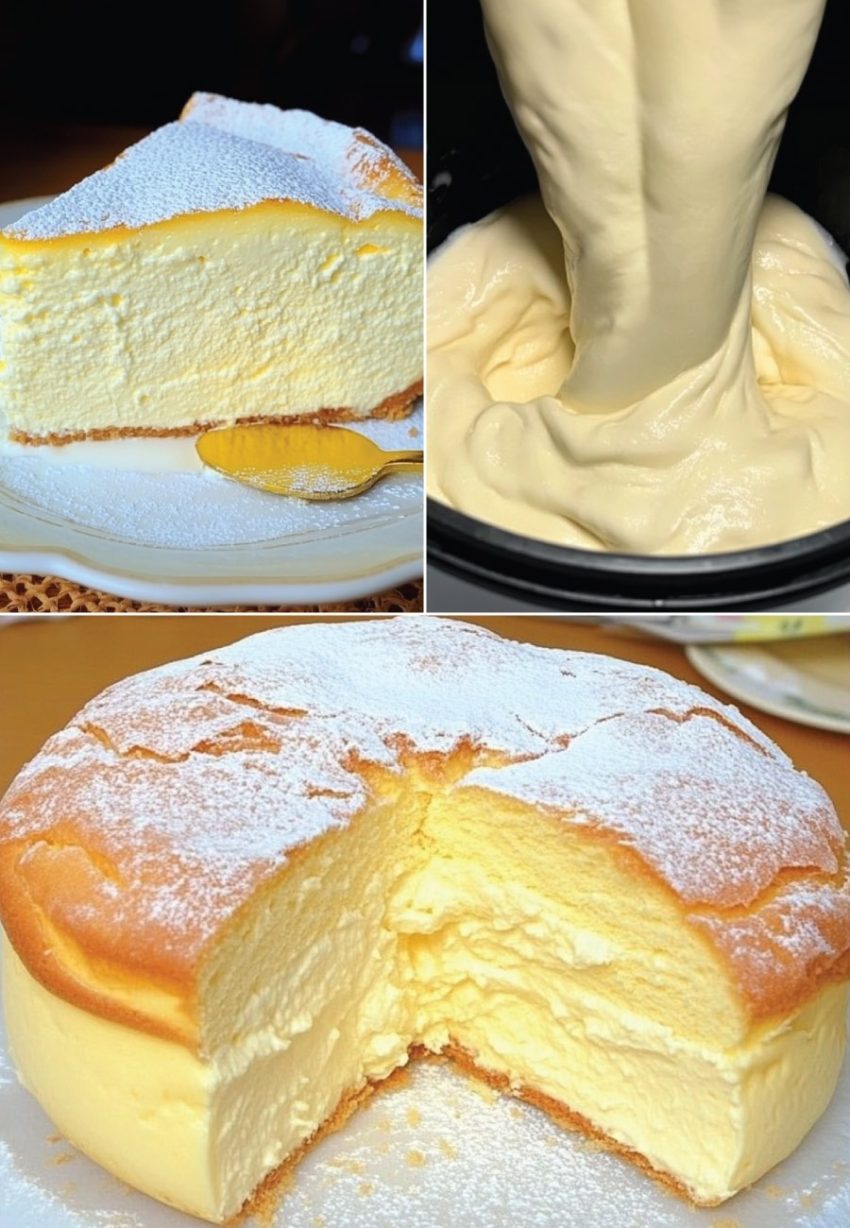
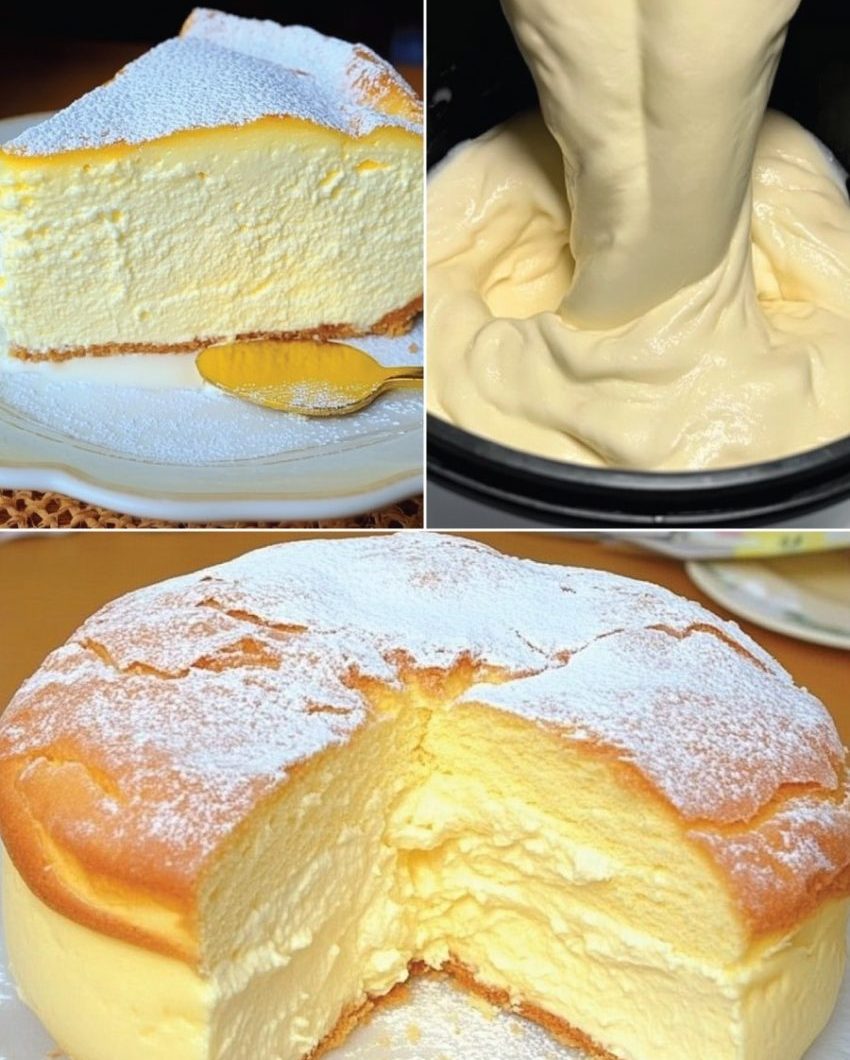
What comes out of the oven is not a heavy traditional cake. It is something much lighter, almost like a cross between a soufflé and a soft sponge. The texture is the reason it gets the name “cloud cake” — it rises gently, feels delicate when sliced, and melts in the mouth instead of sitting heavy.
The best part is how straightforward the ingredients are. Nothing complicated, nothing fancy. Everything usually sits in the fridge or pantry already, which makes it one of those recipes that can be made on a whim without planning ahead.
Why this cake feels different
- Most cakes rely on flour and baking powder or soda to rise. This one doesn’t follow that rule at all. Instead, the structure comes entirely from whipped egg whites. That’s the heart of the recipe.
- When the egg whites are beaten properly, they trap air and turn fluffy, almost like soft foam. That air is what gives the cake its lift. There’s no chemical reaction involved here, just good whisking and a bit of patience.
- Because of this method, the texture ends up very light. It doesn’t have the density of a regular sponge cake. Instead, it feels airy and soft, and the crumb is almost creamy when eaten chilled.
- Another thing I like about it is that it naturally ends up gluten-free since there is no flour involved. It also feels lighter compared to most traditional cakes, so it works well when something sweet is wanted without feeling too heavy afterward.
The simple ingredients behind it
- Eggs
- The eggs are separated. The yolks go into one bowl, and the whites into another. The whites are what give the cake its rise, while the yolks add richness and structure. It is important that no trace of yolk gets into the whites, otherwise they won’t whip properly.
- Room temperature egg whites usually whip better, but cold eggs are easier when separating. That balance is something I’ve noticed after making this a few times.
- Sweetened condensed milk
- This is what brings sweetness and body to the cake. It also helps create that soft, slightly creamy flavor throughout. It blends smoothly with the egg yolks and gives the batter a thick, silky base.
- Without it, the cake would feel too plain and egg-heavy, so it really holds everything together in terms of taste.
- Greek yogurt
- Thick Greek yogurt is what keeps the cake soft and slightly tangy. It also adds moisture without making the batter runny. The key here is to use full-fat and strained yogurt. Thin yogurt changes the texture too much and makes the batter unstable.
- When mixed with condensed milk and egg yolks, it creates a smooth base that feels rich but not heavy.
- Cornstarch
- Only a small amount is used, but it still matters. Cornstarch gives the cake just enough structure so it holds its shape after baking. It also helps stabilize the airy texture created by the egg whites.
- It doesn’t make the cake feel like flour is present, which keeps the “cloud” effect intact.
- Vanilla
- Vanilla is the background flavor that ties everything together. It gives warmth and softness to the taste. Sometimes I use vanilla bean paste because it adds those tiny specks that make the cake feel a bit more special, but extract works just as well.
- On some days, I switch it up with lemon zest for a fresher flavor, but vanilla remains the classic version.
What makes the texture work
- The most important part of this cake is the whipped egg whites. If they are not whipped properly, the whole structure falls apart. They need to reach stiff peaks — meaning they stand up on their own when the whisk is lifted.
- But there is a fine line here. If they are over-whipped, they start to lose moisture and collapse later in the oven. That can make the cake dense instead of airy.
- So the goal is simple: fluffy, stable, but not dry.
- Once the egg whites are ready, they are gently folded into the yolk mixture. This step cannot be rushed. The air inside the whites is what gives the cake height, so the folding has to be slow and careful.
The folding stage (where most people go wrong)
- This is the part that decides the final texture.
- When combining the whipped egg whites with the yolk mixture, it has to be done in batches. I usually add a third at a time. Instead of stirring, I fold — lifting from the bottom and turning the mixture over itself.
- It feels slow, but that is exactly what keeps the cake light. If the air gets knocked out here, the cake turns dense and loses its “cloud” character.
- By the end, the batter should look smooth but still airy, almost like a mousse before baking.
Preparing the pan and baking setup
- This cake is baked in a springform pan, and preparation matters more than usual. The pan is lightly greased and lined with baking paper so the cake releases cleanly after baking.
- Another important step is wrapping the base of the pan with foil. The cake is baked in a water bath, which means the pan sits inside a larger tray filled with hot water. This gentle heat keeps the texture soft and prevents cracks.
- The water should come halfway up the sides of the cake pan, but it should never splash into the batter.
What happens in the oven
- Once it goes into the oven, the transformation begins slowly. The cake rises gently rather than aggressively. The top turns slightly golden while the inside stays soft.
- One important rule here is not to open the oven door during baking. Even a small drop in temperature can cause the cake to sink.
- After baking, it is left inside the oven with the heat turned off. This slow cooling helps it set without collapsing.
After baking
- Once fully cooled, the cake is chilled. This step changes the texture completely. It becomes firmer, smoother, and easier to slice.
- When served cold, it holds its shape but still feels soft when eaten. That contrast between structure and lightness is what makes it stand out.
Cooling and setting the cake properly
- Once the baking time is complete, the cake is not taken out straight away. It stays inside the oven with the heat switched off. This slow cooling step is important because it prevents sudden temperature change, which can cause the cake to collapse in the center.
- After about an hour or so in the cooling oven, the cake is moved to the counter and left until it reaches room temperature. At this stage, it still feels very soft and delicate. It is not fully set yet, and that is completely normal.
- The real transformation happens in the fridge.
- Chilling the cake for a couple of hours, or even overnight, firms it up just enough to slice cleanly. The texture becomes smoother and slightly more custard-like, while still keeping that airy softness. This is when it truly develops its “cloud” character — light but structured at the same time.
What the texture should feel like
- When everything goes right, the cake should not feel dry or dense. Instead, it should be soft, slightly creamy, and very light when bitten into.
- It should hold its shape on a plate but still feel delicate when cut. If it feels rubbery or heavy, it usually means the egg whites were either overmixed or deflated during folding.
- The ideal slice should wobble slightly when moved but not fall apart. That balance is what makes this cake different from regular sponge cakes.
Serving the cake at home
- This cake doesn’t need much decoration. It is often served as it is, chilled, with just a light dusting of powdered sugar on top. That simple finish keeps the focus on the texture rather than heavy toppings.
- Fresh fruit works beautifully with it. Sliced strawberries are the most common choice because their slight tartness balances the sweetness of the condensed milk. Soft berries or even citrus segments also work well.
- Sometimes I keep it plain and let the texture speak for itself. Other times, I add fruit depending on what’s available at home.
Why chilling matters so much
- Skipping the chilling step changes everything. Fresh out of the oven, the cake is too soft to slice properly. It can fall apart easily and feel almost undercooked even when it isn’t.
- The fridge time allows the structure to settle. The yogurt, eggs, and condensed milk all firm up together, creating a clean slice that still feels airy.
- It also improves the flavor. After resting, the sweetness feels more balanced, and the vanilla becomes more noticeable.
Common mistakes to avoid
- There are a few things that can easily go wrong with this cake, and most of them happen during preparation rather than baking.
- One of the biggest issues is grease or moisture in the bowl used for egg whites. Even a small amount can stop them from whipping properly. That’s why a clean glass or metal bowl works best.
- Another common mistake is rushing the folding stage. Mixing too fast knocks out the air, and the cake ends up dense instead of fluffy.
- Opening the oven door too early is another problem. The sudden drop in temperature can make the cake sink in the middle before it has set.
- Finally, using thin or watery yogurt changes the structure completely. The batter becomes unstable, and the cake doesn’t rise properly.
Small adjustments that still work
- Even though the base recipe is simple, there is a little room for variation without changing its nature.
- Vanilla can be swapped for lemon zest if a fresher taste is preferred. This adds a light citrus note that works especially well in warmer weather.
- The topping can also be adjusted depending on what is available. Powdered sugar alone is enough, but fruit adds freshness and color.
- What doesn’t change is the structure of the cake itself. The balance between egg whites, yogurt, and condensed milk is what keeps it stable, so those ingredients always stay the same.
When this cake works best
- This is not a heavy celebration cake. It fits better as a light dessert after a meal or something to serve with tea or coffee.
- It also works well when something sweet is wanted without making a rich or dense dessert. The texture makes it feel lighter than most baked sweets, which is why it often gets made when something simple but satisfying is needed.
- Because it is chilled, it can also be prepared ahead of time. In fact, it tastes better after resting, which makes it convenient for planning.
Keto Cloud Cake
A light, flourless cloud cake made with whipped egg whites, Greek yogurt, and condensed milk. Soft, airy texture with a delicate sweetness, best served chilled with fruit or powdered sugar.
10
servings10
minutes45
minutes141
kcal55
minutesIngredients
4 large eggs (separated)
1 cup (240g) full-fat Greek yogurt
1 cup (240g) sweetened condensed milk
1 tsp vanilla bean paste (or vanilla extract)
1 tbsp cornstarch (cornflour)
Directions
- Preheat oven to 160°C (320°F). Line an 8-inch springform pan and wrap base with foil.
- Separate eggs into two clean bowls (no yolk in whites).
- Mix egg yolks with condensed milk, yogurt, and vanilla until smooth.
- Sift in cornstarch and combine.
- Whisk egg whites until stiff peaks form.
- Gently fold egg whites into yolk mixture in batches.
- Pour batter into prepared pan placed in a water bath.
- Bake for about 45 minutes until golden and set.
- Turn off oven and let cake cool inside.
- Chill for at least 2 hours before serving.
- Dust with sugar and top with fruit if desired.
Notes
- Bowl for egg whites must be clean and grease-free.
- Do not over-whip egg whites or they may collapse.
- Fold gently to keep air in the batter.
- Avoid opening oven door during baking.
- Chilling is essential for proper texture and slicing
Nutrition Facts
- Total number of serves: 10
- Calories: 141kcal
- Fat: 4g
- Saturated Fat: 2g
- Trans Fat: 0.01g
- Polyunsaturated Fat: 0.4g
- Monounsaturated Fat: 1g
- Cholesterol: 77mg
- Sodium: 71mg
- Potassium: 166mg
- Carbohydrates: 19g
- Fiber: 0.01g
- Sugar: 18g
- Protein: 7g
- Vitamin A: 178mcg
- Vitamin C: 1mg
- Calcium: 119mg
- Iron: 0.4mg