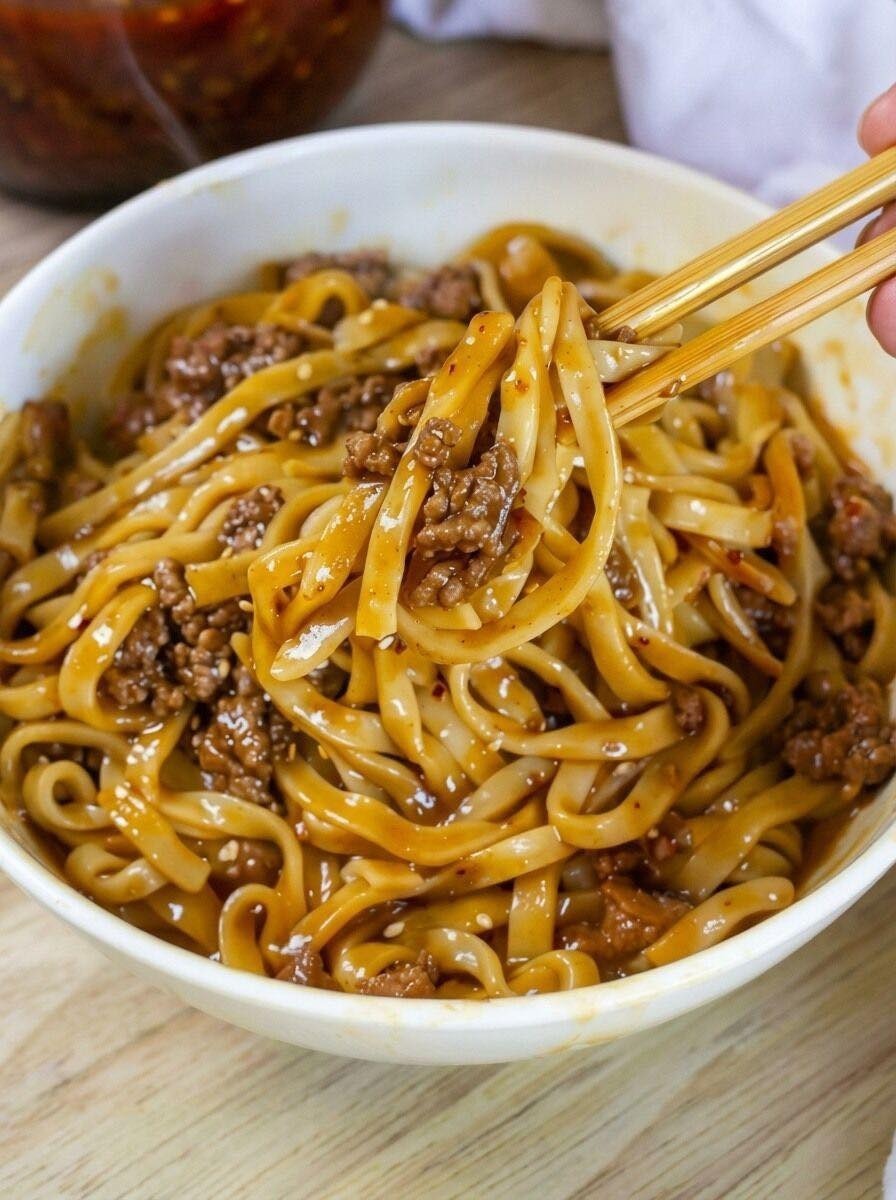
Savory Mongolian Beef Noodles is a fusion-style stir-fried noodle dish inspired by Mongolian beef but adapted into a full meal by combining glossy soy-based caramel sauce, tender beef strips, aromatic garlic and ginger, and chewy noodles that absorb all the flavor. The key to a great version is balance between sweet, salty, umami, and aroma, plus proper heat control so nothing becomes soggy or overcooked.
INGREDIENTS SECTION (FULL DETAILED VERSION)
For the beef
500 grams beef sirloin, flank steak, or ribeye (thinly sliced)
2 tablespoons cornstarch
1 tablespoon light soy sauce
1 teaspoon sesame oil (optional but improves aroma)
1/2 teaspoon black pepper
1 tablespoon cooking oil
For slicing beef properly, it is very important to cut against the grain. The grain refers to the direction of muscle fibers. If you slice along the grain, the beef becomes chewy and tough. If you slice against it, the texture becomes tender and almost silky after cooking. To make slicing easier, place the beef in the freezer for 20–30 minutes until slightly firm but not frozen solid. This allows clean, thin cuts.
Marination is simple but essential. Soy sauce gives initial saltiness and umami, black pepper gives warmth, cornstarch creates a thin protective coating that locks in juices and also helps thicken the final sauce later. A small amount of sesame oil can be added for aroma, but it is optional. Mix everything well and let it rest for at least 30 minutes. If you have time, 2 hours in the refrigerator gives noticeably deeper flavor penetration.
For noodles
300 to 400 grams egg noodles or wheat noodles
1 tablespoon oil for tossing after boiling
Water for boiling
1 teaspoon salt for boiling water
Noodles are the backbone of this dish, and texture matters as much as flavor. You want them springy, not soft or mushy. Egg noodles are ideal because they have a slight chew and absorb sauce beautifully. Boil them only until just al dente. This means they should still have a slight firmness in the center because they will continue cooking later in the wok. After boiling, immediately drain and rinse under cold water. This stops cooking instantly and removes excess starch so they do not stick together. Toss with a tiny amount of oil and keep aside.
Vegetables and aromatics
6–8 cloves garlic finely chopped or minced
1–2 tablespoons fresh ginger finely minced
1 medium onion sliced into thin wedges
6–8 green onions chopped (white and green separated)
1 bell pepper sliced thin (optional but adds crunch and color)
1–2 green chilies sliced (optional for heat)
1 small carrot julienned (optional for sweetness and texture contrast)
Aromatics are what give Mongolian-style dishes their signature smell. Garlic and ginger are essential and should not be substituted. Onions add sweetness and body to the sauce. Green onions give freshness at the end.
Sauce mixture (very important core of recipe)
6 tablespoons soy sauce
1 tablespoon dark soy sauce (for deep brown color)
3–4 tablespoons brown sugar (adjust depending on sweetness preference)
1 tablespoon oyster sauce (optional but strongly recommended for umami depth)
1/2 cup beef stock or water
1 teaspoon rice vinegar (optional, balances sweetness)
1 teaspoon chili sauce or chili flakes (optional heat layer)
1 teaspoon cornstarch mixed with 2 tablespoons water (slurry)
The sauce is what defines Mongolian beef noodles. It is not just salty; it is layered. Soy sauce gives saltiness and umami, dark soy gives color and slight molasses depth, brown sugar creates caramel-like sweetness that coats everything, oyster sauce adds richness and complexity, and vinegar adds a very subtle brightness that prevents heaviness. The cornstarch slurry is added at the end to create glossy thickness so the sauce clings to noodles.
COOKING PROCESS (EXTREMELY DETAILED)
Step 1: Preparing workspace and heat control
Before cooking, prepare all ingredients in advance. Stir-frying is fast, so there is no time to chop while cooking. This method is called mise en place. Arrange beef, noodles, sauce, and vegetables separately.
Use a wok if possible. A wok is ideal because its curved surface allows high heat distribution and quick tossing. If not, a large heavy skillet will work. Heat control is crucial. Mongolian beef noodles require high heat to create slight caramelization without burning sugar.
Step 2: Cooking noodles properly
Bring a large pot of water to a full boil. Add salt to season noodles from inside. Add noodles and stir immediately so they do not stick. Cook only until al dente based on package instructions, usually 2–4 minutes for fresh noodles or 6–8 minutes for dried.
Do not overcook. Overcooked noodles will break during stir-frying and absorb too much sauce, making the dish soggy. After draining, rinse under cold running water for 20–30 seconds. This stops cooking and removes surface starch. Toss lightly with oil to prevent clumping.
Step 3: Searing the beef correctly
Heat wok on highest flame until it starts to slightly smoke. Add 1–2 tablespoons oil. Oil should shimmer immediately. Add beef in small batches. Do not overcrowd because overcrowding lowers temperature and causes steaming instead of searing.
Spread beef in a thin layer. Let it sit for 30–40 seconds before stirring. This allows browning. Then stir quickly for another 1–2 minutes until the edges turn slightly crispy brown but the inside remains juicy. Remove and set aside. Repeat until all beef is cooked.
This step is critical. Proper searing creates Maillard reaction, which gives deep savory flavor. If beef is gray and watery, flavor will be weak.
Step 4: Building aromatic base
In the same wok, keep heat high. Add a little more oil if needed. Add garlic and ginger. Stir constantly for 15–30 seconds. The moment they become fragrant, proceed immediately. If they burn, the dish becomes bitter.
Add onions and white parts of green onions. Stir-fry for 1–2 minutes until slightly softened but still crunchy. Add bell peppers, carrots, or chilies if using. Cook briefly so they maintain texture.
Step 5: Making the sauce
Lower heat slightly to medium-high. Pour in prepared sauce mixture. Stir continuously. As it heats, sugar dissolves and begins to caramelize slightly. The mixture should become fragrant, glossy, and slightly thick.
Let it simmer for 2–3 minutes. This reduces raw soy flavor and integrates all components into a unified sauce base.
Step 6: Thickening the sauce
Slowly add cornstarch slurry while stirring. You will see the sauce transform into a glossy coating texture. Do not add too much at once. The goal is a silky consistency that clings to noodles, not a jelly-like texture.
If it becomes too thick, add a splash of water or stock. If too thin, simmer a little longer.
Step 7: Returning beef
Add cooked beef back into wok. Toss thoroughly so every piece is coated in sauce. Simmer for 1–2 minutes so beef absorbs flavor again. This step helps marry sauce and protein.
Step 8: Adding noodles
Add noodles gradually. Use tongs or chopsticks to lift and separate noodles while mixing. The sauce will slowly coat every strand. This is where the dish transforms into noodles rather than stir-fry.
If it feels dry, add a small splash of water or stock. If too wet, cook for 1–2 extra minutes while stirring so excess liquid evaporates.
Step 9: Final finishing
Add green parts of green onions. Toss briefly and turn off heat immediately. Optional drizzle of sesame oil can be added at the end for aroma.
FINAL RESULT DESCRIPTION
The finished dish should have glossy, dark caramel-brown noodles coated evenly in a sticky savory-sweet sauce. The beef should be tender and juicy with slightly caramelized edges. Vegetables should remain slightly crisp for texture contrast. The aroma should be strong with garlic, soy, and ginger balanced by subtle sweetness.
ADVANCED TIPS FOR PERFECT RESULTS
High heat is non-negotiable for authentic flavor. Low heat produces steamed beef and watery sauce.
Do not skip cornstarch in beef marinade; it improves texture significantly.
Do not overcook noodles; they should always be slightly firm before stir-frying.
Balance sugar carefully; too much makes it taste like dessert noodles.
Use fresh garlic and ginger; powdered versions reduce aroma drastically.
Cook beef in batches; overcrowding ruins texture.
VARIATIONS
Spicy version: Add chili garlic paste or Sichuan chili oil for heat depth
Vegetable-heavy version: Add broccoli, snap peas, mushrooms, bok choy
Healthier version: Use whole wheat noodles and reduce sugar slightly
Extra rich version: Add butter at the end for glossy restaurant-style finish
Crispy beef version: Lightly fry beef before sauce for crunchy edges
COMMON MISTAKES
Using wet noodles directly into wok causes clumping
Adding sauce too early prevents proper beef sear
Cooking beef too long makes it rubbery
Not heating wok enough removes smoky flavor
Too much cornstarch makes sauce glue-like
If you follow this full method carefully, you will get restaurant-quality Mongolian beef noodles with deep flavor, glossy coating, and perfect chewy texture every time.