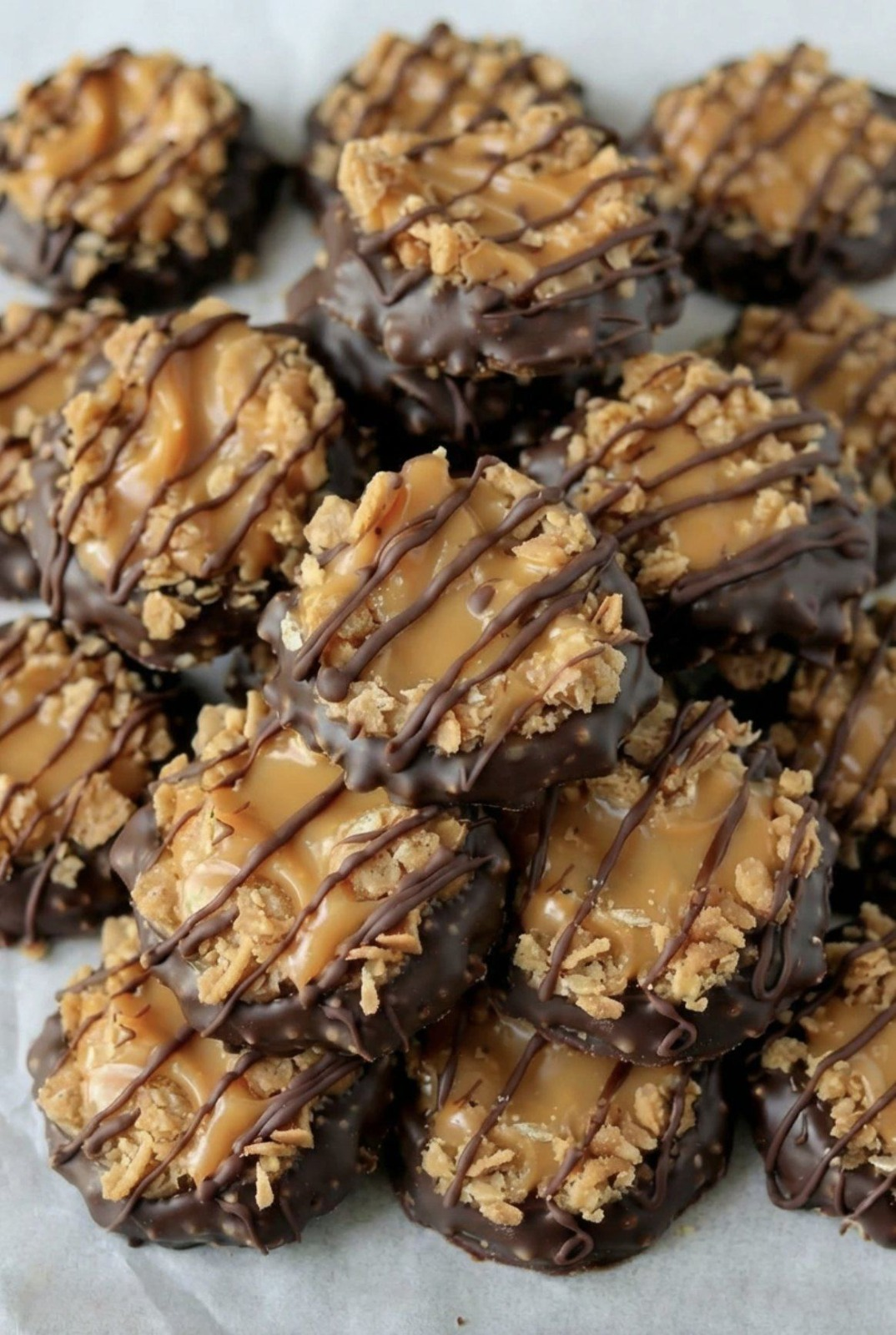
Homemade Caramel Coconut Cookie Bites are luxurious, bakery-style miniature desserts that combine three beloved flavors into one irresistible treat: rich buttery cookies, smooth homemade caramel, and sweet toasted coconut. These bite-sized desserts may be small in appearance, but they deliver a remarkable depth of flavor and texture. Every bite offers a tender cookie shell, a soft and chewy caramel center, and a delicious coconut topping that creates a truly memorable dessert experience.
This comprehensive guide explores every detail involved in making perfect Homemade Caramel Coconut Cookie Bites from scratch. Whether you are an experienced baker or a beginner who wants to create a show-stopping dessert, this extensive recipe will walk you through every stage of preparation, baking, assembly, storage, troubleshooting, and presentation.
These cookie bites are perfect for holiday cookie trays, family gatherings, birthdays, bake sales, dessert buffets, afternoon tea parties, gift boxes, wedding dessert tables, and special celebrations. Their elegant appearance and incredible flavor make them one of the most versatile homemade desserts you can prepare.
The Story Behind Caramel Coconut Cookie Bites
The combination of caramel and coconut has been beloved by dessert lovers for generations. Coconut contributes sweetness, chewiness, and a tropical flavor that pairs beautifully with rich caramel. When these ingredients are combined with a buttery cookie base, they create a dessert that balances sweetness, texture, and richness.
Traditional caramel coconut desserts often appear as bars, cakes, candies, or full-sized cookies. This recipe transforms those flavors into bite-sized treats that are easier to serve, share, transport, and enjoy. Because they are smaller than standard cookies, they are ideal for dessert platters where guests can sample multiple treats without feeling overwhelmed.
The miniature format also allows for a higher ratio of filling to cookie, meaning every bite contains plenty of caramel and coconut goodness.
What Makes These Cookie Bites Special?
Several characteristics distinguish these cookie bites from ordinary cookies:
The cookie base is soft and buttery rather than crunchy.
The caramel filling is homemade rather than store-bought.
The coconut is lightly toasted to maximize flavor.
The dessert is assembled in layers, creating a sophisticated texture.
The bite-sized shape makes them elegant and easy to serve.
The recipe can be customized in countless ways.
The result is a dessert that feels both comforting and impressive.
Understanding the Structure of the Cookie Bites
These cookie bites consist of four major components:
Component One: The Cookie Cup
The cookie cup forms the foundation.
It provides:
Structure
Rich buttery flavor
Tender texture
Support for the filling
The cookie cup should be sturdy enough to hold caramel while remaining soft enough to bite easily.
Component Two: Homemade Caramel
The caramel is the heart of the dessert.
It contributes:
Sweetness
Chewiness
Depth of flavor
Luxurious texture
A properly prepared caramel should be smooth, glossy, and easy to bite through.
Component Three: Toasted Coconut Layer
The coconut layer provides:
Texture contrast
Tropical flavor
Visual appeal
Additional sweetness
Light toasting develops nutty complexity that enhances the overall dessert.
Component Four: Optional Chocolate Finish
Chocolate is optional but highly recommended.
It adds:
Bitterness to balance sweetness
Visual elegance
Extra richness
A professional bakery appearance
Yield Information
Makes Approximately: 60 Cookie Bites
Preparation Time: 1 Hour
Dough Chilling Time: 2 Hours
Baking Time: 20 Minutes
Caramel Preparation Time: 25 Minutes
Assembly Time: 45 Minutes
Cooling and Setting Time: 1 Hour
Total Time: Approximately 5 Hours 30 Minutes
Difficulty Level: Intermediate
Ingredients
For the Cookie Dough
4 cups all-purpose flour
1 teaspoon baking powder
½ teaspoon baking soda
1 teaspoon salt
1½ cups unsalted butter, softened
1 cup granulated sugar
1 cup light brown sugar
3 large eggs
2 teaspoons pure vanilla extract
2 tablespoons whole milk
For the Homemade Caramel
2½ cups granulated sugar
¾ cup water
1 cup heavy cream
½ cup unsalted butter
1 teaspoon vanilla extract
1 teaspoon sea salt
For the Toasted Coconut Layer
4 cups sweetened shredded coconut
3 tablespoons melted butter
3 tablespoons brown sugar
½ teaspoon vanilla extract
For the Chocolate Drizzle
1½ cups semi-sweet chocolate chips
2 teaspoons coconut oil
Optional Garnishes
Flaky sea salt
White chocolate drizzle
Toasted almonds
Crushed pecans
Toasted macadamia nuts
Chocolate curls
Extra toasted coconut
Equipment Needed
Stand mixer or hand mixer
Large mixing bowls
Medium mixing bowls
Measuring cups
Measuring spoons
Rubber spatula
Whisk
Heavy-bottom saucepan
Mini muffin pans
Cooling racks
Parchment paper
Cookie scoop
Small offset spatula
Wire whisk
Pastry brush
Small piping bags
Kitchen thermometer
Sharp knife
Serving tray
Storage containers
Understanding Ingredient Functions
Flour
Flour provides structure.
Too little flour may cause spreading.
Too much flour can create dry cookies.
Accurate measurement is essential.
Butter
Butter contributes:
Flavor
Tenderness
Moisture
Richness
A high-quality butter significantly improves the final result.
Sugar
Granulated sugar provides sweetness and structure.
Brown sugar adds moisture and caramel notes.
The combination creates a balanced cookie texture.
Eggs
Eggs contribute:
Binding
Structure
Moisture
Richness
Eggs also help the dough hold its shape.
Vanilla
Vanilla enhances every flavor in the recipe.
Use pure vanilla extract whenever possible.
Coconut
Coconut provides texture and flavor.
Toasting enhances its natural sweetness and nuttiness.
Step 1: Preparing Your Kitchen
Successful baking begins with organization.
Clean your work surfaces thoroughly.
Gather every ingredient.
Measure everything before beginning.
Prepare baking pans.
Set out equipment.
Read the recipe completely before starting.
Professional bakers call this preparation process “mise en place.”
Proper preparation prevents mistakes later.
Step 2: Preparing the Dry Ingredients
In a large bowl combine:
Flour
Baking powder
Baking soda
Salt
Whisk thoroughly.
Continue whisking for approximately one minute.
This ensures even distribution of the leavening agents.
Set aside.
Step 3: Creaming Butter and Sugar
Place softened butter into the mixing bowl.
Add granulated sugar.
Add brown sugar.
Beat on medium speed.
Continue mixing for 5 to 7 minutes.
The mixture should become:
Light
Creamy
Fluffy
Pale in color
This step is one of the most important in the entire recipe.
Proper creaming creates a lighter cookie texture.
Step 4: Adding Eggs and Vanilla
Add eggs individually.
Mix thoroughly after each addition.
Add vanilla extract.
Continue mixing until smooth.
The mixture should appear glossy and uniform.
Step 5: Combining Wet and Dry Ingredients
Reduce mixer speed.
Gradually add dry ingredients.
Add milk.
Mix until combined.
Stop mixing as soon as the flour disappears.
Overmixing develops gluten and may create tough cookies.
Step 6: Chilling the Dough
Cover the bowl.
Place in the refrigerator.
Chill for at least two hours.
Overnight chilling is even better.
Benefits of chilling include:
Improved flavor
Reduced spreading
Better texture
Easier handling
More uniform baking
Step 7: Preparing the Coconut Mixture
Place coconut into a large bowl.
Add melted butter.
Add brown sugar.
Add vanilla.
Mix thoroughly.
Spread onto a baking sheet.
Bake at 325°F (163°C).
Bake for approximately 10 minutes.
Stir every 3 minutes.
The coconut should become lightly golden.
Cool completely.
The aroma should be warm, sweet, and nutty.
Step 8: Forming Cookie Cups
Grease mini muffin pans.
Portion dough evenly.
Press dough into each cavity.
Create a small well in the center.
Ensure even thickness throughout.
Uniform shaping creates consistent baking.
Step 9: Baking the Cookie Cups
Bake at 350°F (175°C).
Bake for 12 to 15 minutes.
The edges should become lightly golden.
Remove from oven.
Immediately reinforce the center indentation using the back of a spoon.
Cool in pan.
Transfer to wire racks.
Allow complete cooling.
Step 10: Making Homemade Caramel
Place sugar and water into a saucepan.
Cook over medium-high heat.
Do not stir excessively.
Watch carefully.
The mixture will transition through several stages:
Clear syrup
Light golden
Amber
Deep amber
When deep amber is reached:
Add butter carefully.
Whisk continuously.
Slowly add cream.
Continue whisking.
Add vanilla.
Add salt.
Cook until smooth.
Remove from heat.
Cool slightly.
The caramel should be thick but pourable.
Step 11: Understanding Perfect Caramel
Perfect caramel should have:
A glossy appearance
Rich amber color
Smooth texture
Balanced sweetness
A slight chew
No graininess
No burnt taste
Patience is essential during caramel preparation.
Step 12: Filling the Cookie Cups
Arrange cooled cookie cups.
Use a spoon or piping bag.
Fill each center with caramel.
Avoid overfilling.
Allow caramel to settle.
The caramel should sit slightly below the rim.
Step 13: Adding Toasted Coconut
Sprinkle coconut generously.
Press gently.
Ensure coconut adheres to caramel.
The surface should appear textured and abundant.
Step 14: Creating the Chocolate Drizzle
Place chocolate chips and coconut oil into a bowl.
Melt gently.
Stir until smooth.
Transfer to piping bag.
Drizzle across cookie bites.
Use thin elegant lines.
Allow chocolate to set.
Step 15: Resting and Setting
Allow cookie bites to rest for one hour.
This step allows:
Caramel stabilization
Flavor development
Texture improvement
Chocolate hardening
Professional-quality appearance
Texture Profile
A perfectly made Caramel Coconut Cookie Bite should have:
Tender cookie shell
Soft caramel center
Chewy coconut topping
Light chocolate finish
Balanced sweetness
Pleasant mouthfeel
Rich aroma
Lingering caramel flavor
Flavor Profile
The first bite should reveal:
Buttery cookie notes
Vanilla undertones
Rich caramel sweetness
Toasted coconut flavor
Chocolate complexity
A balanced finish
No single ingredient should dominate.
Professional Baker’s Tips
Use room-temperature ingredients.
Measure flour accurately.
Use fresh baking powder.
Avoid overbaking.
Toast coconut carefully.
Monitor caramel constantly.
Cool components fully.
Assemble patiently.
Store properly.
Allow flavors to mature overnight.
Common Mistakes
Overbaking
Results in dry cookie cups.
Remove cookies as soon as edges become golden.
Underbaking
Creates weak cookie cups.
Ensure proper baking time.
Burnt Caramel
Watch caramel constantly.
Burnt caramel develops bitterness.
Runny Caramel
May result from insufficient cooking.
Allow more cooking time.
Tough Cookies
Usually caused by overmixing.
Mix only until combined.
Soggy Coconut
Always cool coconut completely before assembly.
Creative Variations
Salted Caramel Coconut Cookie Bites
Add flaky sea salt on top.
Creates sweet-salty contrast.
Chocolate Coconut Cookie Bites
Add cocoa powder to dough.
Use dark chocolate drizzle.
White Chocolate Coconut Cookie Bites
Replace chocolate drizzle with white chocolate.
Almond Coconut Cookie Bites
Add toasted almonds.
Provides extra crunch.
Tropical Paradise Version
Add dried pineapple pieces.
Coffee Caramel Version
Add espresso powder to caramel.
Creates sophisticated flavor.
Holiday Spice Version
Add cinnamon.
Add nutmeg.
Add ginger.
Perfect for festive gatherings.
Macadamia Coconut Version
Add chopped macadamia nuts.
Creates luxurious texture.
Serving Suggestions
Serve alongside:
Fresh coffee
Espresso
Latte
Cappuccino
Hot tea
Iced coffee
Milk
Hot chocolate
Vanilla ice cream
Whipped cream
Dessert charcuterie boards
Holiday dessert platters
Fruit trays
Party buffets
Wedding dessert tables
Storage Instructions
Store in airtight containers.
Room temperature: 4 days.
Refrigerated: 7 to 10 days.
Freeze for up to 3 months.
Separate layers with parchment paper.
Avoid direct sunlight.
Avoid humidity.
Freezing Instructions
Arrange bites on baking tray.
Freeze until solid.
Transfer to containers.
Label with date.
Thaw at room temperature before serving.
Gift Packaging Ideas
Arrange in decorative boxes.
Use parchment paper layers.
Package in holiday tins.
Wrap with ribbon.
Include ingredient labels.
Ideal for holidays and special occasions.
Approximate Nutritional Information Per Cookie Bite
Calories: 135
Carbohydrates: 17 grams
Protein: 1.5 grams
Fat: 7 grams
Saturated Fat: 4 grams
Sugar: 12 grams
Fiber: 1 gram
Sodium: 45 milligrams
Final Thoughts
Homemade Caramel Coconut Cookie Bites represent the perfect combination of elegance, comfort, and indulgence. Their buttery cookie foundation, silky homemade caramel center, golden toasted coconut topping, and delicate chocolate drizzle create a dessert that feels both nostalgic and sophisticated. Although they require multiple steps, each stage contributes to a final product that is far superior to ordinary cookies or store-bought treats. The rich layers of flavor, contrasting textures, beautiful appearance, and impressive presentation make these cookie bites suitable for everything from casual family desserts to professional-quality dessert tables. With patience, attention to detail, and quality ingredients, you can create dozens of bakery-worthy Caramel Coconut Cookie Bites that are sure to become one of the most requested treats in your recipe collection.