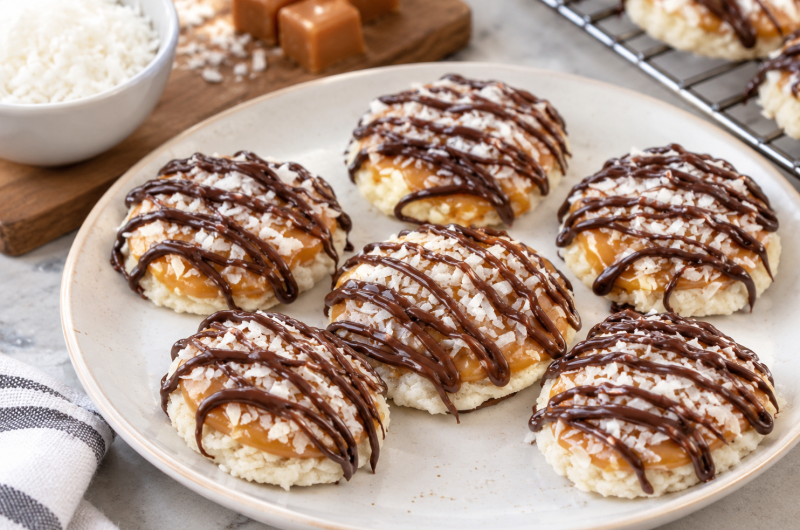
Homemade Caramel Coconut Cookie Bites combine the rich taste of buttery shortbread, smooth caramel, sweet coconut flakes, and a delicate drizzle of melted chocolate. These bite-sized cookies offer several delicious textures in one treat, from the tender cookie base to the chewy caramel topping and lightly crisp coconut.
They are a lovely choice for holiday cookie platters, afternoon snacks, family gatherings, bake sales, or homemade edible gifts. If you enjoy chocolate caramel cookies or classic coconut desserts, this recipe brings those familiar flavors together in a small, satisfying treat.
One of the best things about these caramel coconut cookies is that they look impressive without requiring complicated baking techniques. The shortbread-style cookies are prepared with everyday baking ingredients, while the caramel and chocolate layers create the decorative finish.
Each cookie is coated with chocolate underneath, topped with melted caramel, sprinkled with sweetened coconut, and finished with a chocolate drizzle. Although the finished cookies look like something from a specialty bakery, the process is manageable for home bakers who follow each step carefully.
What Makes These Caramel Coconut Cookies Special?
These homemade cookie bites stand out because every layer contributes something different. The buttery cookie provides a mild, tender foundation, allowing the sweeter toppings to take center stage without overwhelming the overall flavor. Caramel adds a rich, chewy quality, while coconut introduces a pleasant texture and a tropical sweetness. The semi-sweet chocolate balances the sugary toppings and gives the cookies an attractive finish. Together, these ingredients create a dessert that feels indulgent while remaining easy to portion and serve.
Another appealing feature is the contrast between the cookie’s soft interior and the firmer chocolate coating. Once the chocolate sets, it creates a thin layer beneath the cookie that adds flavor and helps distinguish these treats from ordinary shortbread biscuits. The caramel topping stays pleasantly chewy, and the coconut gives the surface a little texture. For anyone who enjoys homemade chocolate caramel cookies, coconut shortbread, or bite-sized dessert recipes, these cookies are an excellent addition to a collection of easy baking favorites.
Ingredients for Homemade Caramel Coconut Cookie Bites
Ingredients for the Shortbread Cookies
The cookie base uses butter, granulated sugar, heavy cream, egg, egg yolk, vanilla extract, water, salt, baking soda, cream of tartar, and all-purpose flour. Each ingredient plays a particular role in creating the dough. Butter contributes richness, sugar provides sweetness, and the egg and egg yolk help bring the mixture together. Vanilla gives the cookies a familiar bakery-style aroma, while the dry ingredients help establish their structure. The result should be a tender cookie that holds its shape and supports the caramel topping.
Cold butter is used at the beginning of the recipe, so cut it into small cubes before mixing. This makes it easier to distribute the butter through the mixture without leaving large pieces behind. Measure the flour carefully and add it in two portions, as directed in the recipe card. Mixing gradually helps incorporate the ingredients evenly while reducing the risk of developing too much structure in the dough. Since these cookies are intended to stay soft rather than become deeply browned, accurate measurements and gentle mixing are especially important.
Ingredients for the Chocolate Layer
Semi-sweet chocolate and a small amount of butter form the chocolate coating. The chocolate brings a deeper cocoa flavor that balances the sweetness of the caramel and coconut, while the butter helps create a smooth mixture that spreads easily over the cookie bases. Semi-sweet chocolate is a useful choice because it provides sweetness without being as sugary as many milk chocolate varieties. The recipe uses chocolate on the underside of each cookie as well as in the decorative drizzle across the finished tops.
For the smoothest coating, melt the chocolate slowly and stir it regularly. Excessive heat can cause chocolate to become thick or grainy, making it difficult to spread. If you use a microwave, work at reduced power and stir between heating intervals whenever necessary. A saucepan over low heat is another option, provided the chocolate is stirred and watched closely. Reserve some of the melted chocolate for the final decoration, because the drizzle is what gives these homemade caramel coconut bites their finished appearance.
Ingredients for the Caramel and Coconut Topping
The topping consists of Kraft caramel bits, heavy cream, and sweetened coconut flakes. The caramel bits melt into a rich, sticky mixture when gently heated with the cream. This creates a spreadable topping that adheres to the cookies and holds the coconut in place. Sweetened coconut flakes contribute sweetness and texture, making each bite more interesting than a plain caramel cookie. The combination is inspired by familiar chocolate, caramel, and coconut treats, but the homemade shortbread base gives these cookies their own distinctive character.
You can use the coconut straight from the package or toast it lightly before adding it to the caramel. Untoasted coconut produces a softer, sweeter finish, while toasted coconut introduces a warmer aroma and slightly crisp texture. If you choose to toast it, watch it carefully because coconut can brown quickly. The recipe’s original instructions also allow you to omit the coconut if preferred, although doing so will naturally change the flavor and appearance of the finished cookies.
How to Make Homemade Caramel Coconut Cookie Bites
Step 1: Prepare the Baking Sheets and Oven
Begin by preheating the oven to 350°F and lining two baking sheets with parchment paper or a silicone baking mat. Preparing the trays before mixing the dough makes the baking process easier and helps prevent the cookies from sticking. Parchment paper is especially useful because you will also need a suitable surface for adding the chocolate, caramel, coconut, and decorative drizzle after baking. Keep the lined trays available throughout the recipe so you can assemble the cookies without moving them unnecessarily.
Step 2: Mix the Butter and Sugar
Cut the cold butter into cubes and place it in a large mixing bowl. Mix on medium speed for approximately 30 seconds to break it into smaller pieces. Add the granulated sugar and heavy cream, then continue mixing for about one minute, or until the mixture is combined. The goal is to distribute the ingredients evenly rather than whip the mixture excessively. A shortbread-style dough benefits from gentle handling, so avoid prolonged mixing that could affect the cookies’ tender texture.
Step 3: Add the Eggs, Vanilla, and Water
Add the whole egg, egg yolk, vanilla extract, and one tablespoon of water to the butter mixture. Mix until the ingredients are incorporated and the mixture looks reasonably smooth. The egg and yolk contribute richness and help bind the dough, while vanilla adds flavor. Scrape down the sides of the bowl if needed so that no ingredients remain stuck around the edges. Taking a moment to check the mixture now helps ensure that the flour and other dry ingredients will be distributed more evenly in the next stage.
Step 4: Incorporate the Dry Ingredients
Combine the salt, baking soda, cream of tartar, and half of the all-purpose flour with the wet mixture. Mix until the ingredients begin to come together, then add the remaining flour and continue mixing only until combined. Adding the flour in two portions makes it easier to incorporate without overworking the dough. The finished mixture should be suitable for scooping and shaping. Avoid continuing to mix simply to make the dough look perfectly uniform, because unnecessary mixing can make the baked cookies less tender.
Step 5: Shape and Bake the Cookies
Use a large cookie scoop to portion the dough onto the prepared baking sheets, leaving enough space between the portions for comfortable handling. Gently press down on each dough ball to flatten it slightly. Bake for eight to ten minutes, watching the cookies carefully toward the end of the baking time. They should no longer look wet on top, but they should not become deeply golden or browned underneath. The short baking time helps preserve the soft texture needed for these caramel-topped cookie bites.
Step 6: Cool the Cookies Completely
Remove the baking sheets from the oven and let the cookies rest on the trays for a few minutes. This brief resting period allows them to firm up enough to move without breaking. Transfer them carefully to a cooling rack and let them cool completely before adding the chocolate layer. Keep the parchment-lined baking sheets nearby for decorating. Applying chocolate to warm cookies can make the coating difficult to control, so allowing the bases to cool is an important step toward a neat, stable finish.
Step 7: Add the Chocolate Base
Once the cookies have cooled, turn them over so their undersides face upward on the parchment paper. Melt the semi-sweet chocolate with the butter over low heat in a saucepan, or use the microwave at 50% power for approximately one minute. Stir until the mixture is smooth, heating further in short intervals if needed. Spread about one teaspoon of melted chocolate over the bottom of each cookie, using a small spatula to cover the surface. Leave the remaining chocolate aside for the final drizzle.
Step 8: Let the Chocolate Set
Allow the chocolate-coated cookie bases to rest until the chocolate has hardened. Depending on the room temperature and the type of chocolate used, this may take a little time. Avoid rushing the process by adding the caramel while the chocolate is still very soft. A set chocolate base provides a firmer foundation for the topping and makes the cookies easier to turn over during assembly. Once the chocolate has hardened, carefully flip each cookie upright so the chocolate-coated side rests underneath.
Step 9: Prepare and Spread the Caramel
Place the caramel bits and heavy cream in a saucepan over low heat, stirring until the caramel melts into a smooth mixture. You can also use a microwave at 50% power for about one minute, stirring afterward and heating a little longer if necessary. Work gently to avoid overheating the caramel, which can make it harder to spread. Use a small spatula to distribute the melted caramel over the tops of the cookies, creating an even layer that reaches across most of each surface.
Step 10: Add the Coconut Topping
Sprinkle the sweetened coconut flakes over each cookie immediately after spreading on the caramel. Press the coconut very gently into the topping so that the flakes stay in place as the caramel cools. This step is best completed one cookie at a time because caramel begins to firm up as it stands. If you wait until the entire batch has been coated, the surface of the earlier cookies may become too dry for the coconut to adhere properly. Repeat until every cookie has a coconut-covered top.
Step 11: Drizzle with the Remaining Chocolate
Melt the reserved chocolate again if it has started to set. Transfer it to a piping bag or a small zip-top bag, then snip off a very small corner to create a narrow opening. Drizzle the chocolate over the coconut-topped cookies using light, sweeping movements. You can make thin parallel lines or a loose zigzag pattern, depending on the look you prefer. Keep the decoration simple so that the coconut and caramel remain visible. Allow the finished cookies to stand until the toppings have set before serving.
Essential Baking Tips for the Best Results
Use Parchment Paper for Easy Assembly
Parchment paper does more than prevent sticking during baking. It also gives you a convenient surface for applying the chocolate coating, spreading caramel, sprinkling coconut, and finishing the cookies with a drizzle. Any chocolate or caramel that falls from the cookies can be left on the paper rather than sticking directly to a tray. Keep the paper in place until the decorations have set, and handle the finished cookies gently when transferring them to a serving plate or storage container.
Avoid Overmixing the Dough
A tender shortbread-style cookie depends on mixing the ingredients only as much as necessary. Once the flour has been added, stop mixing as soon as no obvious dry patches remain. Overworking the dough can produce cookies with a firmer, less delicate texture, which is not ideal for this recipe. Adding the flour in two stages makes the process easier to control, especially when using an electric mixer. If you are mixing by hand, use a sturdy spoon or spatula and work carefully until the dough comes together.
Watch the Baking Time Closely
These cookies are not meant to develop a dark golden-brown surface. Start checking them at the eight-minute mark and remove them when the tops no longer appear wet. The exact timing may vary slightly depending on your oven, baking sheet, and cookie size. Leaving them in the oven too long can make the bottoms brown and the texture firmer than intended. Remember that the cookies will continue to settle as they cool, so they do not need to look completely firm when you take them out.
Add the Coconut While the Caramel Is Soft
Timing is important when assembling caramel coconut cookies. As the caramel cools, it becomes thicker and less sticky, which makes it harder for the coconut flakes to stay in place. For the best results, spread caramel on one cookie, sprinkle the coconut over it immediately, and then move to the next cookie. Press the flakes lightly into the surface without pushing so hard that the caramel spreads beyond the edges. This simple approach helps create a more consistent finish across the whole batch.
Try Toasted Coconut or Chocolate Chips
Toasted coconut is a useful variation if you prefer a deeper, nuttier flavor. Spread the coconut in a thin layer and toast it briefly, checking frequently to prevent burning. You can also stir a handful of mini chocolate chips into the cookie dough if you want extra chocolate flavor in the base. Add them gently after the dough has come together, and avoid mixing for too long. These adjustments let you personalize the recipe while preserving the main combination of buttery cookies, caramel, coconut, and chocolate.
Serving Ideas for Caramel Coconut Cookie Bites
These cookies are easy to serve because their small size makes them suitable for dessert platters, afternoon coffee breaks, and casual gatherings. Arrange them in a single layer on a serving plate so that the chocolate drizzle and coconut topping remain visible. They pair nicely with coffee, black tea, milk, or a simple hot chocolate. For a dessert table, serve them alongside plain shortbread, brownies, or fruit so guests can choose between different textures and levels of sweetness.
They are also a practical choice for holiday baking and homemade gifts. Once the toppings have completely set, place the cookies in a clean container and separate layers with parchment paper if necessary. This helps protect the chocolate drizzle and prevents the caramel tops from pressing against one another. For a gift box, arrange the cookies in small paper liners or use a divided container to keep them stable during transport. Their layered appearance makes them attractive without requiring elaborate decoration or special baking equipment.
How to Store Homemade Caramel Coconut Cookies
Store the finished cookies in an airtight container for up to three days, following the original recipe’s storage guidance. Let the chocolate and caramel set fully before closing the container, since trapped warmth or moisture may affect the toppings. Keep the cookies in a cool, dry place away from direct sunlight and heat. If your kitchen is particularly warm, the chocolate may soften, so a cooler storage location can help maintain the appearance and texture of the finished treats.
When stacking the cookies, place parchment paper between the layers to reduce sticking and protect the chocolate drizzle. Avoid pressing them tightly together, because the caramel may remain slightly tacky even after the surface has set. For serving, allow chilled cookies to stand briefly at room temperature if their toppings have become especially firm. Check their appearance and texture before serving, and discard any cookies that show signs of spoilage. Because storage conditions vary, the three-day period is a practical guideline rather than a guarantee under every condition.
Common Problems and How to Avoid Them
Why Did My Cookies Turn Out Hard?
Hard cookies can result from overbaking, excessive mixing after adding the flour, or inaccurate flour measurements. Check the cookies as soon as they reach eight minutes and remove them when the tops are no longer wet. Measure the flour carefully rather than packing it tightly into the measuring cup, and stop mixing as soon as the dough comes together. These steps help preserve the tender texture that makes the shortbread base a good match for the chewy caramel and coconut topping.
Why Is the Caramel Difficult to Spread?
Caramel may become difficult to spread if it cools too much before you begin decorating or if it has been heated unevenly. Melt the caramel bits with the heavy cream over low heat and stir until the mixture is smooth. If it begins to thicken during assembly, gently warm it again until it becomes spreadable. Avoid overheating, because very hot caramel can be difficult to handle and may become too thin. Preparing your cookies, coconut, and decorating surface before melting the caramel also helps the assembly process move smoothly.
Why Does the Coconut Fall Off?
Coconut usually falls off when the caramel has already started to set before the flakes are added. To prevent this, decorate each cookie immediately after spreading on its caramel layer. Sprinkle the coconut evenly and press it gently into the sticky surface. If you are using toasted coconut, allow it to cool before adding it so that the warmth does not unnecessarily affect the caramel. A small amount of care during assembly makes a noticeable difference in how well the finished topping stays in place.
What Can I Do with Leftover Chocolate or Caramel?
Do not throw away small amounts of leftover chocolate or caramel if they are still clean and suitable for use. The original recipe suggests using them to make chocolate turtles with pecans or chocolate-covered pretzel rods. Leftover coconut can also be saved for other coconut cookie recipes or dessert toppings. Store unused ingredients according to their packaging instructions, and avoid reusing any mixture that has been contaminated during decorating. Planning a second small treat is an easy way to reduce waste after baking.
Frequently Asked Questions
Can I Use Unsweetened Coconut Instead?
Sweetened coconut flakes are specified in the original recipe, so they will give you the intended sweetness and texture. Unsweetened coconut can be used as a personal variation, but the final cookies may taste less sweet and have a slightly different texture. If you choose to make this change, keep the remaining ingredients and quantities the same. You can also lightly toast the coconut for a warmer flavor, provided you watch it carefully and allow it to cool before adding it to the caramel.
Can I Make These Cookies Without Coconut?
Yes, the coconut may be omitted if you prefer a simpler caramel and chocolate cookie. The finished cookies will still have the buttery base, chocolate coating, and caramel topping, but they will lack the distinctive coconut flavor and texture. If you leave out the coconut, consider using the remaining chocolate to add a decorative drizzle that gives each cookie a finished appearance. No other changes are necessary for this variation, although the final result will differ from the original coconut-topped version.
Can I Prepare the Cookies Ahead of Time?
You can bake the cookie bases in advance and decorate them later, provided they are completely cooled and stored appropriately. Keep the undecorated cookies in an airtight container until you are ready to add the chocolate and caramel. For the best appearance, allow enough time for the chocolate coating and final drizzle to set before serving. Preparing the bases ahead can make the process more convenient for holidays or gatherings, when completing every baking and decorating step on the same day may not fit your schedule.
How Can I Get a Neat Chocolate Drizzle?
For a controlled drizzle, use a piping bag or a small zip-top bag with a tiny corner snipped off. If the opening is too large, the chocolate may come out in thick streams and cover the coconut. Start with light pressure and move your hand steadily over the cookies. You can practise on the parchment paper before decorating the full batch. Make sure the chocolate is melted and fluid enough to flow, but not so hot that it becomes difficult to handle safely.
Why This Recipe Is Worth Keeping
Homemade Caramel Coconut Cookie Bites offer an appealing combination of familiar ingredients, straightforward preparation, and a decorative finish that suits many occasions. The recipe builds flavor in layers rather than relying on a complicated dough or specialized equipment. With a tender cookie underneath, chocolate on the base, creamy caramel on top, and coconut finished with a drizzle, each component has a clear purpose. Once you become comfortable with the timing of the chocolate and caramel, these cookies are a rewarding option for anyone who enjoys homemade sweet treats.
The most important details are simple: measure the ingredients carefully, mix the dough gently, avoid overbaking, cool the cookies completely, and add the coconut while the caramel is still sticky. Following those steps helps create cookies that are tender, attractive, and easy to serve. Whether you prepare them for a family dessert plate, a holiday cookie exchange, or an afternoon treat, these caramel coconut bites bring buttery shortbread, chewy caramel, and rich chocolate together in a delicious homemade dessert.
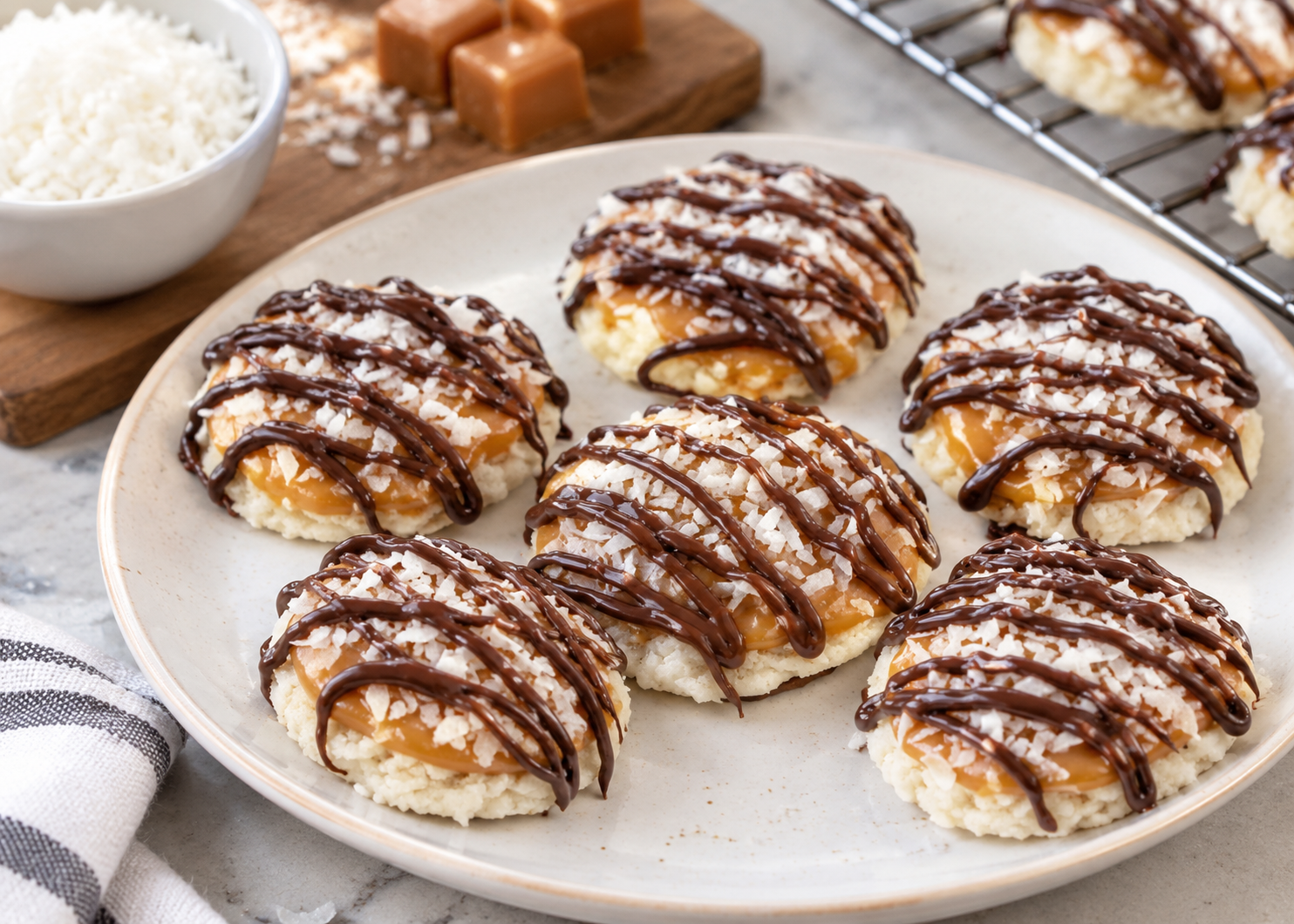
Homemade Caramel Coconut Cookie Bites
Buttery shortbread cookies topped with smooth caramel, sweetened coconut flakes, and a drizzle of semi-sweet chocolate. These bite-sized caramel coconut cookies are sweet, tender, and perfect for dessert platters, holiday gatherings, or an everyday homemade treat.
24
servings15
minutes8
minutes271
kcal60
minutes1
hour23
minutesIngredients
- For the Cookies
½ cup cold butter
1 ¼ cups granulated sugar
1 tablespoon heavy cream
1½ eggs (1 whole egg plus 1 egg yolk)
1 teaspoon vanilla extract
1 tablespoon water
½ teaspoon fine sea salt or table salt
½ teaspoon baking soda
1 teaspoon cream of tartar
2½ cups (330 grams) all-purpose flour
- For the Chocolate Layer
6 ounces semi-sweet chocolate, plus more if needed
½ tablespoon butter
- For the Caramel Topping
8 ounces Kraft caramel bits
1 tablespoon heavy cream
½ cup sweetened coconut flakes
Directions
- Prepare the oven
Preheat the oven to 350°F. Line two baking sheets with parchment paper or silicone baking mats and set aside. - Mix the butter and sugar
Cut the cold butter into cubes and place them in a large mixing bowl. Mix on medium speed for approximately 30 seconds. Add the granulated sugar and heavy cream, then mix for another minute. - Add the wet ingredients.
Mix in the whole egg, egg yolk, vanilla extract, and water until everything is evenly combined. - Incorporate the dry ingredients
Add the salt, baking soda, cream of tartar, and half of the flour. Mix until combined, then add the remaining flour. Stop mixing as soon as the dough comes together. - Shape the cookies
Use a large cookie scoop to portion the dough onto the prepared baking sheets. Gently press each portion down to flatten it slightly. - Bake
Bake for 8–10 minutes, or until the tops no longer look wet. Avoid browning the bottoms to keep the cookies tender. - Cool the cookies
Let the cookies rest on the baking sheets for a few minutes before transferring them to a cooling rack. Allow them to cool completely and keep the parchment-lined trays for decorating. - Prepare the chocolate coating
Melt the semi-sweet chocolate with the butter in a saucepan over low heat or in the microwave at 50% power for approximately one minute. Stir until smooth. - Coat the cookie bottoms
Turn the cooled cookies upside down. Spread approximately one teaspoon of melted chocolate over the bottom of each cookie. Return them to the parchment paper and let the chocolate harden. Reserve the remaining chocolate. - Melt the caramel
Turn the cookies upright once the chocolate has set. Combine the caramel bits and heavy cream in a saucepan over low heat or microwave them at 50% power for approximately one minute. Stir until smooth. - Add the caramel and coconut
Spread the melted caramel over each cookie. Immediately sprinkle sweetened coconut flakes over the caramel and press gently so they stick. Repeat with the remaining cookies. - Drizzle with chocolate
Reheat the reserved chocolate if necessary. Transfer it to a piping bag or a zip-top bag with a small corner snipped off. Drizzle the chocolate over the coconut topping. - 13. Allow the cookies to set
Let the cookies rest until the chocolate and caramel have set. Serve immediately or store in an airtight container for up to three days.
Notes
- Remove the cookies when the tops are no longer wet. Avoid allowing the bottoms to become golden brown.
- Mix only until the ingredients are combined, especially after adding the flour.
- It helps prevent sticking and provides a convenient surface for decorating.
- Sprinkle the coconut immediately after applying the caramel so it adheres properly.
- Lightly toast the coconut for approximately three minutes while the oven warms, watching closely to prevent burning.
- Stir a handful of mini chocolate chips into the dough for additional chocolate flavor.
- Omit the coconut if preferred, or use toasted coconut for a nuttier flavor.
- Use leftover chocolate or caramel to prepare chocolate turtles with pecans or chocolate-covered pretzel rods.
- Keep the finished cookies in an airtight container for up to three days
Nutrition Facts
24 servings per container
- Amount Per ServingCalories270
- % Daily Value *
- Total Fat
10g
13%
- Total Carbohydrate
41g
15%
- Total Sugars 20g
- Protein 5g 10%
* The % Daily Value tells you how much a nutrient in a serving of food contributes to a daily diet. 2,000 calories a day is used for general nutrition advice.