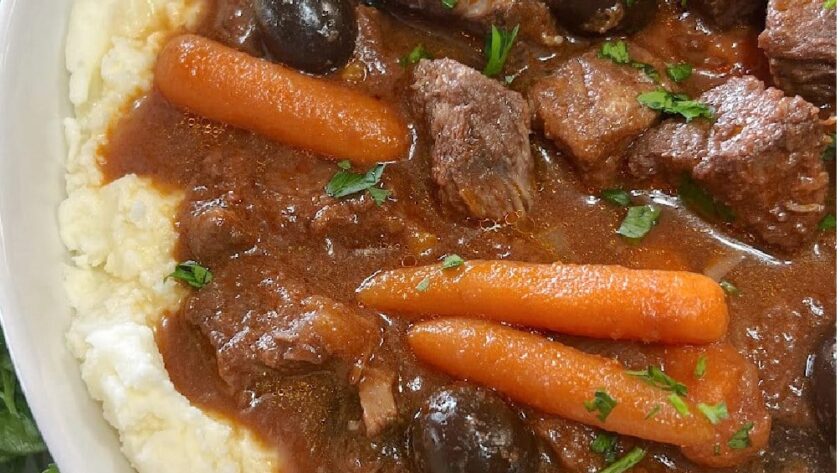
Beef Stew with Mashed Potatoes is the kind of meal that instantly brings feelings of comfort, warmth, and satisfaction. It is a timeless dish that has been enjoyed in homes around the world for generations, and for good reason. Few meals can compete with the rich aroma of tender beef slowly simmering in a savory broth, combined with vegetables that become soft and flavorful as they absorb the essence of herbs and seasonings. When this hearty stew is served over a generous helping of creamy mashed potatoes, it transforms into a complete meal that is deeply nourishing and incredibly satisfying.
This dish is especially popular during the cooler months of the year when people crave warm, filling meals that provide comfort after a long day. However, its appeal extends far beyond winter. Beef Stew with Mashed Potatoes is a meal that can be enjoyed year-round because of its rich flavor, wholesome ingredients, and ability to bring family and friends together around the dining table. It is the sort of meal that encourages slow eating and conversation, creating memories with every serving.
One of the greatest qualities of Beef Stew with Mashed Potatoes is its balance of flavors and textures. The beef becomes wonderfully tender after hours of gentle cooking. The vegetables soften while maintaining enough texture to add interest to every bite. The broth thickens into a luxurious gravy infused with herbs, garlic, onions, and the natural juices released during cooking. Meanwhile, the mashed potatoes provide a creamy, buttery foundation that perfectly complements the richness of the stew. Together, they create a meal that feels both rustic and elegant.
The slow-cooking process is essential to the success of this recipe. Time allows the collagen in the beef to break down, resulting in meat that practically melts in your mouth. The vegetables absorb the flavors of the broth, and the herbs infuse every spoonful with depth and complexity. Although the cooking process takes several hours, the actual preparation is straightforward, making this dish ideal for home cooks of all skill levels.
Ingredients for the Beef Stew
3 pounds beef chuck roast, cut into large bite-sized cubes
4 tablespoons all-purpose flour
2 teaspoons salt
1 teaspoon freshly ground black pepper
3 tablespoons vegetable oil
2 large onions, diced
6 cloves garlic, minced
4 large carrots, peeled and sliced
4 celery stalks, sliced
2 tablespoons tomato paste
6 cups beef broth
1 cup water
2 tablespoons Worcestershire sauce
2 bay leaves
2 teaspoons dried thyme
1 teaspoon dried rosemary
1 teaspoon paprika
1 teaspoon onion powder
1 teaspoon garlic powder
1 pound baby potatoes, halved
1 cup frozen peas
2 tablespoons fresh parsley, chopped
Ingredients for the Mashed Potatoes
4 pounds russet potatoes
8 tablespoons butter
1 cup warm whole milk
1 cup heavy cream
2 teaspoons salt
1 teaspoon black pepper
3 tablespoons fresh chives, finely chopped
2 tablespoons sour cream, optional
Preparation of the Beef
Begin by selecting a quality beef chuck roast. Chuck roast is considered one of the best cuts for stewing because it contains connective tissue that breaks down during long cooking, creating exceptionally tender meat and a naturally rich broth. Trim away any large pieces of excess fat, but leave some marbling intact because it contributes flavor.
Place the beef cubes into a large mixing bowl. Sprinkle them with flour, salt, and black pepper. Toss thoroughly until every piece is lightly coated. The flour serves two purposes. First, it helps develop a beautiful crust when the meat is browned. Second, it contributes to thickening the stew as it cooks.
Heat the vegetable oil in a large Dutch oven over medium-high heat. Once the oil is hot, add the beef cubes in batches. Avoid overcrowding the pot because too much meat at once lowers the temperature and prevents proper browning.
Allow the beef to develop a deep brown crust on all sides. This step may take several minutes per batch, but it is worth the effort. Browning creates flavor compounds that give the stew its rich taste. Transfer the browned beef to a plate and continue until all the beef is cooked.
Building the Flavor Base
Reduce the heat slightly and add the diced onions to the same pot. Stir frequently and cook for about eight minutes until the onions become soft and golden. Add the minced garlic and continue cooking for another minute.
Next, add the carrots and celery. Stir well and cook for approximately five minutes. These vegetables provide sweetness and depth that balance the richness of the beef.
Add the tomato paste and stir continuously for two minutes. Cooking the tomato paste before adding liquid enhances its sweetness and removes any raw taste.
Return the browned beef to the pot. Pour in the beef broth and water. Use a wooden spoon to scrape the bottom of the pot and loosen all the browned bits. These caramelized bits contain concentrated flavor and should never be wasted.
Add the Worcestershire sauce, bay leaves, thyme, rosemary, paprika, onion powder, and garlic powder. Stir thoroughly to combine.
Slow Cooking the Stew
Bring the mixture to a gentle boil. Once boiling, reduce the heat to low and cover the pot with a lid.
Allow the stew to simmer slowly for approximately one and a half to two hours. During this time, the beef gradually becomes tender while the flavors deepen and meld together.
Check occasionally and stir gently to prevent sticking. If the liquid level drops too much, add a small amount of additional broth or water.
After the initial cooking period, add the halved baby potatoes. Stir gently and continue cooking for another hour.
As the stew cooks, the broth transforms into a thick, silky gravy. The potatoes absorb flavor while helping enrich the texture of the stew.
Approximately ten minutes before serving, stir in the frozen peas. They add freshness, color, and a slight sweetness that balances the savory richness.
Taste the stew and adjust seasoning as needed. Remove the bay leaves and stir in fresh parsley.
Preparing the Perfect Mashed Potatoes
While the stew finishes cooking, prepare the mashed potatoes.
Peel the russet potatoes and cut them into evenly sized chunks. Uniform pieces ensure even cooking.
Place the potatoes in a large pot and cover them with cold water. Add a generous amount of salt.
Bring the water to a boil and cook the potatoes for approximately twenty minutes or until they are fork-tender.
Drain thoroughly and return the potatoes to the hot pot. Let them sit for two or three minutes. This allows excess moisture to evaporate and prevents watery mashed potatoes.
Add the butter and begin mashing immediately while the potatoes are still hot.
Gradually pour in the warm milk and heavy cream while continuing to mash. Add the salt and pepper.
For an extra luxurious texture, stir in sour cream.
Continue mashing until smooth and creamy. Avoid overmixing because excessive mixing can create a gluey texture.
Fold in the chopped chives just before serving.
Creating the Ultimate Serving Experience
To serve, place a generous portion of mashed potatoes into each serving bowl. Use the back of a spoon to create a shallow well in the center.
Ladle the hot beef stew over the mashed potatoes, ensuring each serving contains plenty of beef, vegetables, and gravy.
The gravy naturally flows into the mashed potatoes, creating a delicious combination of flavors in every bite.
A sprinkle of fresh parsley provides a beautiful finishing touch and adds brightness to the presentation.
Why Slow Cooking Makes a Difference
One of the defining features of this dish is patience. Slow cooking transforms simple ingredients into something extraordinary.
As the beef cooks, collagen gradually converts into gelatin, creating a silky texture in the broth. This process cannot be rushed. Quick cooking methods simply do not produce the same depth of flavor or tenderness.
The vegetables slowly release their natural sugars into the broth. Herbs have time to infuse the liquid thoroughly. The result is a stew with remarkable richness and complexity.
Tips for Exceptional Results
Always brown the beef thoroughly before simmering.
Use quality beef broth whenever possible.
Allow sufficient cooking time for tenderness.
Season gradually rather than adding excessive salt at the beginning.
Warm the milk and cream before adding them to the potatoes.
Taste frequently during cooking and adjust seasoning as needed.
Let the stew rest for ten minutes before serving.
Storage and Reheating
Beef Stew with Mashed Potatoes stores exceptionally well.
Allow leftovers to cool completely before transferring them to airtight containers.
Store in the refrigerator for up to four days.
Many people find that the stew tastes even better the next day because the flavors continue to develop overnight.
For longer storage, freeze the stew separately from the mashed potatoes. Properly stored stew can remain frozen for up to three months.
To reheat, warm gently on the stovetop over medium-low heat, stirring occasionally. Add a small amount of broth if necessary to restore the desired consistency.
Creative Variations
Although the classic version is wonderful, there are many ways to customize this dish.
Add mushrooms for earthy flavor.
Include parsnips for natural sweetness.
Stir in pearl onions for additional texture.
Replace some broth with red wine for deeper richness.
Add turnips or rutabaga for a rustic variation.
Mix roasted garlic into the mashed potatoes.
Incorporate cheddar cheese into the potatoes for extra indulgence.
Use fresh rosemary sprigs instead of dried herbs.
Add a splash of balsamic vinegar near the end of cooking for complexity.
Nutritional Benefits
This dish is not only comforting but also nutritious.
Beef provides protein, iron, zinc, and essential B vitamins.
Carrots contribute beta-carotene and antioxidants.
Celery adds fiber and minerals.
Potatoes provide potassium, vitamin C, and complex carbohydrates.
Peas offer fiber, vitamins, and plant-based nutrients.
Together, these ingredients create a balanced meal that is both satisfying and nourishing.
The Tradition of Beef Stew
For centuries, beef stew has been a staple of home cooking. Long before modern kitchens existed, families prepared similar meals by simmering meat and vegetables over slow fires. These dishes were practical, economical, and deeply satisfying.
Today, Beef Stew with Mashed Potatoes continues that tradition. It represents comfort, hospitality, and the simple pleasure of sharing a homemade meal. The aroma that fills the kitchen as the stew slowly cooks creates anticipation that builds throughout the day. By the time the meal reaches the table, every ingredient has contributed to a dish that feels greater than the sum of its parts.
Every spoonful offers tender beef, flavorful vegetables, rich gravy, and creamy mashed potatoes. It is the type of meal that encourages people to slow down, enjoy the moment, and appreciate the timeless pleasure of good food prepared with care. Whether served for a family gathering, a special weekend dinner, or a quiet evening at home, Beef Stew with Mashed Potatoes remains one of the most beloved comfort foods in the world, delivering warmth, flavor, and satisfaction with every single bite.