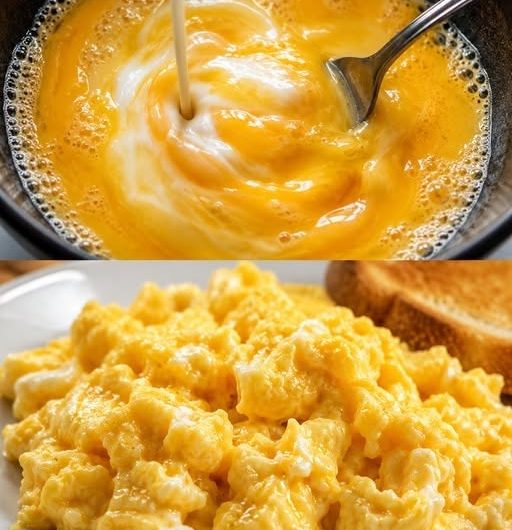

Creamy soft scrambled eggs are often considered one of the simplest dishes in the world, yet they are also one of the easiest to get wrong. At first glance, scrambled eggs appear to require little more than cracking eggs into a pan and stirring until cooked. However, truly exceptional creamy soft scrambled eggs involve an understanding of ingredients, temperature control, timing, texture, moisture retention, protein coagulation, and serving techniques. When prepared properly, soft scrambled eggs become silky, luxurious, delicate, rich, moist, and deeply satisfying.
This comprehensive guide explores every aspect of preparing creamy soft scrambled eggs, from selecting ingredients and understanding the science behind the dish to mastering professional cooking techniques and troubleshooting common problems. By following these detailed instructions, you can consistently produce restaurant-quality scrambled eggs with a smooth, velvety texture.
History of Scrambled Eggs
Eggs have been consumed by humans for thousands of years. Historical evidence suggests that ancient civilizations including the Egyptians, Greeks, Romans, Persians, and Chinese regularly incorporated eggs into their diets. Scrambled eggs likely emerged shortly after people began cooking eggs in pans over fire.
Ancient Roman writings mention egg dishes that involved whisking and cooking eggs with various ingredients. Throughout medieval Europe, eggs became a staple food because they were widely available and relatively inexpensive.
Over centuries, different cultures developed their own versions of scrambled eggs. Some preferred firm, fully cooked eggs while others favored softer preparations. French culinary traditions eventually elevated soft scrambled eggs into a refined dish characterized by gentle cooking and luxurious texture.
Modern chefs around the world continue to refine methods for producing creamy scrambled eggs. Fine dining restaurants often use low temperatures and constant stirring to create exceptionally silky results.
What Makes Soft Scrambled Eggs Different?
Traditional scrambled eggs and soft scrambled eggs differ primarily in texture and cooking method.
Traditional scrambled eggs are often cooked quickly over medium or high heat. This produces large curds and a firmer texture. While convenient, this method can easily lead to dry eggs.
Soft scrambled eggs are cooked slowly over low heat. Continuous stirring creates small curds and a creamy consistency. Moisture remains trapped within the eggs, resulting in a velvety mouthfeel.
Characteristics of excellent soft scrambled eggs include:
Small delicate curds
Moist texture
Creamy consistency
Rich flavor
Glossy appearance
Tender structure
Gentle folds
Silky finish
Uniform cooking
Pleasant mouthfeel
Understanding Egg Structure
To truly master scrambled eggs, it helps to understand what eggs are made of.
An egg contains:
Water
Protein
Fat
Vitamins
Minerals
Natural emulsifiers
The egg white consists primarily of water and proteins.
The yolk contains fats, proteins, vitamins, minerals, and emulsifying compounds.
When heat is applied, proteins unfold and connect with one another. This process is known as coagulation.
As proteins coagulate:
Liquid eggs become solid.
The texture changes from fluid to firm.
Moisture becomes trapped within the protein network.
If cooking continues too long, proteins tighten excessively and squeeze out moisture.
This is why overcooked scrambled eggs become dry.
Soft scrambled eggs succeed because the proteins are allowed to coagulate gently rather than aggressively.
Why Low Heat Is Essential
Many home cooks use excessive heat because they want breakfast ready quickly.
Unfortunately, high temperatures create several problems.
The eggs cook unevenly.
The outside overcooks before the inside is ready.
Moisture escapes.
Curds become large and rubbery.
Texture suffers significantly.
Low heat allows gradual protein coagulation.
This creates:
Tender curds
Greater moisture retention
Better flavor
Improved creaminess
More control
Professional appearance
Low heat requires patience, but the improvement in quality is dramatic.
Ingredients
For two generous servings:
4 large eggs
2 tablespoons unsalted butter
2 tablespoons heavy cream
1/4 teaspoon fine sea salt
1/8 teaspoon black pepper
1 teaspoon butter for finishing
Optional ingredients:
Fresh chives
Fresh parsley
Fresh dill
Parmesan cheese
Gruyère cheese
Goat cheese
Crème fraîche
Smoked salmon
Truffle oil
Sautéed mushrooms
Spinach
Avocado
Toasted sourdough bread
Choosing the Best Eggs
Fresh eggs create superior scrambled eggs.
Signs of quality eggs include:
Clean shells
No cracks
Bright yolks
Fresh aroma
Proper refrigeration
Pasture-raised eggs often contain richer-colored yolks and more complex flavor.
Free-range eggs are also excellent.
Farm-fresh eggs can provide outstanding results when available.
While ordinary supermarket eggs can still produce delicious scrambled eggs, higher-quality eggs often contribute greater richness.
Importance of Room Temperature Eggs
Cold eggs straight from the refrigerator can be used, but room-temperature eggs generally cook more evenly.
Allow eggs to sit at room temperature for approximately fifteen minutes before cooking.
Benefits include:
More uniform cooking
Easier whisking
Improved texture
Better integration of ingredients
Reduced cooking shock
This small step can contribute noticeably to the final quality.
Equipment Selection
Mixing Bowl
A medium-sized bowl provides adequate space for whisking.
Glass bowls work well.
Metal bowls are also excellent.
Whisk
A whisk incorporates air effectively.
A fork can also be used.
The goal is complete blending of whites and yolks.
Pan
A high-quality nonstick skillet is ideal.
Alternatively, a heavy-bottomed saucepan works extremely well.
Thin pans often create hot spots.
Hot spots increase the risk of overcooking.
Spatula
A silicone spatula provides excellent control.
It gently moves eggs across the cooking surface without scratching the pan.
Preparing the Eggs
Crack four eggs into a bowl.
Inspect carefully for shell fragments.
Add salt.
Add pepper.
Add cream.
Whisk thoroughly.
Continue whisking longer than many people expect.
The mixture should appear completely uniform.
No streaks of egg white should remain visible.
The mixture should become slightly frothy.
Tiny bubbles indicate proper incorporation.
This stage contributes to a smoother final texture.
The Role of Salt
Salt affects both flavor and texture.
Adding salt before cooking helps distribute seasoning evenly.
Some chefs prefer salting several minutes before cooking because it can slightly improve tenderness.
Salt enhances:
Richness
Natural egg flavor
Overall balance
Depth of taste
Without sufficient salt, scrambled eggs often taste flat.
The Role of Butter
Butter performs multiple functions.
It contributes richness.
It enhances flavor.
It improves texture.
It helps prevent sticking.
It creates luxurious mouthfeel.
Unsalted butter allows better control over seasoning.
European-style butter with higher fat content can produce especially rich results.
Step-by-Step Cooking Process
Step 1: Heat the Pan
Place the pan over low heat.
Add butter.
Allow butter to melt slowly.
Do not rush.
The butter should melt gently.
Avoid browning.
Avoid smoking.
The pan should be warm but not excessively hot.
Step 2: Add the Eggs
Pour the whisked eggs into the pan.
Allow them to settle briefly.
The edges will begin thickening first.
Do not immediately stir aggressively.
Give the eggs a few moments to begin setting.
Step 3: Begin Gentle Stirring
Use a silicone spatula.
Push eggs slowly toward the center.
Scrape the bottom continuously.
Move carefully and deliberately.
Avoid rapid stirring.
Gentle movement encourages formation of delicate curds.
Step 4: Maintain Low Heat
The temperature should remain low throughout cooking.
If eggs begin cooking too quickly:
Reduce heat.
Temporarily remove pan from burner.
Continue stirring.
Return pan to heat when necessary.
Professional chefs frequently move the pan on and off heat.
This provides remarkable control.
Step 5: Observe Texture Changes
Initially, eggs appear liquid.
Gradually, small curds begin forming.
The mixture thickens.
Curds become visible.
The eggs develop creamy folds.
Glossy appearance remains.
This stage requires attention.
Do not leave the stove.
Step 6: Finish Before Fully Set
One of the biggest secrets is removing eggs before they appear done.
The eggs should remain slightly loose.
Residual heat continues cooking them.
Waiting until they appear fully cooked almost guarantees overcooking.
Step 7: Add Finishing Butter
Add remaining butter.
Fold gently.
The butter melts into the eggs.
This final enrichment creates exceptional silkiness.
Step 8: Serve Immediately
Transfer to warm plates.
Serve without delay.
The texture is best immediately after cooking.
Professional French Method
Many French chefs use an even gentler approach.
Place eggs and butter together in a cold saucepan.
Begin stirring before significant heat develops.
Cook slowly.
Remove from heat periodically.
Continue stirring continuously.
Return to heat.
Repeat multiple times.
This method produces extraordinarily small curds.
The texture becomes almost custard-like.
The result is among the most luxurious egg preparations possible.
Understanding Residual Heat
Residual heat refers to stored thermal energy within the pan and food.
Even after heat is removed:
Cooking continues.
Proteins continue coagulating.
Temperature remains elevated.
This phenomenon explains why timing is critical.
The ideal moment to stop cooking occurs before eggs appear completely finished.
Residual heat completes the process.
Texture Stages
Undercooked
Too much liquid remains.
Eggs appear runny.
Structure is insufficient.
Perfectly Soft
Curds are tender.
Texture is creamy.
Appearance is glossy.
Moisture is retained.
Flavor is rich.
Overcooked
Curds become dry.
Surface appears dull.
Moisture escapes.
Texture becomes rubbery.
Flavor becomes less appealing.
Common Mistakes
Cooking Too Fast
Rapid cooking destroys creaminess.
Excessive Heat
High temperatures toughen proteins.
Neglecting Stirring
Uneven cooking develops.
Poor Timing
Waiting too long causes dryness.
Serving Late
Texture deteriorates.
Using Low-Quality Equipment
Hot spots increase risk of overcooking.
Flavor Variations
Herb Version
Fresh chives
Parsley
Dill
Tarragon
Basil
Herbs add freshness and color.
Cheese Version
Parmesan
Gruyère
Cheddar
Goat cheese
Fontina
Cheese enhances richness.
Luxury Version
Truffle oil
Truffle butter
Caviar
Crème fraîche
These ingredients create a premium experience.
Vegetable Version
Spinach
Mushrooms
Roasted peppers
Asparagus
Leeks
Vegetables add texture and nutritional value.
Serving Ideas
Soft scrambled eggs pair beautifully with:
Toasted sourdough
Buttered toast
English muffins
Bagels
Croissants
Roasted tomatoes
Smoked salmon
Avocado
Breakfast potatoes
Fresh fruit
Sautéed greens
Breakfast sausages
Hash browns
Grilled vegetables
Bacon
Nutritional Discussion
Eggs provide:
High-quality protein
Vitamin B12
Vitamin D
Choline
Selenium
Riboflavin
Healthy fats
Important amino acids
Protein contributes to satiety.
Nutrients support numerous bodily functions.
Eggs remain one of the most nutrient-dense foods available.
Restaurant Secrets
Many restaurants use several techniques:
Very low heat
Constant stirring
Frequent pan removal
Extra butter
Crème fraîche finishing
Warm serving plates
Immediate service
Careful timing
These methods elevate texture dramatically.
Storage
Freshly cooked eggs are always best.
If storage becomes necessary:
Cool quickly.
Place in airtight container.
Refrigerate.
Consume within one day.
Reheat gently.
Avoid overheating.
Overheating destroys softness.
Reheating Method
Place eggs in a small pan.
Add a teaspoon of butter.
Heat over very low temperature.
Stir continuously.
Remove from heat as soon as warmed.
Avoid microwaving whenever possible.
Microwaves frequently overcook eggs.
Final Master Guide Summary
Perfect creamy soft scrambled eggs depend on several fundamental principles:
Use quality eggs.
Whisk thoroughly.
Cook slowly.
Use low heat.
Stir continuously.
Control temperature carefully.
Remove before fully set.
Finish with butter.
Serve immediately.
Practice patience.
Mastering these principles transforms a humble breakfast staple into an elegant dish with extraordinary texture and flavor. The difference between ordinary scrambled eggs and truly creamy soft scrambled eggs is not complicated ingredients or expensive equipment. It is attention to detail, gentle cooking, and understanding how eggs respond to heat. When these elements come together correctly, the result is a plate of silky, tender, luxurious eggs that showcase the remarkable potential of one of the world’s simplest ingredients.