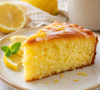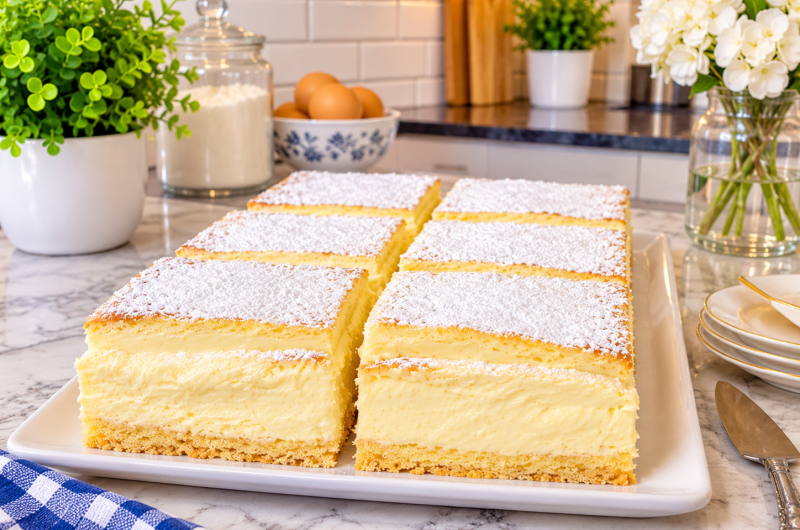
Vanilla Magic Custard Cake is a delightful homemade dessert that brings together the best parts of a soft cake and a creamy custard. What makes this recipe so special is the way the batter transforms during baking. Instead of producing a regular cake with one consistent texture, it forms three delicious layers: a delicate cake top, a smooth custard centre, and a soft, pudding-like base. Every slice offers a wonderful combination of textures with a gentle vanilla flavour that makes this dessert hard to resist.
This easy magic custard cake recipe is perfect for anyone who enjoys classic vanilla desserts without needing complicated baking techniques. The ingredients are simple pantry staples, including eggs, milk, butter, flour, sugar, and vanilla extract.
Although the batter may look unusual before baking, the finished cake is surprisingly beautiful. It is a lovely choice for family gatherings, afternoon tea, celebrations, or whenever you want to prepare a homemade dessert that feels a little different from an ordinary sponge cake.
What Makes Magic Custard Cake So Special?
The beauty of magic custard cake lies in its unique baking process. The batter is much thinner than traditional cake batter, and it contains both whipped egg whites and a milk-based mixture. As the cake bakes, the ingredients settle and form layers with different textures. The top becomes lightly golden and cake-like, the middle stays creamy and custard-rich, while the bottom develops a soft, dense texture similar to a delicate pudding.
Unlike traditional custard cakes that may require preparing a separate custard filling, this recipe creates its layers in one baking dish. There is no need to cook custard on the stovetop or assemble multiple cake components. The magic happens inside the oven, making this dessert both convenient and impressive. It is especially appealing to home bakers who enjoy simple recipes that produce a result that looks and tastes as though it required much more effort.
A Classic Vanilla Flavour for Every Occasion
Vanilla is the main flavour in this magic custard cake, giving it a warm, sweet, and comforting taste. Vanilla extract blends beautifully with the eggs, milk, and butter, creating a dessert that is rich without being overpowering. The caster sugar provides sweetness, while the plain flour gives the upper layer enough structure to resemble a light cake. A final dusting of icing sugar adds a delicate finishing touch and makes each slice look elegant.
This vanilla custard cake is a wonderful dessert for different occasions. Serve it after a family dinner, include it in a dessert table, or enjoy a chilled slice with a cup of tea or coffee. Because the cake has a soft custard centre, it is especially enjoyable when cooled completely. The texture becomes more settled, making it easier to cut into neat squares while keeping the layers beautifully visible.
Why You Will Love This Easy Magic Custard Cake Recipe
One of the biggest reasons to love this recipe is its simplicity. You do not need special baking equipment or unusual ingredients to prepare it. A square baking tin, an electric mixer, a few mixing bowls, and basic kitchen utensils are enough. The recipe also uses familiar ingredients that are commonly available in most kitchens, making it an accessible option for beginner bakers and experienced home cooks alike.
Another appealing feature is the cake’s naturally layered appearance. It looks attractive without requiring frosting, elaborate decorations, or extra fillings. The icing sugar sprinkled over the top provides a simple finish that allows the cake itself to remain the centre of attention. If you enjoy creamy desserts, vanilla pudding, custard slices, or soft homemade cakes, this recipe offers a lovely combination of those familiar flavours and textures in one easy dessert.
Understanding the Ingredients
Eggs are essential to the structure of magic custard cake. The yolks are beaten with caster sugar to create a light mixture, while the whites are whipped separately into stiff peaks. This separation helps introduce air into the batter and contributes to the cake’s distinctive texture. Using eggs at room temperature makes them easier to incorporate and helps the mixture blend more smoothly during preparation.
Caster sugar is used because its fine texture allows it to dissolve more easily into the egg yolks. Melted butter adds richness and flavour, while vanilla extract provides the familiar sweet aroma associated with classic vanilla desserts. Plain flour gives the cake its structure, and sifting it helps remove lumps before it is added to the batter. Lukewarm milk is another important ingredient because it blends more easily with the other components than cold milk.
Icing sugar is used to decorate the finished cake. It creates a light, attractive coating without adding a heavy layer of frosting. The original recipe keeps the decoration simple, allowing the natural golden top and creamy interior to shine. Keeping the ingredients in their original quantities is important for achieving the intended balance between the cake and custard layers.
Preparing the Baking Tin and Oven
Before making the batter, prepare the oven and baking tin. Preheat the oven to 170°C using the fan-forced setting. Line a 20cm square baking tin with baking paper, leaving enough paper extending over the sides. These extra edges make it easier to lift the cake from the tin after it has cooled, reducing the risk of breaking the delicate custard layers.
The baking tin size is important because it affects the thickness of the batter and the way the cake cooks. A 20cm square tin is the size specified in the original recipe. If you use a different tin, the cake may require a different baking time, and the layers may not develop in exactly the same way. For the most reliable result, use the recommended tin and avoid changing the ingredient quantities.
The Importance of Separating the Eggs
Separating the eggs is one of the most important steps in making magic custard cake. Place the egg whites in a clean, completely dry bowl. Even a small amount of grease or egg yolk can make it difficult for the whites to whip properly. Use an electric mixer to beat the egg whites until stiff peaks form. This means the whipped whites should hold their shape when the beaters are lifted.
Once the egg whites are ready, set them aside while preparing the yolk mixture. The whipped whites should be folded into the batter gently rather than beaten aggressively. This helps preserve the air that has been incorporated during whipping. Although the batter may appear unusual at this stage, the mixture is designed to be thinner than ordinary cake batter. Trust the method and continue with the recipe.
Creating the Smooth Vanilla Cake Batter
The egg yolks and caster sugar are combined in a large mixing bowl and beaten until the mixture becomes light and frothy. This step helps create a smooth base for the cake. Once the yolks have been beaten, gradually add the melted butter and vanilla extract while the electric mixer runs on a low speed. Adding these ingredients slowly allows them to blend evenly without making the mixture difficult to handle.
Next, add the sifted plain flour a few spoonfuls at a time. Gradual mixing helps prevent dry pockets of flour from forming in the batter. Once the flour is incorporated, slowly pour in the lukewarm milk while continuing to mix on a low to medium speed. The batter will become quite thin, which is completely normal for this recipe. It may also look slightly lumpy, but that does not mean the cake has failed.
Folding the Egg Whites into the Batter
After the yolk mixture has been prepared, it is time to add the whipped egg whites. This step requires a gentle touch because the air inside the egg whites contributes to the cake’s light upper layer. Add the egg whites to the bowl and carefully fold them into the mixture using a spatula. Move the spatula through the batter and lift it over the top rather than stirring rapidly.
The egg whites may not disappear completely into the batter, and small white patches can remain. The mixture may look uneven or unusual, but that is part of the process. Avoid trying to make the batter perfectly smooth by beating it again. Excessive mixing can remove the air from the whipped whites and affect the final texture. Once the egg whites have been gently incorporated, the batter is ready for the prepared baking tin.
Baking the Magic Custard Cake
Pour the finished batter into the lined 20cm square baking tin. Place the tin in the preheated oven and bake for approximately 35 minutes, or until a golden crust forms on the top. The centre should still have a slight jiggle when the cake is gently moved. This is important because the middle layer is meant to remain soft and custard-like rather than becoming completely firm.
The exact baking time can vary depending on the temperature of the ingredients, the oven, and the baking tin used. Some ovens may require considerably more time, and the cake may take up to an hour to finish baking. Begin checking around the recommended time and continue baking if the top has not developed a golden crust. Avoid relying only on a skewer test, since the creamy centre is supposed to remain soft.
How to Know When the Cake Is Ready
A properly baked magic custard cake has a lightly golden top and a centre that still moves slightly. The cake should not look completely liquid, but a gentle wobble is desirable. This helps preserve the creamy custard texture that makes the dessert different from an ordinary vanilla sponge cake. If the centre is completely firm while baking, the cake may lose some of its characteristic softness.
Keep in mind that the cake will continue to settle as it cools. The centre becomes more stable, and the layers become easier to identify. It is better to allow the cake to cool properly than to rush the process by cutting it while it is hot. A little patience helps produce cleaner slices and a more enjoyable texture.
Cooling and Serving Vanilla Magic Custard Cake
Once the cake has finished baking, remove it from the oven and allow it to cool completely in the tin. The baking paper makes it easier to lift the cake out when it is ready. If the cake has cooled enough, you can place it in the refrigerator to help it become fully chilled. Cooling is an important part of the preparation because the custard layer needs time to settle.
Before serving, dust the top lightly with icing sugar. Use a sharp knife to cut the cake into squares, wiping the blade between cuts if you want neat slices. The cake can be served chilled or after a brief period at room temperature. Its creamy centre and delicate cake layer make it a delicious dessert on its own, without requiring extra toppings or sauces.
Helpful Baking Tips for the Best Results
For the best magic custard cake, start with room-temperature eggs. If possible, take them out of the refrigerator the night before baking. Room-temperature eggs are generally easier to separate and whip, and they blend more smoothly into the batter. The milk should also be lukewarm rather than cold. Gently warming it in a microwave-safe jug is a convenient way to prepare it, but avoid making it hot.
Make sure the bowl used for whipping the egg whites is clean and dry. This small detail can make a noticeable difference in how successfully the whites reach stiff peaks. When folding the whites into the batter, use gentle movements and avoid overmixing. The mixture may appear lumpy or thin, but these characteristics are expected. The unusual batter is what allows the cake to form its distinctive layers during baking.
Another useful tip is to pay attention to the cake rather than relying entirely on the timer. Oven temperatures can vary, and the temperature of the ingredients can influence the baking time. The top should be golden, while the middle should retain a slight wobble. If the cake needs more time, continue checking it at regular intervals until the desired appearance is reached.
Common Mistakes to Avoid When Making Magic Custard Cake
One common mistake is expecting the batter to look like traditional cake batter. This recipe uses a larger amount of milk compared with the flour, so the mixture will be thin. Another mistake is overbeating the egg whites after adding them to the batter. Gentle folding is essential because the whipped whites help create the light texture of the upper layer. Rushing this step can affect the final result.
Baking the cake for too long is another issue to watch out for. Since the middle is meant to be creamy, the cake should not be baked until it becomes completely firm. A golden top and a gentle movement in the centre are good signs that it is ready. Also, avoid cutting the cake while it is still warm, as the custard layer may not have settled enough to hold its shape.
How to Store Vanilla Magic Custard Cake
Vanilla Magic Custard Cake is best stored in the refrigerator because of its creamy custard centre. Once the cake has cooled completely, place it in an airtight container or cover it securely before refrigerating. Proper storage helps maintain the cake’s moisture and prevents it from absorbing unwanted flavours from other foods in the refrigerator.
For the best taste and texture, enjoy the cake within three to four days. It can be served straight from the refrigerator or allowed to sit briefly at room temperature before eating. Avoid leaving the cake at room temperature for extended periods because it contains eggs and milk. If serving it at a gathering, keep the remaining portions refrigerated until needed.
Can You Make Magic Custard Cake Ahead of Time?
Yes, this vanilla custard cake is a convenient make-ahead dessert. In fact, preparing it in advance can make serving easier because the cake needs time to cool and settle after baking. You can bake it the day before an event, allow it to cool completely, and then refrigerate it until you are ready to serve.
Making the cake ahead also helps with slicing. Once chilled, the custard layer becomes more stable, and the cake can be cut into neat squares. Just before serving, add the icing sugar for a fresh and attractive finish. This makes it a practical dessert for family dinners, celebrations, or occasions when you want to prepare most of the food ahead of time.
Frequently Asked Questions About Magic Custard Cake
Why is it called magic custard cake?
It is called magic custard cake because one thin batter separates into three different textures during baking. The top becomes a soft cake layer, the centre develops a creamy custard consistency, and the bottom forms a denser pudding-like layer. The result looks as though three separate components have been assembled, even though everything is prepared in one bowl and baked together.
Why does my magic custard cake batter look lumpy?
The batter may look lumpy because it contains a thin milk mixture combined with whipped egg whites. This is normal for the recipe. Do not try to remove every lump by beating the mixture aggressively. The batter does not need to look perfectly smooth before baking, and the unusual appearance is part of what makes this cake work.
Can I use a different baking tin?
The original recipe uses a 20cm square baking tin. You can use a different tin, but the depth of the batter will change, which may affect the baking time and the formation of the layers. A larger tin may produce a thinner cake, while a smaller tin may require additional baking time. For the most consistent result, use the recommended tin.
Should the cake still wobble when I remove it from the oven?
Yes, a slight wobble in the centre is desirable. The custard layer is meant to remain soft, so the cake should not be completely firm when it comes out of the oven. The centre will continue to settle as the cake cools. However, the cake should have a golden crust and should not look excessively liquid.
Can I serve magic custard cake warm?
It is best to let the cake cool completely before serving. Cooling helps the custard layer become more stable and makes the cake easier to slice. Chilling it in the refrigerator is also a good option. Although it may be tempting to serve it straight from the oven, waiting produces a better texture and cleaner slices.
Magic Custard Cake Recipe
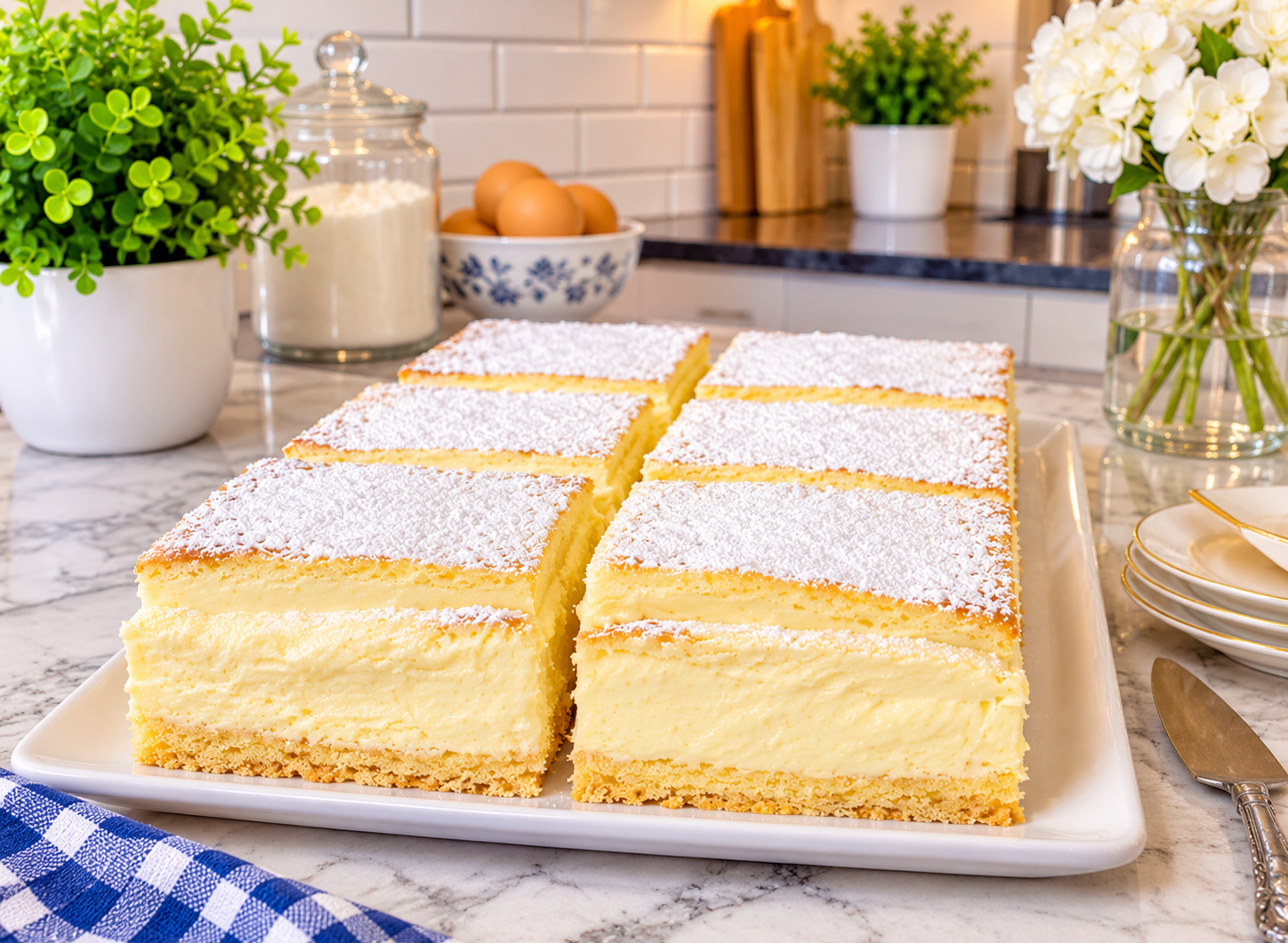
This easy vanilla magic custard cake creates three delicious layers from one simple batter: a soft cake top, a creamy custard centre, and a delicate pudding-like base.
12
servings25
minutes35
minutes139
kcal1
hourIngredients
4 eggs – room temperature
¾ cup caster sugar
125 grams butter melted
1 teaspoon vanilla extract
¾ cup plain flour – sifted
2 cups milk lukewarm (500 mls)
¼ cup icing sugar to decorate
Directions
- Preheat the oven to 170°C fan-forced. Line a 20cm square cake tin with baking paper, leaving extra paper hanging over the sides for easy removal.
- Separate the eggs. Place the whites in a clean, dry bowl and beat with an electric mixer until stiff peaks form. Set aside.
- Beat the egg yolks and caster sugar in a large bowl until light and frothy.
- With the mixer running on low speed, gradually add the melted butter and vanilla extract.
- Add the sifted flour a few spoonfuls at a time, mixing until incorporated.
- Gradually pour in the lukewarm milk. Continue mixing on low to medium speed until combined. The batter will be thin.
- Gently fold the whipped egg whites into the batter. Avoid overmixing, as the mixture may look uneven.
- Transfer the batter into the prepared baking tin and place it in the preheated oven.
- Bake for approximately 35 minutes, or until the top is golden and the centre still has a slight wobble. Baking time may vary.
- Allow the cake to cool completely in the tin. Refrigerate if desired, dust with icing sugar, and cut into 12 slices.
Notes
- Baking time varies depending on the temperature of the ingredients and your oven. Some cakes may require up to an hour.
- A 20cm square baking tin is recommended. Using a different size may change the cooking time.
- The batter may look thin or lumpy before baking. This is normal for magic custard cake.
- The centre should retain a slight wobble when the cake is ready.
- Use room-temperature eggs for better mixing.
- Warm the milk gently until lukewarm; do not make it hot.
- Allow the cake to cool completely before cutting.
- Dust with icing sugar just before serving.
- Store in an airtight container in the refrigerator and enjoy within 3–4 days.
Nutrition Facts
12 servings per container
- Amount Per ServingCalories140
- % Daily Value *
- Total Fat
3g
4%
- Protein 4g 8%
* The % Daily Value tells you how much a nutrient in a serving of food contributes to a daily diet. 2,000 calories a day is used for general nutrition advice.