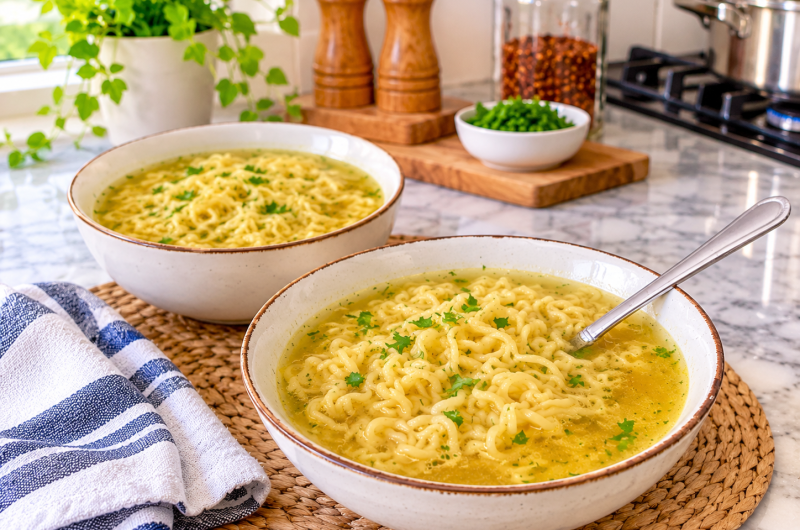
Gluten-Free Chicken Ramen Noodles is a comforting, delicious, and satisfying meal that brings the warmth of a homemade Japanese-inspired soup straight to your kitchen. Made with tender chicken thighs, rice noodles, fresh ginger, garlic, bok choy, and a rich chicken broth, this easy gluten-free ramen recipe is full of savory flavor.
It is an excellent choice for anyone looking for a quick chicken ramen soup that is both nourishing and simple to prepare. With its combination of tender meat, soft noodles, and aromatic broth, every bowl offers a wonderful balance of taste and texture.
One of the best things about this gluten-free chicken ramen recipe is that it can be prepared using just one large pot for the broth and chicken. This makes it especially convenient for busy weeknights when you want a homemade dinner without spending too much time washing dishes.
The chicken is gently poached in the broth, allowing it to absorb the rich flavors of garlic, ginger, tamari, and mirin. Once cooked, the chicken is shredded and returned to the soup with fresh vegetables and rice noodles, creating a complete and comforting meal.
Traditional ramen noodles are usually made with wheat flour, which means they are unsuitable for people following a gluten-free diet. This recipe uses rice noodles instead, providing a delicious alternative without sacrificing the satisfying texture of a noodle soup. Whether you are preparing a family dinner, looking for a warm lunch, or simply craving a flavorful bowl of homemade ramen, this gluten-free chicken noodle soup is a wonderful recipe to keep in your collection.
What Makes This Gluten-Free Chicken Ramen Special?
A Delicious Gluten-Free Alternative to Traditional Ramen
This homemade ramen soup is designed to provide all the comforting qualities of traditional ramen while using gluten-free ingredients. Rice noodles are a practical replacement for wheat-based ramen noodles because they naturally contain no gluten. They cook quickly and absorb the flavors of the broth beautifully, making them ideal for a simple chicken ramen soup.
Using gluten-free tamari instead of regular soy sauce is another important part of this recipe. Traditional soy sauce often contains wheat, while tamari is commonly available in gluten-free varieties. When selecting ingredients, it is important to check the product labels to ensure that the chicken broth, tamari, mirin, and noodles are suitable for a gluten-free diet. This is especially important for people with celiac disease or those who need to avoid gluten strictly.
Tender Chicken Cooked Directly in the Broth
Rather than cooking the chicken separately, this recipe uses a simple poaching method. The chicken thighs are added directly to the simmering broth and gently cooked until tender. This technique allows the chicken to absorb the aromatic flavors of ginger, garlic, tamari, and mirin while also adding extra richness to the soup.
Cooking chicken in the broth is a practical way to save time and reduce the number of dishes needed. Once the chicken has finished cooking, it is removed briefly and allowed to rest before being shredded. Returning the shredded chicken to the soup helps distribute the flavor throughout the bowl and ensures that every serving contains tender, juicy pieces of meat.
Fresh Vegetables for Flavor and Texture
Bok choy is an excellent vegetable for homemade ramen because it has a mild flavor and a pleasant texture. Its leafy green tops soften quickly in hot broth, while the thicker stems retain a slight crunch. This combination adds freshness and color to the soup without overpowering the savory chicken broth.
Fresh bok choy also pairs naturally with ginger, garlic, sesame oil, and rice noodles. It is a common ingredient in Asian-inspired noodle soups and works particularly well in recipes that need a quick-cooking vegetable. In this recipe, the bok choy is added near the end of cooking, allowing it to become tender without losing its shape.
Ingredients for Homemade Gluten-Free Chicken Ramen
Chicken Thighs
Skinless and boneless chicken thighs are used in this recipe because they remain moist and tender when gently poached. Their rich flavor complements the broth and creates a satisfying protein source for the soup. Chicken thighs are particularly suitable for noodle soups because they are less likely to become dry than leaner cuts when cooked carefully.
Other chicken cuts can also be used, including chicken breast, bone-in thighs, drumsticks, or chicken legs. However, cooking times may vary depending on the size and type of chicken selected. Always ensure that the chicken is fully cooked before shredding and returning it to the broth.
Rice Noodles
Rice noodles are the main ingredient that makes this chicken ramen recipe gluten-free. They provide a soft, satisfying texture and work beautifully with the aromatic broth. Medium-sized rice noodles are a good option because they hold their shape while allowing the soup’s flavors to come through.
Brown rice noodles can also be used if preferred. When purchasing rice noodles, check the ingredient list and packaging to confirm that they are gluten-free. Some specialty noodles may contain additional ingredients, so checking the label is a useful step for anyone avoiding gluten.
Chicken Broth
A good-quality gluten-free chicken broth forms the foundation of this ramen soup. Since the broth carries much of the flavor, choosing one that tastes rich and savory can make a noticeable difference to the finished dish.
Chicken bone broth can also be used if desired. It provides a deeper flavor and works especially well with the tender chicken thighs. Homemade chicken broth is another excellent option, particularly when you have leftover broth from previous meals. Make sure the broth is gluten-free before adding it to the recipe.
Tamari and Mirin
Tamari provides the salty, savory, umami flavor that makes ramen broth so satisfying. It is commonly used as a gluten-free alternative to regular soy sauce, although not every tamari product is certified gluten-free. Always check the packaging when preparing food for someone with a gluten intolerance or celiac disease.
Mirin adds a gentle sweetness and depth to the broth. This Japanese-style seasoning balances the saltiness of tamari and helps create a rounded, flavorful soup. Together, tamari and mirin give the chicken broth a delicious balance of savory and slightly sweet flavors.
Fresh Ginger and Garlic
Fresh ginger and garlic are essential ingredients for creating an aromatic ramen broth. Ginger adds a warm, slightly spicy flavor, while garlic provides a savory depth that works beautifully with chicken and vegetables.
Mincing these ingredients before cooking helps release their flavor quickly. Sautéing them briefly in sesame oil also allows their aroma to develop, creating a delicious foundation for the broth.
Bok Choy and Optional Garnishes
Bok choy adds freshness and a pleasant vegetable texture to the soup. The recipe uses three whole bok choy heads, trimmed and quartered or sliced through the middle. Depending on availability, bok choy may also be sold under the name pak choi.
Optional toppings such as sliced scallions, black sesame seeds, and red chili add extra flavor and visual appeal. Scallions provide a mild onion flavor, sesame seeds add a subtle nutty taste, and red chili introduces a little heat. These garnishes can be adjusted to suit individual preferences.
How to Make Gluten-Free Chicken Ramen Soup
Step 1: Prepare the Ingredients
Before beginning the cooking process, prepare all the ingredients so they are ready to use. Mince the fresh ginger and garlic, trim the bok choy, and slice it into manageable pieces. Measure the sesame oil, tamari, mirin, and chicken broth. If the chicken thighs are large, check that they will fit comfortably in the pot. Preparing everything in advance makes the cooking process smoother and helps prevent the broth from boiling for too long while you search for ingredients.
Step 2: Sauté the Ginger and Garlic
Place a large pot or Dutch oven over medium heat and add the sesame oil. Once the oil is warm, add the minced ginger and garlic. Stir them gently for approximately one minute, allowing their natural aromas to develop. Avoid browning the garlic too much, as it can become bitter. This short step creates a flavorful base for the ramen broth and allows the ginger and garlic to blend beautifully with the sesame oil.
Step 3: Create the Flavorful Chicken Broth
Pour the gluten-free chicken broth into the pot, followed by the tamari and mirin. Stir the ingredients together until the seasonings are evenly distributed. Increase the heat and bring the mixture to a boil. Once the broth begins bubbling, reduce the heat to a gentle simmer. The broth should be hot enough to cook the chicken but should not continue boiling aggressively, as a gentle simmer helps the chicken remain tender and juicy.
Step 4: Poach the Chicken Thighs
Carefully add the skinless, boneless chicken thighs to the simmering broth. Make sure the chicken is mostly submerged so it cooks evenly. Allow the chicken to poach for approximately 20 minutes, depending on the thickness of the pieces. Check that the chicken has reached an internal temperature of 165°F (74°C) before removing it from the pot. Properly cooked chicken should be tender and easy to shred without any raw or undercooked areas.
Step 5: Rest the Chicken and Prepare the Rice Noodles
Remove the cooked chicken thighs from the broth and place them on a clean plate or cutting board. Allow the chicken to rest for around 10 minutes before shredding. During this time, prepare the rice noodles according to the instructions printed on their packaging. Different rice noodle varieties may require different cooking times, so it is best to follow the manufacturer’s directions rather than relying on a fixed cooking time.
Step 6: Shred the Chicken and Add the Bok Choy
Once the chicken has rested, use two forks to pull it into bite-sized shreds. Return the shredded chicken to the pot containing the warm broth. Add the prepared bok choy and stir gently to combine. Allow the vegetables to cook for one or two minutes, just until the leaves begin to wilt and the stems soften slightly. Keeping the cooking time short helps maintain the fresh appearance and pleasant texture of the bok choy.
Step 7: Add the Rice Noodles
Drain the cooked rice noodles thoroughly before adding them to the ramen broth. Gently stir the noodles into the soup so they are evenly distributed among the shredded chicken and vegetables. Taste the broth and add sea salt if needed. Since tamari and chicken broth can already contain a considerable amount of sodium, it is best to season carefully. The finished soup should have a rich, savory flavor without becoming overly salty.
Step 8: Serve the Gluten-Free Chicken Ramen
Ladle the hot chicken ramen into individual serving bowls, making sure each bowl contains a good portion of noodles, shredded chicken, bok choy, and broth. Garnish with sliced scallions, black sesame seeds, and red chili if desired. Serve immediately while the noodles are tender and the broth is hot. This homemade gluten-free ramen is delicious on its own and makes a comforting meal for lunch or dinner.
Tips for Making the Best Gluten-Free Chicken Ramen
Choose the Right Gluten-Free Noodles
Rice noodles are a convenient choice for this recipe, but not all gluten-free noodles have the same texture. Medium-sized rice noodles provide a satisfying bite and work well in a soup with chicken and vegetables. Brown rice noodles can also be used for a slightly different flavor. Always check the packaging for cooking instructions and gluten-free labeling, especially if the meal is being prepared for someone with celiac disease.
Avoid Overcooking the Rice Noodles
Rice noodles can become soft and break apart if they remain in hot broth for too long. For the best texture, cook them according to the package instructions and add them to the soup near the end. If you are preparing the ramen ahead of time, keep the noodles separate from the broth until you are ready to serve. This small adjustment helps preserve the noodles and keeps the soup enjoyable after reheating.
Keep the Broth at a Gentle Simmer
A gentle simmer is ideal for poaching chicken thighs. Rapid boiling can cause the chicken to cook unevenly and may make the meat less tender. Once the broth reaches a boil, lower the heat and allow the chicken to cook steadily. This approach also helps maintain a clear, flavorful broth that can be served with the noodles and vegetables.
Adjust the Seasoning Before Serving
The flavor of chicken broth can vary depending on the brand or whether it is homemade. Tamari also differs in saltiness, so the final seasoning may need a small adjustment. Taste the broth before adding sea salt. If you enjoy a little extra heat, sliced red chili makes a delicious garnish. Scallions and black sesame seeds can also provide extra flavor without changing the main ingredients.
Prepare the Garnishes in Advance
Sliced scallions, red chili, and black sesame seeds can be prepared while the chicken is cooking. Store them separately until the ramen is ready to serve. This makes it easy to garnish each bowl and allows everyone to choose their preferred toppings. Fresh garnishes also add a pleasing contrast to the warm broth, tender chicken, and soft rice noodles.
What to Serve with Gluten-Free Chicken Ramen
A Simple Side Salad
A fresh salad is a lovely accompaniment to chicken ramen because it adds a refreshing contrast to the warm soup. A simple cucumber salad with a light dressing can complement the savory broth without making the meal feel too heavy. Fresh greens, sliced vegetables, or a small serving of crunchy cabbage salad can also work well. Choose a gluten-free dressing or prepare one at home to ensure the entire meal remains suitable for a gluten-free diet.
Steamed or Stir-Fried Vegetables
Steamed broccoli, carrots, or green beans can be served alongside the ramen if you want to include more vegetables in your meal. Lightly stir-fried vegetables are another option, especially when prepared with a small amount of sesame oil. The mild flavor of these vegetables pairs nicely with the ginger, garlic, and chicken broth. Since the ramen already contains bok choy, a simple vegetable side is usually enough to complete the meal.
Enjoy It as a Complete Meal
This gluten-free chicken ramen is satisfying enough to serve on its own. The combination of chicken, rice noodles, broth, and bok choy provides a mixture of protein, carbohydrates, and vegetables in one bowl. For a simple family dinner, serve the ramen in large bowls with optional garnishes placed on the table. This allows everyone to customize their serving while keeping the main preparation easy and convenient.
How to Store Gluten-Free Chicken Ramen
Refrigerating Leftover Ramen
If you have leftover ramen, allow it to cool before transferring it to an airtight container. Refrigerate the soup promptly and use it within three to four days. For the best texture, store the noodles separately from the broth whenever possible. Rice noodles can absorb liquid as they sit, which may cause them to become softer and leave less broth in the container.
If the noodles have already been mixed into the soup, the leftovers can still be stored safely, but the texture may change. The broth may become thicker as the noodles absorb some of the liquid. When reheating, add a little extra gluten-free chicken broth if needed to restore the soup’s consistency.
Reheating Chicken Ramen
Reheat the chicken ramen in a saucepan over medium heat until it is steaming hot throughout. Stir occasionally to distribute the heat evenly and prevent the noodles from sticking to the bottom of the pan. If the broth has become too thick, add a small amount of chicken broth. Avoid repeatedly reheating the same portion, as this can affect the quality of the noodles and chicken.
Can You Make Gluten-Free Chicken Ramen Ahead of Time?
Preparing the Broth in Advance
This recipe can be prepared ahead of time, making it useful for meal planning and busy weekdays. You can cook the broth with the chicken, shred the meat, and return it to the pot. Allow the mixture to cool appropriately before transferring it to an airtight container and refrigerating it. When you are ready to serve, prepare the rice noodles and add the bok choy to the reheated broth.
Preparing the broth ahead of time allows the flavors of ginger, garlic, tamari, mirin, and chicken to develop together. The result is a convenient meal that requires less preparation when dinner time arrives. For the best texture, cook the rice noodles shortly before serving rather than storing them in the broth overnight.
Cooking Rice Noodles in Advance
If you prefer to prepare the rice noodles ahead of time, cook them according to the package directions and drain them thoroughly. Toss the noodles with a little olive oil to help prevent them from sticking together. Store them in a separate airtight container in the refrigerator. When serving, add the noodles to the hot broth and allow them to warm through gently.
Keeping the noodles separate is particularly helpful when preparing multiple servings. It allows you to reheat only the amount of broth and chicken needed for each meal. This method also helps prevent the noodles from becoming overly soft while stored in the refrigerator.
How to Freeze Gluten-Free Chicken Ramen
Freeze the Chicken and Broth Separately from the Noodles
The chicken and broth can be prepared in advance and frozen for convenient future meals. Cook the chicken in the broth, remove it, shred it, and return the meat to the liquid. Allow the mixture to cool safely before transferring it to freezer-safe airtight containers. Leave a little space at the top of each container to allow for expansion during freezing.
For the best quality, freeze the chicken broth base without the rice noodles or bok choy. Rice noodles can become overly soft and break apart after freezing and reheating. Bok choy is also best added fresh during the final cooking stage. The prepared chicken and broth base can be frozen for up to three months.
Thawing and Reheating Frozen Ramen
When you are ready to enjoy the frozen ramen base, transfer it to the refrigerator and allow it to thaw overnight. Reheat the broth and chicken in a saucepan over medium heat until piping hot throughout. Prepare the rice noodles according to their package instructions and add the bok choy to the broth during the final minutes of cooking.
Once the vegetables have softened slightly, add the drained noodles and stir gently. Make sure the entire dish is thoroughly heated before serving. Freezing the broth and chicken separately from the noodles gives you a convenient homemade meal while helping maintain a better texture.
Frequently Asked Questions About Gluten-Free Chicken Ramen
Are Traditional Ramen Noodles Gluten-Free?
Traditional ramen noodles are generally made with wheat flour, which means they contain gluten. However, there are many alternatives available for people who need or prefer to avoid gluten. Rice noodles are one of the most convenient options and are widely available in grocery stores. Other gluten-free noodle varieties may be made with potato, mung bean, or chickpea flour. Always check the ingredients and packaging to confirm that the noodles are suitable for your dietary requirements.
Is This Gluten-Free Chicken Ramen Healthy?
This chicken ramen can be part of a balanced meal because it contains chicken, rice noodles, broth, and vegetables. Chicken provides protein, while rice noodles contribute carbohydrates for energy. Bok choy adds vegetables to the dish, and ginger and garlic provide flavor without requiring complicated seasoning. However, the nutritional value depends on portion size, the type of broth used, and the amount of tamari and salt added. The recipe is not automatically low in sodium, so checking ingredient labels can be helpful.
Can I Use Chicken Breast Instead of Chicken Thighs?
Yes, chicken breast can be used in place of chicken thighs. Chicken breast is generally leaner, while thighs have a richer flavor and tend to remain moist during cooking. If you use chicken breast, adjust the cooking time according to the thickness of the pieces. The chicken should reach an internal temperature of 165°F (74°C) before it is removed from the broth. Allow it to rest before shredding it and returning it to the soup.
Can I Use Regular Soy Sauce Instead of Tamari?
Regular soy sauce can be used if you are not following a gluten-free diet. However, many traditional soy sauces contain wheat, making them unsuitable for people who need to avoid gluten. For this recipe, gluten-free tamari is the recommended choice. If you are preparing the ramen for someone with celiac disease, check the label carefully to ensure that the tamari is certified or clearly labeled gluten-free.
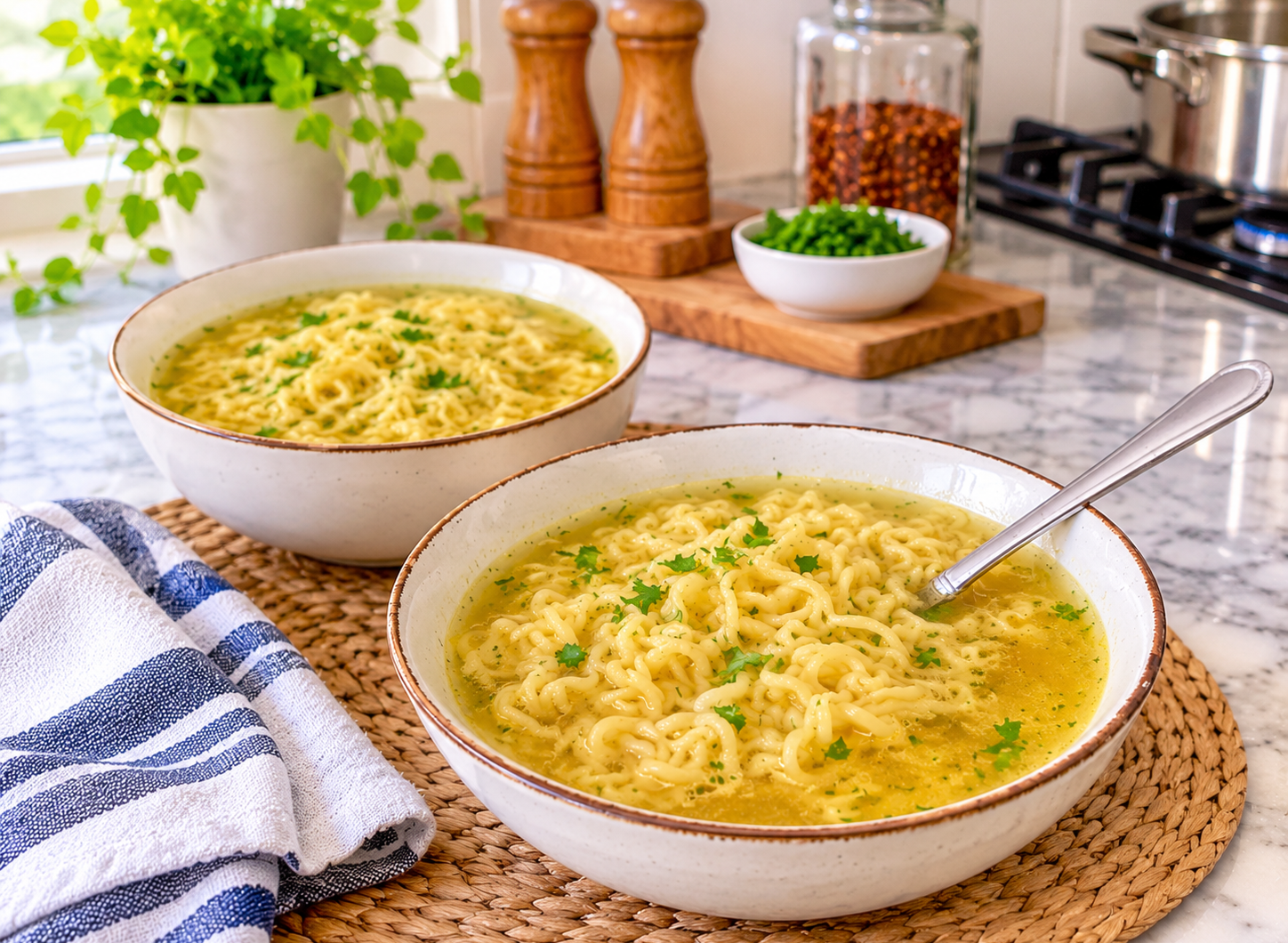
Gluten-Free Chicken Flavor Ramen Noodles
A comforting homemade chicken ramen soup made with tender shredded chicken, gluten-free rice noodles, bok choy, and a rich ginger-garlic broth.
4
servings10
minutes40
minutes435
kcal50
minutesIngredients
4 chicken thighs – skinless and boneless
2 tsp sesame oil – or vegetable oil
1 tbsp fresh ginger – minced
3 tbsp tamari – gluten-free alternative to soy sauce
2 tbsp mirin
4 cups gluten-free chicken broth
8 oz rice noodles
3 whole bok choy – trimmed and sliced into 4 pieces through the middle
Sea salt – to taste
- Optional Garnish
2 scallions (spring onions) – sliced
1 tbsp black sesame seeds
Red chili – sliced
Directions
- Heat the sesame oil in a large pot over medium heat. Add the minced garlic and ginger. Sauté for approximately 1 minute until fragrant.
- Add the gluten-free chicken broth, tamari, and mirin. Increase the heat and bring the mixture to a boil. Reduce the heat to a gentle simmer.
- Add the chicken thighs to the simmering broth. Poach for approximately 20 minutes or until fully cooked. Remove the chicken and allow it to rest for 10 minutes.
- Cook the rice noodles according to the package instructions. Drain thoroughly and set aside while preparing the remaining ingredients.
- Shred the rested chicken using two forks. Return it to the pot with the sliced bok choy. Allow the vegetables to wilt for 1–2 minutes.
- Add the drained rice noodles to the broth. Stir gently and season with sea salt if needed. Serve hot, garnished with scallions, sliced red chili, and black sesame seeds.
Notes
- Use gluten-free rice noodles and gluten-free tamari to keep the recipe suitable for a gluten-free diet.
- Chicken should reach an internal temperature of 165°F (74°C).
- Cook the noodles separately if preparing the broth ahead of time.
- Store leftover soup in an airtight container in the refrigerator for 3–4 days.
- Freeze the chicken and broth base without the noodles or bok choy for up to 3 months.
- Add the noodles and bok choy when reheating for the best texture.
Nutrition Facts
4 servings per container
- Amount Per ServingCalories440
- % Daily Value *
- Total Fat
9g
12%
- Total Carbohydrate
56g
20%
- Total Sugars 3g
- Protein 30g 60%
* The % Daily Value tells you how much a nutrient in a serving of food contributes to a daily diet. 2,000 calories a day is used for general nutrition advice.