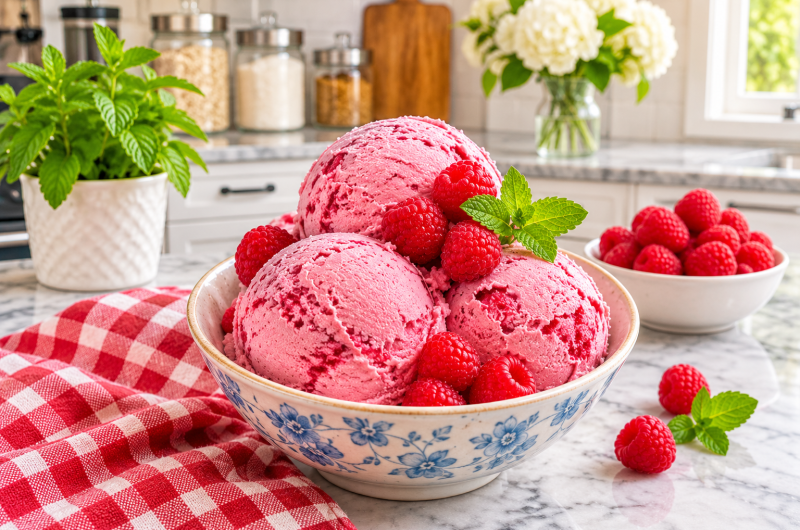
Homemade raspberry ice cream is a delicious frozen dessert that combines the natural sweetness and refreshing tartness of ripe raspberries with the smooth, rich texture of a traditional cream-based custard. Made with egg yolks, heavy cream, sugar, and fresh or frozen raspberries, this recipe creates a beautifully balanced ice cream that tastes fruity, creamy, and wonderfully refreshing. Every spoonful brings together the bright flavor of raspberries and the richness of homemade custard.
If you enjoy making ice cream at home, this creamy raspberry ice cream recipe is an excellent addition to your collection. It uses a classic custard method to create a smooth base before incorporating a generous amount of raspberry puree.
The result is a naturally flavored ice cream with a lovely pink color and a vibrant berry taste. Unlike many store-bought varieties, this homemade version allows you to control the ingredients and enjoy the fresh flavor of real fruit.
This easy raspberry ice cream recipe is especially suitable for people who enjoy traditional churned ice cream. Although it requires a little preparation and patience while the custard chills, the actual cooking process is simple. Once the ingredients are combined and properly chilled, your ice cream maker does most of the remaining work. It is a wonderful dessert to prepare ahead of time for summer gatherings, family dinners, or a relaxing evening at home.
Why You Will Love This Creamy Raspberry Ice Cream
One of the best things about homemade raspberry ice cream is its natural fruit flavor. Raspberries have a distinctive combination of sweetness and acidity that makes them especially delicious in frozen desserts. Using a generous quantity of ripe berries ensures that their flavor remains noticeable even after they are blended with rich cream and egg yolks. This creates a dessert that tastes like real raspberries rather than an artificial berry-flavored product.
The custard base is another reason this recipe works so well. Egg yolks help create a rich, smooth texture, while heavy cream provides the luxurious mouthfeel that makes traditional ice cream so satisfying. When the custard is cooked carefully and chilled properly, it produces a creamy mixture that churns beautifully in an ice cream machine. The final texture is dense, silky, and enjoyable without being overly heavy.
This recipe also offers flexibility when choosing raspberries. Fresh berries are an excellent option during raspberry season, especially when they are fully ripe and fragrant. Frozen raspberries are equally useful and can be a convenient choice throughout the year. Since frozen berries are often harvested when ripe, they can deliver excellent flavor even when fresh raspberries are unavailable.
Another advantage is that the recipe can be prepared in advance. The custard needs several hours to chill, making it convenient to prepare the base the day before serving. Once churned, the ice cream can be stored in the freezer until dessert time. This makes it a practical choice for entertaining or preparing a special homemade treat without rushing.
What Makes Raspberry Ice Cream So Delicious?
Raspberry ice cream is particularly appealing because it balances several flavors and textures. The berries provide a bright, slightly tangy taste, while the cream and egg yolks create a rich foundation. Sugar sweetens the mixture and helps contribute to the texture of the finished dessert. A small amount of salt enhances the overall flavor, while lemon juice adds freshness and helps the raspberry flavor stand out.
Raspberries contain natural acidity, which makes them especially suitable for creamy desserts. Their flavor is bold enough to remain noticeable even when mixed into a custard base. The combination of raspberry puree and cream creates a smooth fruit ice cream that feels refreshing while still having the richness expected from a traditional homemade dessert.
The texture is equally important. A properly prepared custard base helps prevent the ice cream from becoming excessively icy. Chilling the mixture thoroughly before churning allows the ingredients to become cold and stable, helping the ice cream maker incorporate air and freeze the base evenly. These small details make a meaningful difference in the final result.
Ingredients for Homemade Raspberry Ice Cream
Raspberries
Raspberries are the main ingredient responsible for the distinctive flavor and color of this homemade fruit ice cream. Use 340 grams of ripe raspberries, either fresh or frozen. The quality of the berries matters because their natural flavor is the foundation of the recipe. Choose berries that are fragrant, flavorful, and reasonably sweet, with the characteristic tartness that makes raspberries so enjoyable.
Fresh raspberries are ideal when they are in season and readily available. If you are using fresh berries, taste a few before preparing the puree to ensure they have enough flavor. Frozen raspberries are a convenient alternative and can be especially useful when fresh berries are expensive or difficult to find. Allow the berries to soften enough for blending if necessary.
Egg Yolks
Four large egg yolks are used to create the custard base. Egg yolks contribute richness and help the cream mixture thicken during cooking. They also give the ice cream its classic custard-style texture, making it smooth and luxurious rather than simply frozen cream.
When separating the eggs, try to keep the yolks intact. A small amount of egg white remaining with the yolks is not a problem. If any small cooked egg pieces appear in the custard, the mixture can be passed through a fine mesh sieve before adding the raspberry puree.
Granulated Sugar
Granulated sugar provides sweetness and helps balance the natural tartness of the raspberries. The recipe uses 100 grams of fine granulated sugar. This quantity creates a pleasant sweetness without overwhelming the fruit.
Sugar also plays an important role in the texture of frozen desserts. It affects how the ice cream freezes and helps keep the finished mixture from becoming excessively hard. For the best results, use the specified quantity rather than making large changes to the sugar content.
Heavy Cream
Heavy cream, also known as heavy whipping cream, is responsible for the rich and creamy texture of this raspberry ice cream. The recipe uses 480 grams, which creates a luxurious custard base with a smooth mouthfeel.
Heavy cream is ideal for traditional churned ice cream because its fat content helps produce a satisfying texture. Although light cream or half-and-half may be used in some ice cream recipes, replacing part of the heavy cream can result in a less rich and less creamy dessert. For the original recipe, use heavy cream as listed.
Fine Sea Salt
A small pinch of fine sea salt helps balance the sweetness and enhance the natural raspberry flavor. Salt is not intended to make the ice cream taste salty. Instead, it works in the background to make the other ingredients taste more balanced.
Fine sea salt dissolves easily into the custard, making it a suitable choice for this recipe.
Fresh Lemon Juice
One tablespoon of freshly squeezed lemon juice adds a little brightness to the raspberry mixture. The acidity of the lemon complements the berries and helps their flavor remain noticeable after they are combined with the rich custard.
Fresh lemon juice is recommended because it provides a clean, natural flavor. The amount used is small, so it enhances the fruit without making the ice cream taste strongly of lemon.
How to Make Raspberry Ice Cream from Scratch
Step 1: Prepare the Ingredients
Begin by measuring all the ingredients before starting the cooking process. Separate four large eggs and collect the yolks in a small bowl. Measure the granulated sugar, heavy cream, fine sea salt, raspberries, and lemon juice. Preparing everything in advance makes the process easier and helps prevent unnecessary interruptions while the custard is cooking.
If you are using fresh raspberries, gently check them for any damaged or unripe berries. If you are using frozen raspberries, allow them to soften enough to blend smoothly. There is no need to overcomplicate the preparation because the recipe uses straightforward ingredients and a simple cooking method.
Step 2: Combine the Cream, Sugar, Salt, and Egg Yolks
Place the egg yolks, granulated sugar, salt, and heavy cream into a saucepan. Whisk the ingredients thoroughly until the egg yolks are broken up and the sugar is distributed throughout the cream. A smooth mixture at this stage helps the custard cook more evenly.
Make sure to scrape around the sides and bottom of the saucepan while whisking. Egg yolks can sometimes remain in small pieces if they are not mixed thoroughly. Taking a little extra time to combine the ingredients properly will help produce a smoother finished custard.
Step 3: Cook the Custard Carefully
Place the saucepan over medium-low heat and begin cooking the mixture. Stir continuously or very frequently, paying particular attention to the bottom of the pan. The custard will gradually warm and begin to thicken as the egg yolks cook.
Continue heating until the mixture reaches 165°F (approximately 74°C). A kitchen thermometer is the most reliable way to check the temperature. The bottom of the custard may thicken first because it is closest to the heat source, so careful stirring is important.
Avoid allowing the mixture to boil vigorously. Excessive heat can cause the egg yolks to cook too quickly, creating small lumps or a grainy texture. Gentle, steady heating helps the custard become smooth and creamy.
Step 4: Transfer and Strain the Custard
Once the custard reaches the correct temperature, remove the saucepan from the heat. Transfer the mixture into a clean heat-safe bowl. If you notice small cooked egg pieces or any uneven texture, pour the custard through a fine mesh sieve before continuing.
Straining is a useful step for achieving a smooth homemade ice cream. It removes any small particles that could affect the texture of the finished dessert. Allow the custard to cool while you prepare the raspberries.
Step 5: Blend the Raspberries
Place the raspberries into a food processor or blender. Blend until the berries are completely broken down into a smooth puree. Depending on the ripeness and type of raspberries, the puree may be thick or slightly runny.
Raspberries naturally contain small seeds. If you enjoy their texture, you can leave the seeds in the puree. However, for a smoother raspberry ice cream, straining the puree is recommended. The next step combines the puree with the custard while removing most of the seeds.
Step 6: Combine the Raspberry Puree with the Custard
Place a fine mesh sieve over the bowl containing the cooked custard. Pour the raspberry puree into the sieve and stir it gently, pressing the puree through the mesh with a spoon or spatula. Take your time so that as much flavorful raspberry pulp and juice as possible passes through the sieve.
Scrape the underside of the sieve occasionally to collect the puree that has gathered there. This helps prevent waste and ensures that the ice cream receives plenty of raspberry flavor. Discard the remaining seeds once you have extracted as much puree as possible.
Add one tablespoon of freshly squeezed lemon juice to the mixture. Stir thoroughly until the raspberry puree, lemon juice, and custard are fully combined. At this point, the mixture should have a beautiful raspberry color and a rich, fruity aroma.
Step 7: Cool and Refrigerate the Ice Cream Base
Allow the raspberry custard mixture to cool to room temperature. Once it has cooled, cover the bowl with plastic wrap and place it in the refrigerator. Chill the mixture overnight or for at least six to eight hours.
This chilling period is an important part of the recipe. A thoroughly chilled base freezes more efficiently in the ice cream machine and can help produce a smoother texture. The resting time also allows the flavors of the raspberries, cream, and lemon to blend together.
If a thin layer forms on the surface of the custard during refrigeration, stir it gently before churning. The mixture should be cold and evenly combined when it is ready for the ice cream maker.
Step 8: Prepare the Ice Cream Maker
Before churning, check the instructions for your ice cream machine. Some machines require a removable freezer bowl to be frozen in advance. If your machine uses this type of bowl, make sure it has been frozen for the recommended amount of time, preferably overnight or longer.
Having the machine properly prepared is essential for successful homemade ice cream. A bowl that is not sufficiently cold may prevent the mixture from freezing correctly, resulting in a softer texture than expected.
Step 9: Churn the Raspberry Ice Cream
Pour the chilled raspberry custard into your ice cream maker. Churn according to the manufacturer’s instructions. During this process, the mixture will gradually thicken as it freezes and incorporates air.
The exact churning time depends on the machine being used. Keep an eye on the texture rather than relying only on a fixed number of minutes. The finished mixture should resemble soft-serve ice cream, thick enough to hold its shape while remaining smooth and creamy.
Avoid overfilling the ice cream machine because the mixture needs room to expand as it churns. If your machine has a smaller capacity, follow its recommended fill level.
Step 10: Transfer and Freeze
Once the ice cream has finished churning, transfer it into a clean, airtight, freezer-safe container. Use a spatula to scrape the mixture from the ice cream maker and spread it evenly in the container.
For a firmer texture that is easier to scoop, place the container in the freezer for several hours. Homemade ice cream is often soft immediately after churning, so additional freezing helps it become more suitable for serving.
When you are ready to enjoy the raspberry ice cream, remove it from the freezer and allow it to sit briefly at room temperature if it is very firm. This makes scooping easier and helps the creamy texture become more noticeable.
Tips for Making the Best Raspberry Ice Cream
Choose Flavorful Raspberries
The most important tip for making excellent raspberry ice cream is to use berries with a strong natural flavor. Raspberries that are bland or underripe may produce an ice cream that tastes less fruity. If fresh berries are not particularly flavorful, frozen raspberries can be a convenient alternative.
Cook the Custard Slowly
Gentle cooking helps prevent the egg yolks from becoming scrambled. Use medium-low heat and stir the mixture regularly. A thermometer is useful because it allows you to monitor the temperature accurately instead of relying only on appearance.
Strain for a Smooth Texture
Raspberry seeds are completely edible, but they can create a slightly grainy texture in ice cream. Straining the puree through a fine mesh sieve removes most of the seeds and produces a smoother dessert. Press the puree through the sieve carefully to retain as much fruit as possible.
Chill the Base Thoroughly
Do not rush the chilling stage. A cold custard base churns more effectively and helps the ice cream achieve a better consistency. Refrigerating the mixture overnight is a convenient way to prepare it in advance.
Use a Properly Frozen Ice Cream Bowl
If your machine requires a frozen bowl, make sure it is fully frozen before starting. An insufficiently cold bowl may cause the mixture to remain too soft, even when the custard itself has been prepared correctly.
Store the Ice Cream Correctly
Transfer the finished ice cream to an airtight container and keep it in the back of the freezer. The temperature in this area is generally more stable than near the freezer door. Avoid leaving the container open or allowing the ice cream to melt and refreeze repeatedly.
Frequently Asked Questions About Raspberry Ice Cream
Can I Use Frozen Raspberries Instead of Fresh Raspberries?
Yes, frozen raspberries work very well in this recipe. They are a convenient option when fresh raspberries are unavailable or out of season. Choose frozen berries with a good natural flavor and blend them into a puree before combining them with the custard.
Do I Need to Remove the Raspberry Seeds?
Removing the seeds is optional. If you enjoy the natural texture of raspberries, you can leave them in the puree. For a smoother and more refined ice cream, strain the puree through a fine mesh sieve and press it gently to extract as much fruit as possible.
Why Does the Custard Need to Reach 165°F?
The custard is heated to 165°F to help ensure that the egg mixture is properly cooked while beginning to thicken. This temperature also helps create the creamy structure of the ice cream. A thermometer is recommended for accuracy, and the mixture should be stirred carefully to prevent uneven heating.
How Long Should the Ice Cream Base Chill?
The raspberry custard base should chill overnight or for at least six to eight hours. Thorough chilling improves the churning process and allows the flavors to develop. The colder the base is before churning, the easier it is for the ice cream machine to freeze it properly.
Can I Make This Recipe Without an Ice Cream Maker?
This recipe is designed for an ice cream machine, which helps create a smooth and creamy texture through controlled churning. Without a machine, the texture may be different. A no-churn preparation would require a different method and should not be considered an exact replacement for this original recipe.
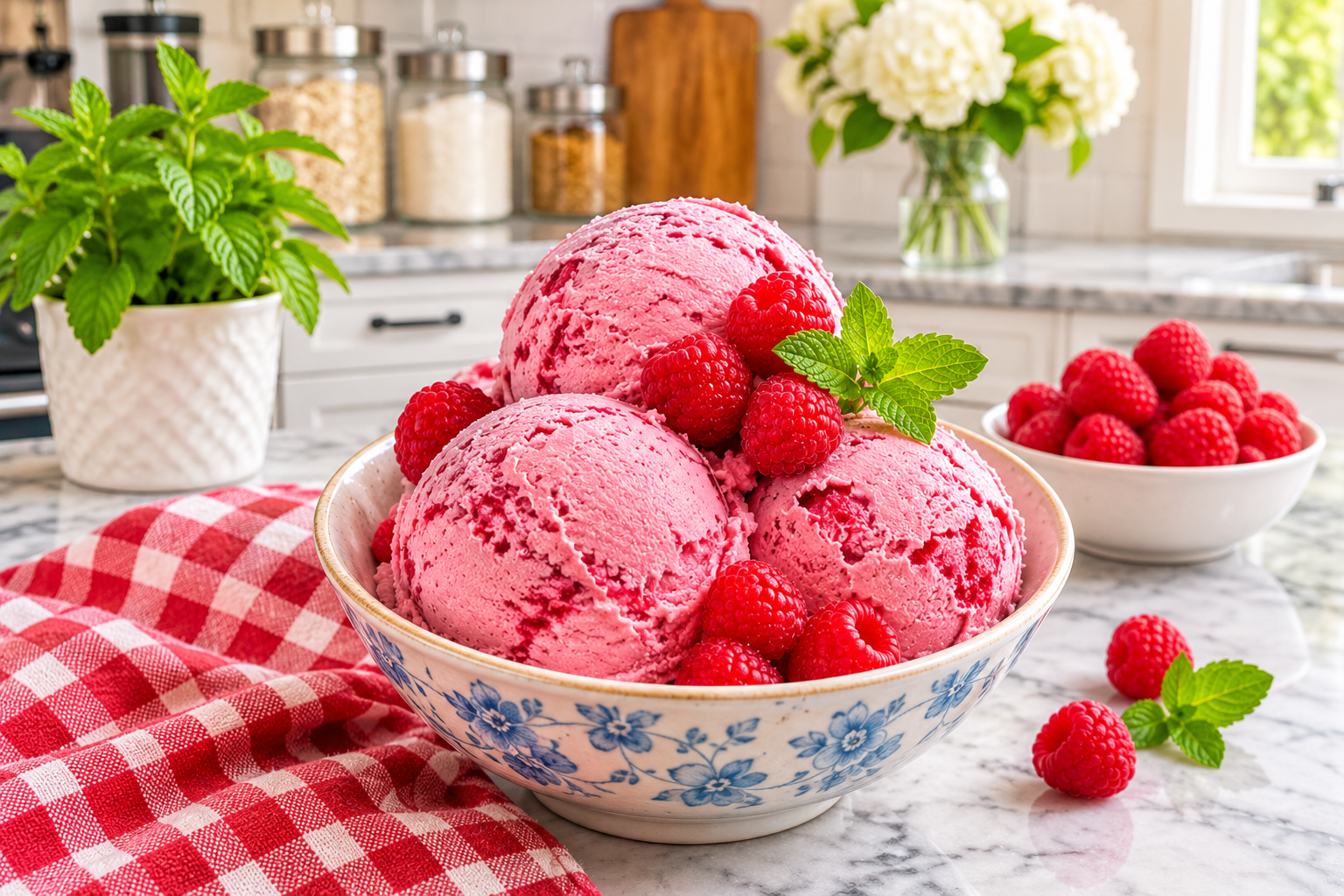
Raspberry Ice Cream
A rich and creamy raspberry ice cream made with a traditional egg yolk custard, heavy cream, and plenty of fresh or frozen raspberries.
1
servings20
minutes10
minutes720
minutes12
hours30
minutesIngredients
4 large egg yolks
100 g (½ cup) granulated sugar
1 pinch fine sea salt
480 g (2 cups) heavy cream
340 g ripe raspberries, fresh or frozen
1 tablespoon freshly squeezed lemon juice
Directions
- Add the egg yolks, granulated sugar, fine sea salt, and heavy cream to a saucepan. Whisk thoroughly until the ingredients are well combined and the egg yolks are fully broken up.
- Place the saucepan over medium-low heat. Stir frequently while cooking until the mixture reaches 165°F (approximately 74°C) and begins to thicken. Avoid allowing the custard to boil.
- Remove the saucepan from the heat. Transfer the custard into a clean bowl, passing it through a fine mesh sieve if any small cooked egg pieces are present.
- Place the raspberries in a food processor or blender. Blend on high until the berries form a smooth puree.
- Position a fine mesh sieve over the bowl of custard. Pour in the raspberry puree and stir while pressing the berries through the sieve to extract as much puree as possible. Scrape the underside of the sieve to collect any remaining puree.
- Pour the freshly squeezed lemon juice into the raspberry custard. Stir thoroughly until the mixture is evenly combined.
- Allow the mixture to cool to room temperature. Cover with plastic wrap and refrigerate overnight, or for at least 6–8 hours. Stir the mixture if a layer forms on the surface.
- Pour the thoroughly chilled mixture into your prepared ice cream maker. Churn according to the manufacturer’s instructions until the mixture reaches a thick, soft-serve consistency.
- Transfer the churned ice cream to an airtight, freezer-safe container. Place it in the freezer until firm enough to scoop.
- Scoop into bowls and serve. Garnish with fresh raspberries if desired.
Notes
- This recipe yields approximately 1 quart of homemade raspberry ice cream.
- Use ripe and flavorful raspberries for the best results.
- Fresh and frozen raspberries are both suitable for this recipe.
- Straining the raspberry puree removes most of the seeds and creates a smoother texture.
- The ice cream base should be thoroughly chilled before churning.
- If your ice cream machine requires a frozen bowl, freeze it according to the manufacturer’s instructions before use.
- A small splash of vanilla extract may be added to the custard if desired.
- Store the finished ice cream in an airtight container in the back of the freezer for approximately one month.