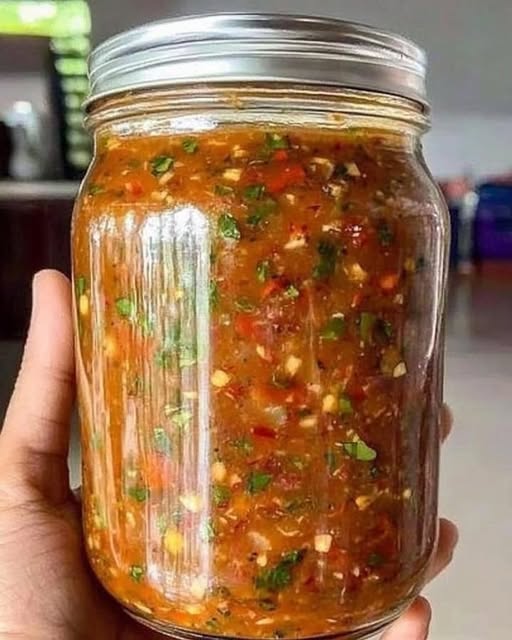
Salsa picante simply means “spicy sauce.” Unlike chunky salsa, this version is usually smoother, thinner, and more intense in flavor. It can be used as:
- A dip
- A cooking sauce
- A topping for eggs, tacos, rice, or grilled meats
The key elements are:
- Heat (chili peppers)
- Acidity (vinegar or lime)
- Depth (garlic, onion, roasting)
- Balance (salt and sometimes a touch of sweetness)
2. INGREDIENTS (CORE VERSION)
Fresh Ingredients
- 8–10 medium ripe tomatoes (or 5 large)
- 6–12 red chili peppers (adjust to spice level)
- Examples: Fresno, serrano, or cayenne
- 3–6 cloves garlic
- 1 medium onion (white or yellow)
- 1–2 fresh jalapeños (optional for extra heat)
- 1/2 cup fresh cilantro (optional but recommended)
- 1–2 tablespoons lime juice
Pantry Ingredients
- 2–3 tablespoons white vinegar (important for preservation and tang)
- 1–2 teaspoons salt (adjust to taste)
- 1/2 teaspoon sugar (optional, balances acidity)
- 1/2 teaspoon ground cumin (optional)
- 1/2 teaspoon black pepper
Optional Additions
- 1 roasted bell pepper (adds sweetness)
- 1 teaspoon smoked paprika (for smokiness)
- 1 tablespoon oil (for sautéing or roasting)
3. PREPARATION METHODS (VERY IMPORTANT)
You can make salsa picante in three main ways:
Method A: Raw (Fresh and Bright)
- Strong, sharp flavor
- Best for immediate use
Method B: Roasted (Most recommended)
- Deep, smoky flavor
- Balanced and rich
Method C: Cooked/Simmered
- Smooth, restaurant-style
- Longer shelf life
This recipe will focus on the roasted + simmered hybrid method for maximum flavor.
4. STEP-BY-STEP PROCESS
Step 1: Prepare the Vegetables
- Wash all vegetables thoroughly.
- Remove stems from chili peppers.
- Peel garlic cloves.
- Cut tomatoes in halves.
- Slice onion into thick wedges.
Tip: Leave chili seeds in for more heat; remove some for milder salsa.
Step 2: Roast the Ingredients
Option 1: Oven Roasting
- Preheat oven to 220°C (425°F).
- Place tomatoes, chilies, onion, and garlic on a baking tray.
- Lightly coat with oil.
- Roast for 20–30 minutes until:
- Tomatoes are soft and slightly charred
- Chilies blister
- Onion edges brown
Option 2: Pan Roasting (Traditional)
- Heat a dry pan or skillet.
- Place vegetables directly on it.
- Turn frequently until charred and softened.
Important: Slight burning is good; it adds flavor.
Step 3: Cooling
- Let all roasted ingredients cool for 10–15 minutes.
- This helps blending and improves flavor development.
Step 4: Blending
Add to blender:
- Roasted tomatoes
- Chilies
- Garlic
- Onion
- Vinegar
- Lime juice
- Salt
- Optional spices
Blend until smooth or slightly textured, depending on preference.
Tip:
- Add a little water if too thick.
- For a thinner, sauce-like consistency, blend longer.
Step 5: Simmering (Critical Step)
- Pour blended mixture into a saucepan.
- Cook on medium-low heat for 15–25 minutes.
- Stir occasionally.
During simmering:
- Flavors deepen
- Acidity balances
- Texture thickens slightly
Taste and adjust:
- Add more salt if needed
- Add vinegar for more tang
- Add sugar if too acidic
Step 6: Final Adjustments
At the end:
- Add chopped cilantro (optional)
- Adjust spice level:
- Too spicy: add more tomatoes
- Too mild: blend in fresh chili
5. TEXTURE OPTIONS
Smooth Salsa Picante
- Blend thoroughly
- Strain if needed
Rustic Style
- Pulse blend lightly
- Keep some chunks
6. STORAGE
- Refrigerate in airtight container: lasts 1–2 weeks
- For longer storage:
- Add extra vinegar
- Boil and store in sterilized jars
7. VARIATIONS
Extra Spicy Version
- Use habanero peppers
- Add chili flakes
Smoky Version
- Roast longer
- Add chipotle peppers in adobo
Green Salsa Picante
Replace:
- Tomatoes with tomatillos
- Red chilies with green chilies
Garlic-Heavy Version
- Double the garlic for bold flavor
8. COMMON MISTAKES
- Not roasting enough → weak flavor
- Too much vinegar → overly sour
- Not simmering → raw taste
- Over-blending → watery texture
- Too many seeds → unbearable heat
9. HOW TO USE SALSA PICANTE
- With eggs (breakfast style)
- As marinade for chicken or beef
- Mixed into rice or beans
- As dipping sauce for snacks
- Drizzled over tacos, burgers, or fries
10. PRO TIPS FOR BEST RESULTS
- Use ripe tomatoes for natural sweetness
- Combine different chilies for complex heat
- Let salsa rest overnight for better flavor
- Always taste after cooling (heat perception changes)