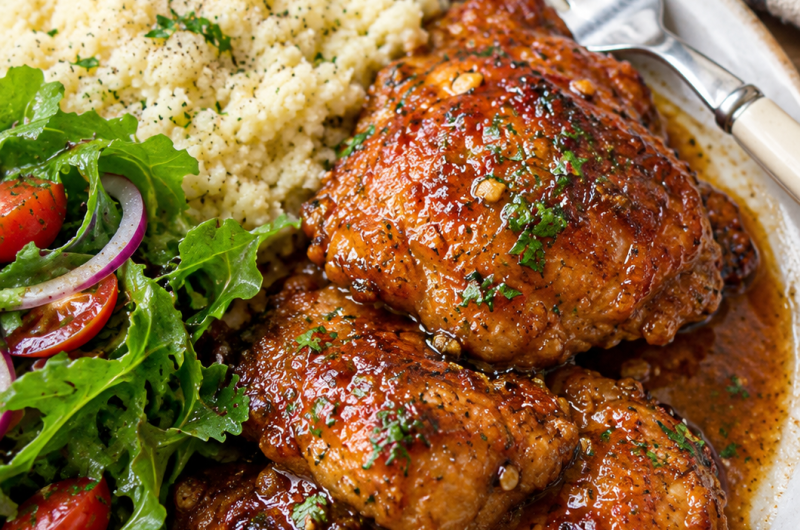
Keto sticky baked chicken thighs are a delicious option for anyone who wants a flavorful chicken dinner without spending hours in the kitchen. Made with boneless, skinless chicken thighs and a glossy sweet-and-savory glaze, this oven-baked chicken recipe is simple enough for a busy weeknight and tasty enough to serve when family or friends come over. The chicken cooks at a high temperature, allowing the sauce to caramelize on the surface while keeping the meat tender and juicy inside.
This recipe is especially useful when you need a quick meal but have not planned anything complicated. Most of the ingredients are common pantry staples, so there is no need to search for special seasonings or prepare an elaborate marinade. Simply mix the glaze, coat the chicken, bake it, and finish it under the broiler for a beautifully browned surface. The result is sticky, flavorful chicken with plenty of delicious pan juices to spoon over your meal.
Although this dish is presented as keto sticky baked chicken thighs, the original glaze contains ketchup and brown sugar, which contribute carbohydrates. Therefore, the recipe in its original form is not strictly keto-friendly. It can be enjoyed as a regular chicken dinner, while anyone following a strict ketogenic diet should consider suitable low-carbohydrate substitutes and recalculate the nutritional information. Keeping this distinction in mind helps you choose the version that best fits your dietary needs without sacrificing the appeal of a homemade chicken dinner.
Why You Will Love These Sticky Baked Chicken Thighs
One of the best things about sticky baked chicken thighs is their balance of convenience and flavor. Chicken thighs are naturally juicy and have a richer taste than many leaner cuts of chicken. When combined with a glaze made from ketchup, soy sauce, brown sugar, garlic, Worcestershire sauce, vinegar, and olive oil, they develop a savory coating with sweetness and a gentle tang. Each ingredient contributes something different, creating a well-rounded sauce that tastes much more complex than the short preparation time suggests.
Another reason to make this recipe is that it avoids much of the mess associated with pan-frying chicken. Cooking chicken thighs in a skillet can produce splattering oil and require close attention, especially when the sauce begins to thicken. Oven baking makes the process easier because the chicken cooks in one pan, leaving you free to prepare vegetables, a salad, or another side dish while it is in the oven. A short broiling stage at the end adds color and caramelization without requiring you to stand over the stove.
The pan juices are just as valuable as the chicken itself. As the meat cooks, its juices mix with the glaze, creating a flavorful sauce that can be spooned over the finished thighs. This extra moisture makes the dish especially satisfying when served with vegetables, cauliflower rice, mashed beans, or another side that can absorb the sauce. With only a few minutes of preparation and straightforward cooking steps, this recipe offers a practical way to turn everyday chicken into a memorable meal.
What Makes the Sticky Chicken Glaze So Flavorful?
The secret to a successful sticky chicken recipe is the balance between sweet, savory, and acidic ingredients. Rather than relying on a long list of spices, this glaze combines a handful of familiar condiments to create layers of flavor. Ketchup provides a tomato-based foundation, brown sugar adds sweetness, and soy sauce contributes saltiness and depth. Garlic brings a fragrant, savory note, while vinegar balances the sweetness with acidity. Worcestershire sauce adds another layer of richness, and olive oil helps round out the mixture.
Ketchup is an important part of the glaze because it provides both tomato flavor and a smooth consistency. As it heats, it combines with the other ingredients to coat the chicken evenly. Brown sugar helps the surface become glossy and caramelized, especially during the final broiling stage. However, sugar-containing sauces can brown quickly under intense heat, so it is important to watch the chicken carefully during the last few minutes of cooking.
Soy sauce gives the glaze a deeper savory taste without requiring additional salt in most cases. For the best balance, use light or all-purpose soy sauce rather than dark soy sauce, which can produce a much stronger flavor and darker color. Worcestershire sauce contributes a distinctive tangy, umami-rich quality, while minced garlic makes the sauce smell inviting as it cooks. Apple cider vinegar brings the acidity needed to keep the glaze from tasting overly sweet.
Olive oil is included to give the mixture a smoother, more rounded finish. It can be omitted if necessary, although the original recipe includes it as part of the glaze. Together, these ingredients create a sauce that becomes concentrated in the oven and forms a sticky coating around the chicken. Because the glaze is made from everyday ingredients, it is also easy to adapt when you need to use what is already available in your kitchen.
Choosing the Best Chicken Thighs for Baking
Boneless, skinless chicken thighs are ideal for this recipe because they cook relatively quickly and are easy to serve. Their natural fat content helps keep the meat moist during high-temperature baking, making them a reliable choice for beginners and experienced home cooks alike. The original recipe uses 700 grams, or approximately 1.4 pounds, of chicken thighs, usually around five to seven pieces depending on their size.
Try to choose chicken thighs that are reasonably similar in thickness. When the pieces are close in size, they are more likely to finish cooking at approximately the same time. If some pieces are much smaller than others, check them earlier so they do not become overcooked while the larger pieces finish. Very small thighs may require a shorter baking period, so visual checks and an internal temperature reading are more useful than relying on the clock alone.
Before placing the chicken in the baking pan, arrange the thighs flat rather than folding or bunching them together. This helps expose more of the upper surface to the oven’s heat and encourages better browning. If the pieces overlap, they may steam instead of developing the caramelized finish that makes sticky baked chicken so appealing. A sufficiently large pan is therefore important for achieving the intended texture.
For the original cooking method, foil is used to line the baking pan. This is a practical choice because the sweet glaze can become sticky and firmly attached to the pan as it caramelizes. Foil makes cleanup easier, especially after the final broiling stage. Do not use parchment paper under the broiler, because it may scorch or catch fire when exposed to intense direct heat.
How to Make Keto Sticky Baked Chicken Thighs
The preparation process is straightforward, making this recipe suitable for busy evenings when you want a homemade dinner without complicated cooking techniques. Start by preheating the oven to 220°C or 425°F, using 200°C or 400°F for a fan-assisted oven. Prepare a sufficiently large baking pan by lining it with foil, then arrange the boneless, skinless chicken thighs in a single layer with their upper surfaces facing upward.
Next, combine the ketchup, brown sugar, soy sauce, apple cider vinegar, olive oil, Worcestershire sauce, and minced garlic in a bowl. Stir until the sugar is incorporated and the ingredients form a smooth, evenly mixed glaze. There is no need to cook the sauce separately before using it. Mixing everything together in one bowl keeps preparation simple and ensures that the flavorings are distributed throughout the coating.
Spoon approximately two-thirds of the glaze over the upper surface of each chicken thigh. Spread it gently so that the pieces receive an even coating, but do not worry about covering the underside. The lower surfaces will cook in the pan juices, while keeping the upper surfaces exposed helps them brown properly. Reserve the remaining glaze for the second stage of cooking.
Place the pan in the preheated oven and bake the chicken for 15 minutes. During this stage, the thighs begin cooking through and the glaze starts to mingle with the natural juices released by the meat. Once the initial baking period is complete, carefully remove the pan and spoon some of the accumulated pan juices over the chicken. Add the reserved glaze to the upper surfaces, distributing it as evenly as possible.
Switch the oven to its high broiler or grill setting and adjust the rack so the chicken sits approximately 20 centimeters, or 8 inches, from the heat source. Return the pan to the oven and broil for another eight to ten minutes, watching the chicken closely. The direct heat helps the glaze become darker, stickier, and more caramelized. Cooking times may vary according to the thickness of the thighs and the strength of the broiler, so avoid leaving the pan unattended.
Once the chicken is cooked, remove the pan and allow the thighs to rest uncovered for a few minutes. This brief resting period gives the juices time to settle and makes serving easier. Transfer the chicken to plates and spoon the flavorful pan juices over the top. Serve immediately while the glaze is glossy and the meat is warm and tender.
Tips for Perfectly Caramelized Oven-Baked Chicken
Use High Heat for Better Browning
A hot oven is essential for developing the rich color and sticky surface associated with this recipe. Baking at 220°C or 425°F helps the chicken cook efficiently while the glaze thickens around the edges. The final broiling stage provides more direct heat, helping the upper surface develop a caramelized finish. Since the sauce contains sugar, keep a close eye on the chicken during broiling to prevent the glaze from burning.
Apply the Glaze in Two Stages
Dividing the glaze into two portions makes a noticeable difference to the finished dish. The first portion coats the chicken during baking, allowing the ingredients to blend with the natural juices. The remaining glaze is added before broiling, giving the upper surface another layer of flavor. Spoon some pan juices over the chicken before adding the reserved sauce to help keep the coating moist and flavorful.
Avoid Crowding the Baking Pan
Chicken thighs need enough room for the hot air to circulate around them. If the pieces are piled on top of one another, they may release moisture into the pan without browning as effectively. Use a pan that allows every thigh to lie flat in a single layer. If you need to prepare a larger quantity, use a second pan instead of overcrowding the first.
Check the Internal Temperature
The safest way to determine whether chicken thighs are fully cooked is to measure their internal temperature using a food thermometer. Insert it into the thickest part of a thigh without touching the pan. Chicken should reach an internal temperature of 74°C or 165°F. If the chicken needs more time, continue cooking and check again before serving. The original recipe’s approximate cooking time is a useful guide, but the size of the chicken pieces and the performance of the oven can affect the final result.
Is This Recipe Suitable for a Keto Diet?
The name keto sticky baked chicken thighs suggests a low-carbohydrate meal, but the original glaze contains ketchup and brown sugar. Both ingredients contribute carbohydrates, so the recipe as written should not be considered strictly ketogenic. The chicken itself is a good source of protein, but the complete nutritional profile depends on the sauce, portion size, and side dishes served with it.
For a lower-carbohydrate variation, you could explore a sugar-free ketchup and a suitable low-carbohydrate sweetener that performs well in sauces. Check the labels of your chosen products because their carbohydrate content can vary considerably. You may also need to adjust the amount of sweetener to achieve a balanced flavor without making the glaze excessively sweet. These changes would create a modified recipe rather than the original version.
It is also important to recalculate the nutrition information after making substitutions. The nutritional figures provided in the recipe card below apply to the original ingredients and should not be used as the nutritional estimate for a modified keto version. If you follow a strict ketogenic eating plan, account for the carbohydrates in every ingredient, including condiments and any accompanying vegetables or sauces.
What to Serve with Sticky Baked Chicken Thighs
The rich glaze makes these chicken thighs versatile enough to pair with a wide variety of side dishes. For a lighter meal, serve them with roasted broccoli, sautéed green beans, steamed zucchini, or a fresh cucumber salad. These vegetables add freshness and texture while balancing the richness of the chicken. A squeeze of lemon over the vegetables can also introduce a bright flavor that works well with the sweet-and-savory sauce.
For a lower-carbohydrate meal, cauliflower rice is an excellent accompaniment because it absorbs the pan juices without adding the carbohydrates associated with traditional rice. Roasted cauliflower, sautéed cabbage, or mashed cauliflower can also create a satisfying plate. Choose simply seasoned sides so their flavors complement the chicken instead of competing with the glaze.
If you are not following a low-carbohydrate diet, the chicken also works beautifully with mashed potatoes, steamed rice, crusty bread, or a creamy bean mash. Bread is particularly useful for soaking up the extra sauce, while rice provides a mild base for the concentrated flavors. A simple green salad can complete the meal without requiring much additional preparation.
For a family dinner, consider serving the chicken directly from a warm platter with the pan juices poured over the top. Place the side dishes separately so everyone can choose their preferred combination. Because the glaze has a strong, savory-sweet character, there is no need to prepare an elaborate sauce or several complicated accompaniments.
Storage, Reheating, and Meal Preparation
How to Store Leftover Chicken
Allow leftover chicken to cool slightly before transferring it to a clean, airtight container. Refrigerate it within two hours of cooking, or sooner in a very warm environment. Properly refrigerated cooked chicken should generally be eaten within three to four days. Store the pan juices with the chicken whenever possible because they help maintain moisture and preserve the flavor of the glaze.
How to Reheat Sticky Chicken Thighs
For the best texture, reheat the chicken in an oven set to approximately 175°C or 350°F. Place the thighs in an oven-safe dish with a little of the reserved sauce or pan juices, then cover loosely to reduce moisture loss. Heat until the center reaches 74°C or 165°F. Uncover briefly at the end if you want to restore some of the glaze’s sticky texture, taking care not to burn the sauce.
A microwave can also be used for a quick lunch. Place the chicken in a microwave-safe dish, add a spoonful of sauce, and cover loosely. Heat in short intervals until the chicken is steaming hot throughout, turning or rearranging the pieces as needed. Avoid repeatedly reheating the same portion; instead, warm only the amount you plan to eat.
Can You Prepare the Glaze Ahead of Time?
Yes. You can mix the glaze in advance and keep it covered in the refrigerator until you are ready to cook. Stir it again before using so that the ingredients are evenly distributed. Preparing the sauce earlier in the day makes the final cooking process faster, particularly when you are preparing several dishes at once. Keep raw chicken separate from the glaze until you are ready to coat it, and never reuse sauce that has contacted raw chicken unless it is thoroughly cooked.
Frequently Asked Questions About Sticky Baked Chicken Thighs
Can I Use Chicken Breast Instead of Chicken Thighs?
Yes, boneless chicken breast can be used, although the result will be somewhat different. Chicken breast is leaner and can become dry more easily than thighs, while the oven-baked glaze may not caramelize in quite the same way. For the original breast variation, cut each breast horizontally into two thinner pieces. For oven baking, coat one side with all the sauce and bake at 220°C or 425°F for approximately 18 minutes without broiling, checking that the chicken reaches a safe internal temperature. Alternatively, broil thinner pieces carefully, applying the sauce in stages and monitoring them closely to prevent burning.
Can I Use Bone-In Chicken Thighs or Drumsticks?
Yes, but bone-in chicken requires a different cooking time. The original recipe suggests placing the pieces skin-side down in a foil-lined pan and baking at 180°C or 350°F for 20 minutes. Turn them over, apply the reserved glaze, and bake for another 30 minutes, basting with the pan juices toward the end. These times are approximate rather than guaranteed. Check the thickest part of the meat with a thermometer, avoiding contact with the bone, and ensure the chicken reaches at least 74°C or 165°F.
Can I Substitute the Ingredients in the Glaze?
The original recipe allows several substitutions. Ketchup can be replaced with a similar tomato sauce or barbecue sauce, while brown sugar can be replaced with white sugar or a liquid sweetener such as honey or maple syrup. Light or all-purpose soy sauce is preferred over dark soy sauce because the latter can be more intense. Apple cider vinegar can be replaced with another suitable clear vinegar, such as white wine vinegar or rice vinegar. Each substitution may change the final flavor and nutritional values.
What Can I Add for More Flavor?
If you want a different flavor profile, you can experiment with a little hot sauce, mixed herbs, oregano, thyme, cayenne pepper, paprika, cumin, or coriander. These additions can introduce heat, warmth, or an earthy note without requiring a completely different cooking method. Start with small quantities so that the additional seasonings complement the original glaze rather than overpowering its sweet and savory balance.
Why Is Foil Recommended Instead of Parchment Paper?
Foil helps prevent the sticky glaze from bonding firmly to the baking pan, making cleanup much easier. It is particularly useful when the pan is placed under a hot broiler. Parchment paper should not be used for this broiling method because exposure to intense direct heat can cause it to scorch or ignite. Always use cookware and lining materials suitable for the temperature and cooking method.
Why Is There No Glaze on the Underside of the Chicken?
The original method concentrates the glaze on the upper surface because this side receives direct oven and broiler heat, which encourages caramelization. Sauce placed underneath the thighs tends to run into the pan rather than stay attached. That does not mean the underside will be bland; it cooks in the flavorful juices that collect beneath the chicken during baking.
Final Thoughts
Sticky baked chicken thighs are a practical way to prepare a satisfying homemade dinner with minimal preparation and familiar ingredients. The combination of tender chicken, a rich savory glaze, and caramelized edges makes the recipe suitable for weeknight meals, casual family gatherings, and simple meal preparation. Baking the chicken before finishing it under the broiler gives you a useful balance of juicy meat, concentrated flavor, and a glossy coating without the constant attention required by pan-frying.
For the best results, arrange the chicken in a single layer, divide the glaze between the two cooking stages, and watch carefully during the final broiling period. Serve the chicken with vegetables, cauliflower rice, or your preferred side dish, and make good use of the flavorful pan juices. If you intend to follow a strict keto diet, remember that the original ketchup and brown sugar contribute carbohydrates and that suitable substitutions will be needed.
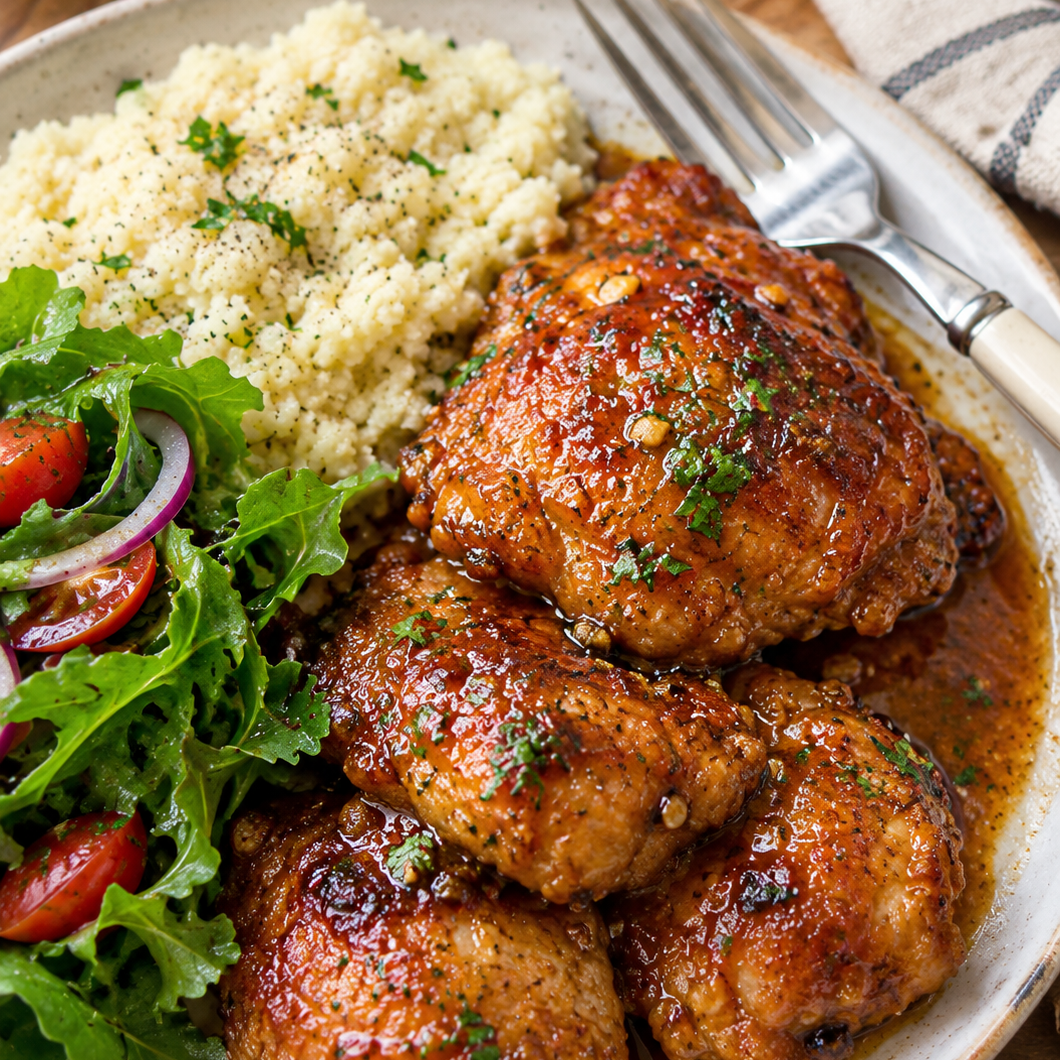
Keto Sticky Baked Chicken Thighs
Juicy, boneless, skinless chicken thighs baked in the oven and finished under the broiler with a sticky, sweet-and-savory glaze made from ketchup, brown sugar, soy sauce, garlic, Worcestershire sauce, vinegar, and olive oil. This easy chicken dinner is full of flavor and requires minimal preparation.
4
servings5
minutes25
minutes297
kcal30
minutesIngredients
- For the Chicken
– 700 g (1.4 lb) boneless, skinless chicken thighs (5–7 pieces)
- For the Sticky Glaze
1/4 cup ketchup
3 tablespoons lightly packed brown sugar
1.5 tablespoons all-purpose or light soy sauce (not dark soy sauce)
1 tablespoon apple cider vinegar
1 tablespoon olive oil
2 teaspoons Worcestershire sauce
2 garlic cloves, minced
Directions
- Preheat the oven:
Heat the oven to 220°C/425°F, or 200°C/400°F for a fan-assisted oven. - Prepare the baking pan:
Line a suitably sized baking pan with aluminum foil. Arrange the chicken thighs flat in a single layer without overlapping or folding them. - Mix the glaze:
Combine the ketchup, brown sugar, soy sauce, apple cider vinegar, olive oil, Worcestershire sauce, and minced garlic in a bowl. Stir until evenly blended. - Coat the chicken:
Spoon approximately two-thirds of the glaze over the upper surfaces of the chicken thighs. Keep the remaining glaze aside for the final cooking stage. - Bake the chicken:
Place the pan in the preheated oven and bake for 15 minutes. - Add the remaining glaze:
Carefully remove the pan. Spoon the accumulated pan juices over the chicken, then spread or dab the reserved glaze over the upper surfaces. - Broil until caramelized:
Switch the oven to its high broiler or grill setting. Position the rack approximately 20 cm (8 inches) from the heat source. Broil for 8–10 minutes, watching closely until the glaze is nicely caramelized. - Check for doneness:
Use a food thermometer to confirm that the thickest part of each thigh reaches at least 74°C/165°F. Continue cooking if necessary. - Rest and serve:
Remove the pan from the oven and let the chicken rest uncovered for a few minutes. Serve warm with the pan juices spooned over the top.
Notes
- Chicken size: Smaller thighs may cook faster, so begin checking them early.
- Chicken breast alternative: Slice each breast horizontally into two thinner pieces. For the oven method, coat one side with all the sauce and bake at 220°C/425°F for approximately 18 minutes without broiling, checking the internal temperature. Alternatively, broil thinner pieces carefully, adding the glaze in stages and monitoring them closely.
- Bone-in chicken alternative: Bone-in thighs and drumsticks require longer cooking. A suggested method is 20 minutes at 180°C/350°F with the pieces skin-side down, followed by turning, glazing, and approximately 30 more minutes of baking. Check the internal temperature rather than relying on time alone.
- Glaze substitutions: Similar tomato sauces or barbecue sauce can replace ketchup. White sugar, honey, or maple syrup can replace brown sugar, while other suitable clear vinegars can replace apple cider vinegar. These changes affect flavor and nutrition.
- Soy sauce: Use light or all-purpose soy sauce rather than dark soy sauce. Fish sauce is another possible alternative, but use a smaller amount because of its stronger flavor.
- Optional seasonings: A little hot sauce, oregano, thyme, cayenne, paprika, cumin, or coriander can add a different flavor.
- Pan lining: Use aluminum foil for easier cleanup. Do not use parchment paper under the broiler.
- Sauce placement: Coat the upper surfaces of the chicken for better caramelization. The undersides will absorb flavor from the pan juices.
- Keto note: The original recipe contains ketchup and brown sugar, so it is not strictly keto-friendly. Use suitable low-carbohydrate alternatives and recalculate the nutrition if adapting it.
- Storage: Refrigerate leftovers in an airtight container within two hours and consume within three to four days. Reheat to 74°C/165°F before serving.
Nutrition Facts
4 servings per container
- Amount Per ServingCalories300
- % Daily Value *
- Total Fat
10g
13%
- Total Carbohydrate
13g
5%
- Total Sugars 12g
- Protein 34g 68%
* The % Daily Value tells you how much a nutrient in a serving of food contributes to a daily diet. 2,000 calories a day is used for general nutrition advice.