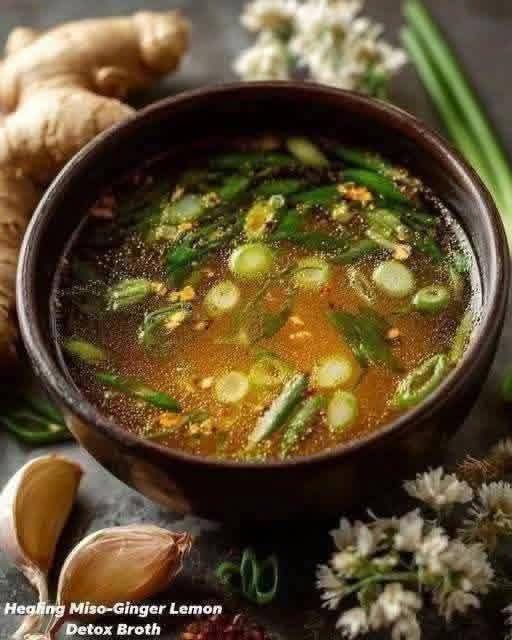
Healing Miso-Ginger Lemon Detox Broth is one of those timeless recipes that feels comforting, nourishing, and restorative from the very first sip. Made with a combination of mineral-rich vegetables, aromatic ginger, fermented miso, bright lemon juice, garlic, herbs, and gentle seasonings, this broth is designed to provide warmth, hydration, and deep flavor while remaining light and easy to digest. Whether enjoyed during colder months, after a heavy meal, during a wellness reset, or simply as a daily ritual, this broth offers a soothing experience that many people find both satisfying and rejuvenating.
Unlike heavy soups or rich stews, this broth focuses on clean, layered flavors. The sweetness of slowly simmered vegetables, the warming spice of fresh ginger, the savory umami character of miso, and the brightness of lemon create a balanced combination that awakens the palate while remaining gentle on the stomach. Every ingredient contributes something meaningful to the final result, making this broth far more than simply flavored water. It is a carefully crafted blend of textures, aromas, and flavors that work together beautifully.
This extensive recipe explores every detail, from ingredient selection and preparation techniques to cooking methods, storage tips, serving ideas, and flavor variations, ensuring a deeply flavorful and memorable broth every time.
Introduction to the Broth
For centuries, cultures throughout the world have relied on simple broths for comfort and nourishment. Japanese cuisine has long celebrated miso-based soups, while ginger and lemon have been valued in numerous culinary traditions for their bright flavor and warming characteristics.
The combination of miso, ginger, and lemon creates a particularly harmonious broth because each ingredient balances the others perfectly.
Miso provides depth and richness.
Ginger provides warmth and gentle spice.
Lemon provides freshness and brightness.
Vegetables contribute sweetness and body.
Herbs provide freshness and complexity.
The resulting broth is deeply savory yet remarkably light, making it suitable for virtually any time of day.
Yield
Makes approximately 8 generous servings.
Preparation Time
Preparation Time: 25 minutes
Cooking Time: 50 minutes
Resting Time: 10 minutes
Total Time: Approximately 1 hour 25 minutes
Ingredients
For the Broth Base
10 cups filtered water
2 tablespoons extra virgin olive oil
1 large yellow onion, thinly sliced
2 medium carrots, sliced
3 celery stalks, chopped
1 leek, cleaned thoroughly and sliced
6 garlic cloves, minced
5 tablespoons fresh ginger, finely grated
1 tablespoon grated fresh turmeric
1 small piece kombu seaweed
2 bay leaves
1 teaspoon whole black peppercorns
1 teaspoon coriander seeds
1 teaspoon fennel seeds
1 tablespoon low-sodium tamari
1 tablespoon rice vinegar
For the Miso Mixture
4 tablespoons white miso paste
2 tablespoons yellow miso paste
1 tablespoon red miso paste
1 cup warm broth from the pot
For Lemon Flavor
Juice of 3 fresh lemons
1 tablespoon finely grated lemon zest
Fresh Herb Blend
¼ cup parsley, finely chopped
¼ cup cilantro, finely chopped
2 tablespoons dill, chopped
4 green onions, thinly sliced
Optional Vegetables
1 cup sliced shiitake mushrooms
1 cup baby spinach
1 cup bok choy
1 zucchini, diced
1 cup napa cabbage, sliced
Optional Protein Additions
1 cup firm tofu cubes
1 cup shelled edamame
1 cup cooked chickpeas
Finishing Ingredients
1 teaspoon toasted sesame oil
1 teaspoon maple syrup or honey
Sea salt to taste
Freshly cracked black pepper
Extra lemon wedges for serving
Understanding the Ingredients
Miso Paste
Miso is the heart of this recipe. Produced through fermentation, miso develops an extraordinary depth of flavor that cannot be replicated by ordinary seasonings.
White miso tends to be mild and slightly sweet.
Yellow miso offers moderate intensity.
Red miso contributes bold, rich complexity.
Using a combination of miso varieties creates remarkable depth and balance.
Fresh Ginger
Fresh ginger is essential. It provides warmth, brightness, and an invigorating aroma that defines the broth.
When selecting ginger:
Choose firm roots.
Avoid shriveled pieces.
Look for smooth skin.
Freshly grate immediately before cooking for maximum flavor.
Lemons
Fresh lemons bring brightness that transforms the broth from comforting to vibrant.
Both juice and zest are used because they contribute different flavors.
Juice provides acidity.
Zest provides fragrant citrus oils.
Together they create a more complete lemon flavor.
Garlic
Garlic acts as a foundational aromatic ingredient.
Slow cooking softens its sharpness and allows it to blend seamlessly with the ginger and vegetables.
Kombu
Kombu naturally enhances savory flavors and contributes subtle mineral notes.
It is often used in traditional broths because it helps create a fuller taste without relying on excessive salt.
Herbs
Fresh herbs are added near the end to preserve their vibrant color and aroma.
Parsley adds freshness.
Cilantro contributes brightness.
Dill provides subtle complexity.
Green onions add gentle sharpness.
Step 1: Preparing the Vegetables
Begin by washing all vegetables thoroughly.
Slice the onion into thin half-moons.
Peel and slice the carrots.
Chop the celery into small pieces.
Clean the leek carefully because sand often hides between the layers.
Mince the garlic finely.
Grate the ginger and turmeric.
Arrange everything separately so the cooking process flows smoothly.
Proper preparation may seem simple, but it contributes significantly to the final quality of the broth.
Step 2: Building the Flavor Foundation
Place a large stockpot over medium heat.
Add olive oil.
Allow it to warm gently.
Add onions and leeks.
Cook slowly for approximately 10 minutes.
Stir occasionally.
The vegetables should become soft and translucent rather than browned.
This stage develops sweetness that balances the sharpness of ginger and lemon later.
Next add carrots and celery.
Cook another 8 minutes.
The vegetables will begin releasing moisture and flavor into the pot.
Add garlic, ginger, and turmeric.
Stir constantly for 2 minutes.
The aroma at this stage should be rich, warm, and intensely fragrant.
Step 3: Adding Liquid
Pour in the filtered water.
Add kombu.
Add bay leaves.
Add peppercorns.
Add coriander seeds.
Add fennel seeds.
Add tamari.
Add rice vinegar.
Increase heat until the mixture reaches a gentle boil.
Once boiling, immediately reduce to a low simmer.
Step 4: Slow Simmering
Allow the broth to simmer gently for 40 minutes.
Avoid rapid boiling.
A slow simmer extracts flavor more effectively and keeps the broth clear.
During cooking:
The carrots release sweetness.
The celery contributes earthiness.
The onion deepens the flavor.
The ginger infuses the liquid.
The kombu enriches the broth.
The spices become integrated.
The kitchen fills with an inviting aroma that signals the broth is developing complexity.
Step 5: Optional Vegetable Additions
If adding mushrooms, zucchini, cabbage, spinach, or bok choy, introduce them during the final 10 minutes of simmering.
This timing allows them to soften while maintaining texture and color.
Overcooking vegetables can cause them to lose both flavor and visual appeal.
Step 6: Straining the Broth
After simmering, remove the kombu and bay leaves.
For a clear broth:
Strain through a fine-mesh sieve.
Press lightly on the vegetables.
Avoid pressing too hard because it can make the broth cloudy.
For a rustic broth:
Leave some vegetables in the pot.
Both approaches work beautifully.
Step 7: Preparing the Miso
This is perhaps the most important step.
Never boil miso.
High temperatures can negatively affect flavor and texture.
Place the miso pastes into a bowl.
Add one cup of warm broth.
Whisk until completely smooth.
The mixture should resemble a creamy liquid with no lumps.
Slowly pour it back into the pot while stirring constantly.
The broth instantly develops a richer appearance and deeper aroma.
Step 8: Adding Lemon
After the miso has been incorporated:
Add lemon juice.
Add lemon zest.
Stir gently.
Taste immediately.
Notice how the lemon brightens the entire broth and enhances the complexity of the miso.
The transformation is remarkable.
Step 9: Finishing Touches
Add parsley.
Add cilantro.
Add dill.
Add green onions.
Add sesame oil.
Add maple syrup if desired.
Season with salt and pepper.
Allow the broth to rest for 10 minutes before serving.
Resting time helps the flavors meld and become more harmonious.
The Ideal Flavor Profile
A properly prepared Healing Miso-Ginger Lemon Detox Broth should taste:
Savory but not overly salty.
Bright but not sour.
Warming but not spicy.
Rich but not heavy.
Fresh but not grassy.
Balanced but layered.
Each sip should reveal subtle complexity while remaining comforting and easy to drink.
Serving Suggestions
Serve in large ceramic mugs for a cozy experience.
Serve in soup bowls as a light meal.
Pair with brown rice.
Serve alongside quinoa.
Add soba noodles.
Add rice noodles.
Serve with steamed vegetables.
Pair with tofu.
Serve with avocado toast.
Enjoy before meals.
Enjoy after meals.
Sip throughout the day.
Use as a nourishing afternoon beverage.
Serve during cold weather.
Serve whenever comfort is needed.
Wellness Meal Bowl Variation
Transform the broth into a complete meal.
Place in a bowl:
Cooked brown rice.
Steamed spinach.
Roasted carrots.
Edamame.
Tofu cubes.
Fresh herbs.
Pour hot broth over everything.
Allow the ingredients to absorb the flavorful liquid.
The result is a satisfying and nourishing meal that remains light and refreshing.
Storage Instructions
Allow broth to cool completely.
Transfer to glass containers.
Refrigerate for up to 5 days.
For freezing:
Freeze before adding miso and lemon.
Store for up to 3 months.
When reheating:
Thaw overnight.
Heat gently.
Add fresh miso mixture.
Add fresh lemon juice.
This preserves the best flavor and texture.
Common Mistakes to Avoid
Boiling the miso.
Using bottled lemon juice.
Skipping the ginger.
Over-salting early in the process.
Using stale herbs.
Cooking vegetables too aggressively.
Adding lemon too soon.
Rushing the simmering process.
Each of these mistakes can reduce the depth and balance of the final broth.
Professional Chef Tips
Use multiple miso varieties for greater complexity.
Always taste before adding extra salt.
Use freshly grated ginger rather than pre-packaged paste.
Prepare lemon zest before juicing lemons.
Allow the broth to rest before serving.
Use filtered water for a cleaner taste.
Warm serving bowls before pouring in the broth.
Add herbs at the last moment for maximum freshness.
Final Thoughts
Healing Miso-Ginger Lemon Detox Broth is much more than a simple soup. It is a deeply flavorful, aromatic, and comforting preparation that combines the ancient culinary traditions of fermented foods, fresh herbs, warming spices, and nourishing vegetables. The slow-simmered aromatics create depth, the miso contributes extraordinary umami richness, the ginger provides warmth, and the lemon brings vibrant brightness that elevates every sip.
Whether enjoyed as a morning wellness drink, a light lunch, a restorative evening broth, or the foundation of a complete meal, this recipe delivers remarkable flavor while remaining elegant, simple, and nourishing. Prepared with care and quality ingredients, each bowl offers warmth, comfort, and a beautifully balanced combination of savory, citrusy, and aromatic notes that make it a recipe worth returning to again and again.