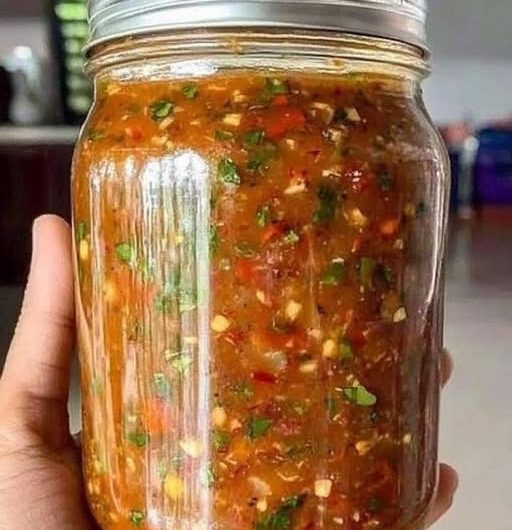

HOMEMADE SALSA PICANTE
1. Understanding Salsa Picante
Salsa picante simply means “spicy sauce.” Unlike chunky salsa, this version is usually smoother, thinner, and more intense in flavor. It can be used as:
- A dip
- A cooking sauce
- A topping for eggs, tacos, rice, or grilled meats
The key elements are:
- Heat (chili peppers)
- Acidity (vinegar or lime)
- Depth (garlic, onion, roasting)
- Balance (salt and sometimes a touch of sweetness)
2. INGREDIENTS (CORE VERSION)
Fresh Ingredients
- 8–10 medium ripe tomatoes (or 5 large)
- 6–12 red chili peppers (adjust to spice level)
- Examples: Fresno, serrano, or cayenne
- 3–6 cloves garlic
- 1 medium onion (white or yellow)
- 1–2 fresh jalapeños (optional for extra heat)
- 1/2 cup fresh cilantro (optional but recommended)
- 1–2 tablespoons lime juice
Pantry Ingredients
- 2–3 tablespoons white vinegar (important for preservation and tang)
- 1–2 teaspoons salt (adjust to taste)
- 1/2 teaspoon sugar (optional, balances acidity)
- 1/2 teaspoon ground cumin (optional)
- 1/2 teaspoon black pepper
Optional Additions
- 1 roasted bell pepper (adds sweetness)
- 1 teaspoon smoked paprika (for smokiness)
- 1 tablespoon oil (for sautéing or roasting)
3. PREPARATION METHODS (VERY IMPORTANT)
You can make salsa picante in three main ways:
Method A: Raw (Fresh and Bright)
- Strong, sharp flavor
- Best for immediate use
Method B: Roasted (Most recommended)
- Deep, smoky flavor
- Balanced and rich
Method C: Cooked/Simmered
- Smooth, restaurant-style
- Longer shelf life
This recipe will focus on the roasted + simmered hybrid method for maximum flavor.
4. STEP-BY-STEP PROCESS
Step 1: Prepare the Vegetables
- Wash all vegetables thoroughly.
- Remove stems from chili peppers.
- Peel garlic cloves.
- Cut tomatoes in halves.
- Slice onion into thick wedges.
Tip: Leave chili seeds in for more heat; remove some for milder salsa.
Step 2: Roast the Ingredients
Option 1: Oven Roasting
- Preheat oven to 220°C (425°F).
- Place tomatoes, chilies, onion, and garlic on a baking tray.
- Lightly coat with oil.
- Roast for 20–30 minutes until:
- Tomatoes are soft and slightly charred
- Chilies blister
- Onion edges brown
Option 2: Pan Roasting (Traditional)
- Heat a dry pan or skillet.
- Place vegetables directly on it.
- Turn frequently until charred and softened.
Important: Slight burning is good; it adds flavor.
Step 3: Cooling
- Let all roasted ingredients cool for 10–15 minutes.
- This helps blending and improves flavor development.
Step 4: Blending
Add to blender:
- Roasted tomatoes
- Chilies
- Garlic
- Onion
- Vinegar
- Lime juice
- Salt
- Optional spices
Blend until smooth or slightly textured, depending on preference.
Tip:
- Add a little water if too thick.
- For a thinner, sauce-like consistency, blend longer.
Step 5: Simmering (Critical Step)
- Pour blended mixture into a saucepan.
- Cook on medium-low heat for 15–25 minutes.
- Stir occasionally.
During simmering:
- Flavors deepen
- Acidity balances
- Texture thickens slightly
Taste and adjust:
- Add more salt if needed
- Add vinegar for more tang
- Add sugar if too acidic
Step 6: Final Adjustments
At the end:
- Add chopped cilantro (optional)
- Adjust spice level:
- Too spicy: add more tomatoes
- Too mild: blend in fresh chili
5. TEXTURE OPTIONS
Smooth Salsa Picante
- Blend thoroughly
- Strain if needed
Rustic Style
- Pulse blend lightly
- Keep some chunks
6. STORAGE
- Refrigerate in airtight container: lasts 1–2 weeks
- For longer storage:
- Add extra vinegar
- Boil and store in sterilized jars
7. VARIATIONS
Extra Spicy Version
- Use habanero peppers
- Add chili flakes
Smoky Version
- Roast longer
- Add chipotle peppers in adobo
Green Salsa Picante
Replace:
- Tomatoes with tomatillos
- Red chilies with green chilies
Garlic-Heavy Version
- Double the garlic for bold flavor
8. COMMON MISTAKES
- Not roasting enough → weak flavor
- Too much vinegar → overly sour
- Not simmering → raw taste
- Over-blending → watery texture
- Too many seeds → unbearable heat
9. HOW TO USE SALSA PICANTE
- With eggs (breakfast style)
- As marinade for chicken or beef
- Mixed into rice or beans
- As dipping sauce for snacks
- Drizzled over tacos, burgers, or fries
10. PRO TIPS FOR BEST RESULTS
- Use ripe tomatoes for natural sweetness
- Combine different chilies for complex heat
- Let salsa rest overnight for better flavor
- Always taste after cooling (heat perception changes)