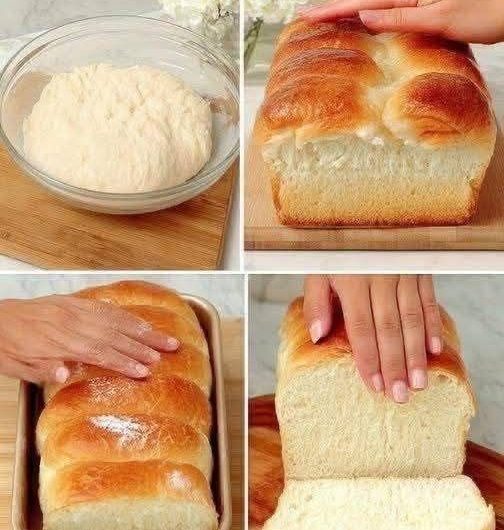

Heavenly Cloud Loaf
Heavenly Cloud Loaf is an ultra-light, soft, airy bread-like creation with a delicate texture somewhere between soufflé, sponge cake, and Japanese milk bread. It is famous for its cloud-like appearance, fluffy crumb, and melt-in-the-mouth softness. This detailed recipe explains every stage carefully, including ingredient science, preparation methods, troubleshooting, flavor variations, baking theory, storage techniques, serving ideas, and professional tips so you can make an exceptional cloud loaf at home.
Introduction to Heavenly Cloud Loaf
Cloud loaf became popular because of its incredibly soft texture and beautiful rise. Unlike traditional bread, this loaf relies heavily on whipped egg whites for structure and airiness. The result is a loaf that feels light as air while still having enough body to slice and enjoy.
This recipe combines methods from chiffon cake baking, soufflé preparation, and enriched bread techniques to produce a loaf that is:
- Soft and fluffy
- Slightly sweet
- Moist but not wet
- Tall and airy
- Delicate yet sliceable
- Beautifully golden on the outside
- Pillowy on the inside
The process requires patience and attention to detail, but every step is manageable if followed carefully.
Yield
- 1 medium loaf
- Approximately 8–10 slices
Preparation Time
- Prep time: 45 minutes
- Resting time: 15 minutes
- Baking time: 45–55 minutes
- Cooling time: 1 hour
Total time: Around 3 hours including cooling.
Equipment Needed
To achieve the perfect Heavenly Cloud Loaf, having the right tools matters significantly.
Essential Equipment
- Large mixing bowls
- Electric hand mixer or stand mixer
- Rubber spatula
- Fine mesh sieve
- Loaf pan (8×4 inch or 9×5 inch)
- Parchment paper
- Kitchen scale
- Cooling rack
- Whisk
- Offset spatula
- Measuring spoons
- Mixing spoons
Optional but Helpful
- Oven thermometer
- Bench scraper
- Cake tester or skewer
- Silicone baking mat
- Digital instant-read thermometer
Ingredients
Main Ingredients
Dry Ingredients
- 120 grams cake flour
- 20 grams cornstarch
- 1 teaspoon baking powder
- 1/4 teaspoon fine salt
Wet Ingredients
- 6 large eggs, separated
- 120 ml whole milk
- 60 ml neutral oil
- 1 teaspoon vanilla extract
- 1/2 teaspoon almond extract (optional)
Sugar Components
- 140 grams granulated sugar, divided
Stabilizers
- 1 teaspoon cream of tartar
Understanding the Ingredients
Eggs
Eggs are the backbone of this recipe. The yolks add richness, moisture, and color while the whites create the signature airy structure.
Fresh eggs are highly recommended because they whip more effectively and create stronger foam stability.
Room temperature eggs produce more volume than cold eggs.
Cake Flour
Cake flour contains less protein than all-purpose flour. Lower protein means less gluten formation, resulting in a softer loaf.
If cake flour is unavailable, you can make a substitute:
- Measure 1 cup all-purpose flour
- Remove 2 tablespoons
- Add 2 tablespoons cornstarch
- Sift multiple times
Cornstarch
Cornstarch softens the crumb and reduces toughness. It also contributes to the cloud-like texture.
Cream of Tartar
Cream of tartar stabilizes whipped egg whites. It helps maintain volume and prevents collapse during folding and baking.
If unavailable, lemon juice or white vinegar may substitute.
Milk
Whole milk contributes moisture and richness. Warm milk blends more smoothly into the batter.
Oil
Oil keeps the loaf soft even after cooling. Neutral oils such as sunflower, canola, or vegetable oil work best.
Butter may be used but creates a slightly denser texture.
Preparing the Workspace
Before starting, organize all ingredients and tools.
Important Preparation Rules
- Clean bowls thoroughly.
- Ensure no grease touches egg whites.
- Preheat oven correctly.
- Measure ingredients accurately.
- Line loaf pan carefully.
- Keep ingredients at room temperature.
Even tiny amounts of oil or yolk contamination can prevent egg whites from whipping properly.
Step 1: Preparing the Oven and Pan
Oven Temperature
Preheat oven to:
- 160°C (320°F)
A gentle temperature helps the loaf rise evenly without cracking excessively.
Preparing the Pan
- Grease the loaf pan lightly.
- Line with parchment paper.
- Allow paper to overhang slightly for easy removal.
This prevents sticking and protects the delicate loaf.
Step 2: Separating the Eggs
Carefully separate all eggs.
Tips for Perfect Separation
- Separate eggs while cold.
- Place whites in a large clean bowl.
- Place yolks in another bowl.
- Avoid breaking yolks.
- If yolk enters whites, remove it immediately.
Even a drop of yolk can interfere with whipping.
Step 3: Preparing the Yolk Mixture
In the yolk bowl:
- Add milk.
- Add oil.
- Add vanilla extract.
- Add almond extract if using.
Whisk until smooth and creamy.
Adding Dry Ingredients
Sift together:
- Cake flour
- Cornstarch
- Baking powder
- Salt
Sifting prevents lumps and incorporates air.
Gradually fold dry ingredients into yolk mixture until smooth.
Do not overmix.
The batter should appear silky and thick but pourable.
Step 4: Whipping the Egg Whites
This is the most important stage.
Begin Whipping
Using a mixer:
- Beat egg whites on low speed until foamy.
- Add cream of tartar.
- Increase to medium speed.
Adding Sugar Gradually
Add sugar in three stages.
First Addition
When bubbles become small and frothy.
Second Addition
When whites become opaque.
Third Addition
When soft peaks begin forming.
Understanding Peak Stages
Soft Peaks
Peaks droop gently.
Medium Peaks
Peaks hold shape with slight curl.
Stiff Peaks
Peaks stand upright firmly.
For cloud loaf, aim for medium-stiff peaks.
Overwhipped whites become grainy and difficult to fold.
Step 5: Folding Technique
Folding preserves air.
Initial Lightening
Take one-third of whipped whites and stir into yolk batter.
This loosens the mixture.
Final Folding
Add remaining whites in two additions.
Use a spatula.
Cut through center.
Sweep around bowl.
Rotate bowl gently.
Continue carefully until no white streaks remain.
Do not stir aggressively.
Step 6: Filling the Pan
Pour batter into prepared loaf pan.
Use spatula to smooth top gently.
Tap pan lightly once or twice to remove huge air pockets.
Avoid excessive tapping.
Step 7: Baking the Loaf
Place loaf in center rack.
Bake at 160°C (320°F) for 45–55 minutes.
What Happens During Baking
Early Stage
Air bubbles expand.
Middle Stage
Egg proteins set.
Final Stage
Exterior browns while structure stabilizes.
Signs of Proper Baking
- Golden brown top
- Slight dome shape
- Toothpick comes out mostly clean
- Surface springs back lightly
Internal temperature should reach approximately 93–96°C.
Step 8: Cooling Process
Cooling is crucial.
Immediate Cooling
Remove loaf carefully.
Drop pan gently from a small height once to reduce shrinkage.
Invert loaf onto cooling rack if needed.
Allow to cool completely before slicing.
Why Cooling Matters
During cooling:
- Steam redistributes
- Structure firms
- Moisture stabilizes
- Crumb sets properly
Cutting too early may collapse the loaf.
Texture Expectations
A perfect Heavenly Cloud Loaf should have:
- Feather-light crumb
- Soft bounce
- Fine air pockets
- Delicate moisture
- Gentle sweetness
The loaf should compress lightly when pressed and spring back softly.
Flavor Variations
Vanilla Cloud Loaf
Increase vanilla extract slightly.
Honey Cloud Loaf
Replace 20 grams sugar with honey.
Lemon Cloud Loaf
Add:
- Lemon zest
- Tiny amount of lemon juice
Chocolate Cloud Loaf
Add:
- 20 grams cocoa powder
- Extra tablespoon milk
Matcha Cloud Loaf
Add:
- 2 teaspoons matcha powder
Strawberry Cloud Loaf
Fold in freeze-dried strawberry powder.
Advanced Baking Science
Protein Structure
Egg proteins trap air during whipping.
Heat coagulates proteins, forming stable structure.
Sugar’s Role
Sugar:
- Stabilizes foam
- Adds moisture
- Delays protein coagulation
- Improves texture
Moisture Balance
Too much moisture:
- Causes collapse
Too little moisture:
- Creates dryness
Proper balance is essential.
Common Mistakes and Solutions
Problem: Loaf Collapses
Causes
- Underbaking
- Overmixed batter
- Weak egg foam
Solutions
- Bake longer
- Fold gently
- Whip properly
Problem: Dense Texture
Causes
- Deflated whites
- Incorrect folding
- Heavy mixing
Solutions
- Use lighter folding motions
- Avoid rushing
Problem: Cracked Top
Causes
- Oven too hot
Solutions
- Lower temperature slightly
Problem: Wet Interior
Causes
- Underbaked center
Solutions
- Extend baking time
Problem: Eggy Flavor
Causes
- Low vanilla
- Poor balance
Solutions
- Add more flavoring
- Use fresher eggs
Professional Tips
Use Room Temperature Ingredients
They blend more smoothly and trap more air.
Sift Dry Ingredients Twice
Double sifting improves softness.
Fold Slowly
Gentle folding preserves structure.
Avoid Opening Oven Early
Temperature fluctuations can collapse the loaf.
Bake on Middle Rack
Ensures even heat circulation.
Decorative Ideas
Powdered Sugar Finish
Dust lightly before serving.
Honey Glaze
Brush warm honey on top.
Whipped Cream Pairing
Serve with lightly sweetened cream.
Fresh Fruit
Excellent with:
- Strawberries
- Blueberries
- Mango
- Kiwi
Serving Suggestions
Breakfast
Serve warm with butter and tea.
Dessert
Pair with fruit compote.
Afternoon Snack
Enjoy with coffee.
Celebration Table
Slice elegantly with whipped cream and berries.
Storage Instructions
Room Temperature
Store in airtight container:
- Up to 2 days
Refrigerator
Store:
- Up to 5 days
Bring to room temperature before serving.
Freezing
Wrap tightly.
Freeze:
- Up to 2 months
Thaw slowly for best texture.
Reheating Methods
Oven
Warm at low heat for 5–8 minutes.
Microwave
Heat briefly for 10 seconds.
Avoid overheating.
Nutritional Overview
Approximate per slice:
- Calories: 180–220
- Protein: 5–7 grams
- Fat: 8–10 grams
- Carbohydrates: 22–28 grams
Values vary based on ingredients.
Frequently Asked Questions
Can I Use All-Purpose Flour?
Yes, but texture becomes slightly less delicate.
Can I Reduce Sugar?
Yes, though stability may decrease slightly.
Can I Make It Dairy-Free?
Use plant milk alternatives.
Why Did My Loaf Shrink?
Some shrinking is natural due to steam loss.
Excessive shrinking usually indicates underbaking or weak foam structure.
Can I Add Fillings?
Yes, but keep additions light.
Heavy fillings can deflate batter.
Expert-Level Folding Explanation
Professional bakers focus intensely on folding because trapped air determines final texture.
The ideal motion is:
- Slice through center.
- Scrape bottom.
- Lift batter upward.
- Rotate bowl.
- Repeat slowly.
This preserves microscopic air cells.
Understanding Oven Behavior
Every oven behaves differently.
Some ovens:
- Run hotter
- Heat unevenly
- Brown too quickly
Using an oven thermometer improves consistency dramatically.
Moisture Management
Cloud loaf depends on balanced evaporation.
Too much steam:
- Causes soggy center
Too little steam:
- Produces dryness
Correct bake timing is essential.
Presentation Ideas
Elegant Dessert Plate
Serve with:
- Berry sauce
- Mint leaves
- Cream
Tea Party Style
Cut into small cubes.
Serve with flavored tea.
Modern Café Style
Toast lightly and pair with mascarpone cream.
Full Step-by-Step Quick Summary
- Preheat oven.
- Prepare loaf pan.
- Separate eggs.
- Mix yolk batter.
- Sift dry ingredients.
- Combine dry and wet mixtures.
- Whip egg whites.
- Add sugar gradually.
- Fold whites carefully.
- Transfer batter.
- Bake gently.
- Cool completely.
- Slice carefully.
- Serve fresh.