
Introduction
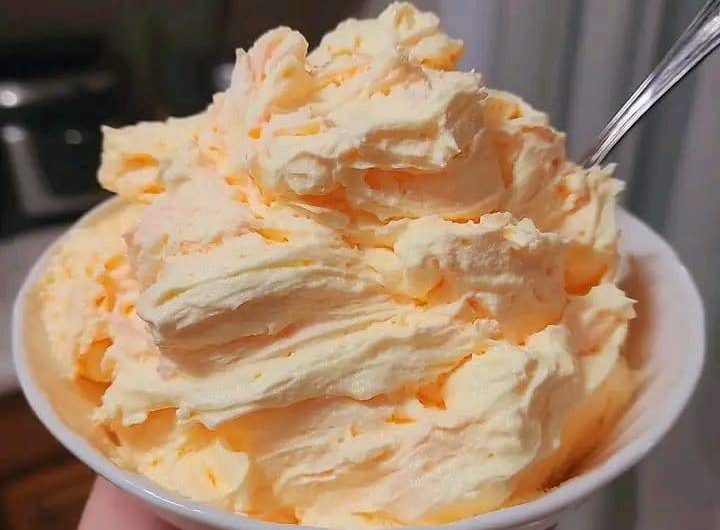
Orange Fluffy Cuisine refers to a category of light, airy desserts where orange is the primary flavor and the texture is soft, cloud-like, and delicate. The most popular example is an Orange Fluffy Cake, often similar to chiffon or sponge cake, but enhanced with citrus oils, juice, and careful aeration techniques.
The defining characteristics are:
- Extremely soft and airy crumb
- Bright citrus aroma from fresh orange zest
- Balanced sweetness with slight tanginess
- Moist but not dense texture
Achieving this texture requires precision, patience, and understanding of how ingredients interact.
Ingredient Breakdown (With Purpose)
Dry Ingredients
- 2 cups all-purpose flour
Provides structure. Too much makes the cake dense; too little makes it collapse. - 1½ teaspoons baking powder
Adds lift and helps create air pockets. - ½ teaspoon baking soda
Reacts with orange juice acidity for extra rise. - ¼ teaspoon salt
Enhances flavor and balances sweetness.
Wet Ingredients
- 5 large eggs (separated)
Egg whites create air structure; yolks add richness. - 1¼ cups sugar (divided)
Sweetens and stabilizes whipped egg whites. - ¾ cup fresh orange juice
Provides flavor, acidity, and moisture. - ⅓ cup vegetable oil
Keeps cake moist and soft even after refrigeration. - 1½ tablespoons orange zest
Contains natural oils that give intense orange flavor. - 1 teaspoon vanilla extract
Enhances overall flavor complexity.
Optional Enhancers
- ½ teaspoon orange extract (for strong flavor)
- 2 tablespoons milk or yogurt (for extra softness)
- 1 tablespoon cornstarch (for lighter crumb)
Equipment and Preparation
- 8–9 inch round cake pan or tube pan
- Mixing bowls (clean and grease-free for egg whites)
- Electric mixer (recommended)
- Fine sifter
- Rubber spatula
Preheat oven to 170°C (340°F).
Line the base of the pan but do not grease the sides to allow the cake to climb and rise properly.
Step 1: Understanding the Technique
This cake relies on aeration, which means incorporating air into the batter.
Two key processes:
- Whipping egg whites to create structure
- Folding gently to preserve trapped air
If done correctly, the cake becomes light like foam. If done incorrectly, it becomes dense.
Step 2: Preparing Dry Ingredients
Sift flour, baking powder, baking soda, and salt at least twice.
Why this matters:
- Removes lumps
- Adds air
- Ensures even mixing
Set aside.
Step 3: Preparing Egg Yolk Base
In a large bowl:
- Add egg yolks and half of the sugar
- Beat until pale and creamy (this can take 3–5 minutes)
- Add oil slowly while mixing
- Add orange juice gradually
- Add orange zest and vanilla
The mixture should become smooth, slightly thick, and glossy.
Now gently mix in the dry ingredients until just combined.
Do not overmix at this stage.
Step 4: Whipping Egg Whites (Most Important Step)
In a completely clean bowl:
- Add egg whites
- Beat on low until foamy
- Add sugar gradually in small portions
- Increase speed to medium-high
Continue until stiff peaks form:
- Peaks should stand straight when lifted
- Texture should be glossy, not dry
If overbeaten:
- Whites become grainy and unusable
If underbeaten:
- Cake will not rise properly
Step 5: Folding Process (Critical for Fluffiness)
This step determines final texture.
- Add 1/3 of egg whites into yolk batter
Mix gently to lighten the batter - Add remaining whites in two parts
Folding technique:
- Use a spatula
- Cut through the center
- Lift and fold over
- Rotate bowl slowly
Do not stir or beat.
Goal: Keep as much air as possible.
Step 6: Pan Filling and Air Control
Pour batter slowly into pan.
Tap pan lightly once to remove large bubbles.
Do not over-tap, as this removes essential air.
Step 7: Baking Science
Place cake in middle rack.
Bake at 170°C for 40–50 minutes.
During baking:
- Heat expands air bubbles
- Egg proteins set structure
- Moisture turns into steam, increasing lift
Do NOT open oven early.
Step 8: Checking Doneness
Cake is ready when:
- Top is golden orange
- Toothpick comes out clean
- Surface springs back when touched
Internal temperature ideally around 95–98°C.
Step 9: Cooling Technique
Cooling is crucial.
- Remove cake from oven
- Let it sit for 10 minutes
- Remove from pan carefully
- Cool completely on rack
For chiffon-style cakes, some bakers cool upside down to prevent collapse.
Step 10: Orange Syrup Infusion (Advanced Step)
For bakery-level flavor:
Ingredients:
- ½ cup orange juice
- 3 tablespoons sugar
Heat until dissolved.
Brush warm syrup over cooled cake.
This adds moisture and intensifies flavor.
Step 11: Frosting Options (Detailed)
1. Light Orange Glaze
- Powdered sugar + orange juice
Creates a shiny, thin coating.
2. Whipped Cream Frosting
- Heavy cream + sugar + vanilla
Light and airy, complements texture.
3. Orange Buttercream
- Butter + powdered sugar + orange zest
Richer and sweeter option.
Step 12: Texture Analysis
Perfect cake should have:
- Fine, even crumb
- Soft and springy feel
- Moist but not wet
- Light citrus aroma
If dense:
- Overmixed or egg whites deflated
If dry:
- Overbaked
If collapsed:
- Underbaked or oven opened early
Step 13: Flavor Enhancements
- Add candied orange peel
- Mix in white chocolate chips
- Layer with orange curd
- Add coconut for tropical variation
Step 14: Professional Tips
- Use room temperature eggs
- Always measure ingredients accurately
- Avoid humidity while whipping whites
- Use fresh oranges for best aroma
- Do not rush folding process
Step 15: Storage and Shelf Life
- Room temperature: 2 days (covered)
- Refrigerator: 5 days
- Freezer: up to 2 months
Wrap tightly to prevent drying.
Step 16: Variations
Layered Orange Cake
Slice into layers and add cream filling.
Orange Sponge Roll
Bake thin layer, roll with cream.
Orange Cupcakes
Reduce baking time to 18–22 minutes.
Eggless Version
Use yogurt and baking soda, but texture will differ.