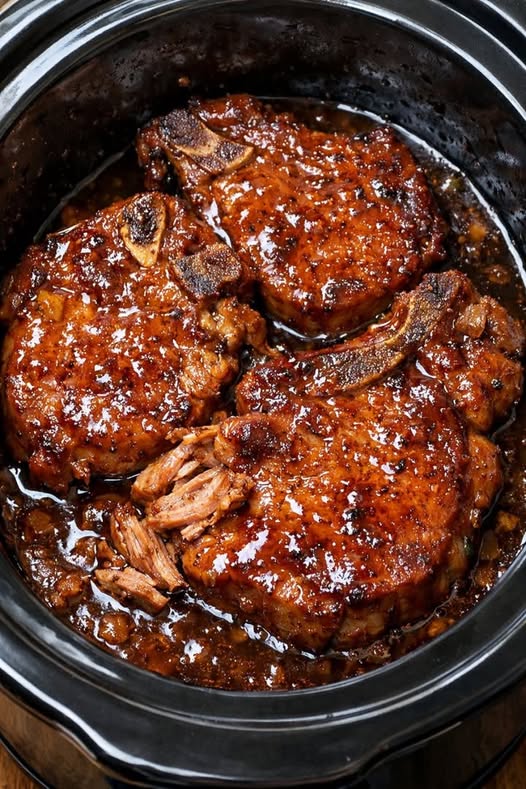
This dish is built on a balance of three main flavor pillars:
- Sweetness from brown sugar
- Umami and saltiness from soy sauce and Worcestershire sauce
- Aromatic depth from garlic, onion, and spices
The slow cooker plays a critical role. Unlike fast cooking methods, slow cooking allows connective tissue in the pork to gradually break down. This results in meat that is not just cooked, but tender, moist, and infused with flavor all the way through.
The brown sugar doesn’t just make the dish sweet. During slow cooking, it melts and blends with meat juices and seasonings to form a glaze-like sauce that coats every bite.
SECTION 2: INGREDIENTS
PORK CHOPS
You can use bone-in or boneless pork chops.
Bone-in chops:
- More flavorful due to the bone
- Stay juicier during long cooking
- Slightly harder to fit evenly in small slow cookers
Boneless chops:
- Easier to serve and eat
- Cook a bit faster
- Slightly more prone to drying out if overcooked
Thickness matters:
- Thin chops (less than 1/2 inch) may overcook and become tough
- Ideal thickness is around 1 inch
BROWN SUGAR
Brown sugar contains molasses, which gives:
- A deep caramel flavor
- Moisture retention
- A slightly sticky texture in sauce
Light brown sugar:
- Milder flavor
- More subtle sweetness
Dark brown sugar:
- Stronger molasses flavor
- Richer, deeper sauce
SOY SAUCE
Adds:
- Saltiness
- Umami (savory depth)
- Color to the sauce
You can use low-sodium soy sauce if you want better control over salt levels.
WORCESTERSHIRE SAUCE
This ingredient is complex. It contains vinegar, molasses, anchovies, and spices. It enhances:
- Depth
- Slight tanginess
- Overall balance
GARLIC AND ONION
These form the aromatic base:
- Garlic gives sharp, warm flavor
- Onion provides sweetness and body as it softens
During slow cooking, both mellow out and blend into the sauce.
LIQUID (BROTH OR WATER)
This prevents burning and creates the cooking medium.
Chicken broth:
- Adds more flavor
Water:
- Neutral, but still effective
SPICES
Paprika:
- Adds color and mild warmth
Mustard powder:
- Adds subtle tanginess and complexity
Thyme or oregano:
- Adds herbal notes
Chili flakes:
- Optional heat
SECTION 3: PREPARATION IN EXTREME DETAIL
STEP 1: DRYING THE MEAT
Take each pork chop and press it gently between paper towels.
Why this matters:
- Removes surface moisture
- Helps seasoning stick better
- Improves browning if searing
STEP 2: SEASONING THE PORK
Sprinkle salt, pepper, and paprika evenly over both sides.
Important technique:
- Season from a slight height so it distributes evenly
- Rub gently into the surface
Let the seasoned pork sit for 10–15 minutes if possible.
This allows the salt to penetrate slightly into the meat.
STEP 3: OPTIONAL SEARING (HIGHLY RECOMMENDED)
Heat a pan over medium-high heat and add a small amount of oil.
Place pork chops in the pan:
- Do not overcrowd
- Leave space between each piece
Cook for 2–3 minutes per side until golden brown.
Why this step matters:
- Creates a crust through the Maillard reaction
- Adds a roasted, complex flavor
- Improves final texture
Remove and set aside.
SECTION 4: BUILDING THE SAUCE
In a bowl, combine:
- Brown sugar
- Soy sauce
- Worcestershire sauce
- Broth
- Garlic
- Onion
- Spices
Mix thoroughly until:
- Sugar begins dissolving
- Texture becomes smooth and slightly thick
Taste the sauce (before adding raw meat):
- Too sweet? Add a splash of vinegar
- Too salty? Add a bit more water or sugar
- Too mild? Add more spices or garlic
SECTION 5: SLOW COOKER
Lightly grease the slow cooker or use a liner.
Place pork chops:
- Flat layer if possible
- Slight overlap is acceptable
Pour sauce evenly:
- Make sure all pieces are coated
- Spoon some sauce directly over each chop
Add optional vegetables if using.
SECTION 6: COOKING PROCESS IN DETAIL
Set slow cooker:
LOW setting:
- 6 to 7 hours
- Best for tenderness and flavor
HIGH setting:
- 3 to 4 hours
- Faster but slightly less tender
What happens during cooking:
Hour 1–2:
- Meat begins to warm
- Sugar dissolves fully
Hour 3–4:
- Meat releases juices
- Sauce becomes more liquid
Hour 5–7:
- Collagen breaks down
- Meat becomes fork-tender
- Sauce thickens naturally
Avoid lifting the lid:
- Each time adds 15–20 minutes to cooking
SECTION 7: FINAL TEXTURE AND DONENESS
Properly cooked pork chops should be:
- Very tender
- Easy to cut with a fork
- Fully coated in sauce
Even though safe temperature is 63°C (145°F), slow cooking often brings it higher, which is fine here because moisture prevents dryness.
SECTION 8: THICKENING THE SAUCE
Remove pork chops carefully.
Pour sauce into a small pot if you want more control, or keep in slow cooker.
Mix cornstarch slurry:
- 1 tablespoon cornstarch
- 2 tablespoons cold water
Add slowly while stirring.
Heat until:
- Sauce thickens
- Becomes glossy
- Coats the back of a spoon
Return pork chops and coat thoroughly.
SECTION 9: SERVING
Place pork chops on a plate or serving dish.
Spoon sauce generously over the top.
Best pairings:
- Mashed potatoes (absorbs sauce well)
- Rice (balances sweetness)
- Steamed vegetables (adds freshness)
- Flatbread or dinner rolls
SECTION 10: COMMON MISTAKES AND HOW TO AVOID THEM
- Using very thin pork chops
Result: Overcooked, tough meat - Adding too much liquid
Result: Sauce becomes watery - Skipping seasoning
Result: Flat flavor - Overcooking on high
Result: Dry texture - Not tasting sauce beforehand
Result: Imbalanced flavor
SECTION 11: CUSTOMIZATION OPTIONS
Sweet and spicy:
- Add chili sauce or hot sauce
Garlic-heavy version:
- Double the garlic
Tangy version:
- Add vinegar or lemon juice
Smoky version:
- Add smoked paprika or a drop of liquid smoke
SECTION 12: STORAGE AND LONG-TERM USE
Refrigeration:
- Store in airtight container
- Lasts 3–4 days
Freezing:
- Freeze with sauce
- Keeps up to 2 months
Reheating:
- Low heat preferred
- Add liquid if needed
SECTION 13: FINAL NOTES
This recipe is forgiving. Even if measurements are slightly off, slow cooking allows flavors to blend and improve over time.
The key idea is balance:
- Sweet
- Salty
- Savory
- Aromatic
Master that balance, and the dish will consistently turn out rich, comforting, and deeply satisfying.